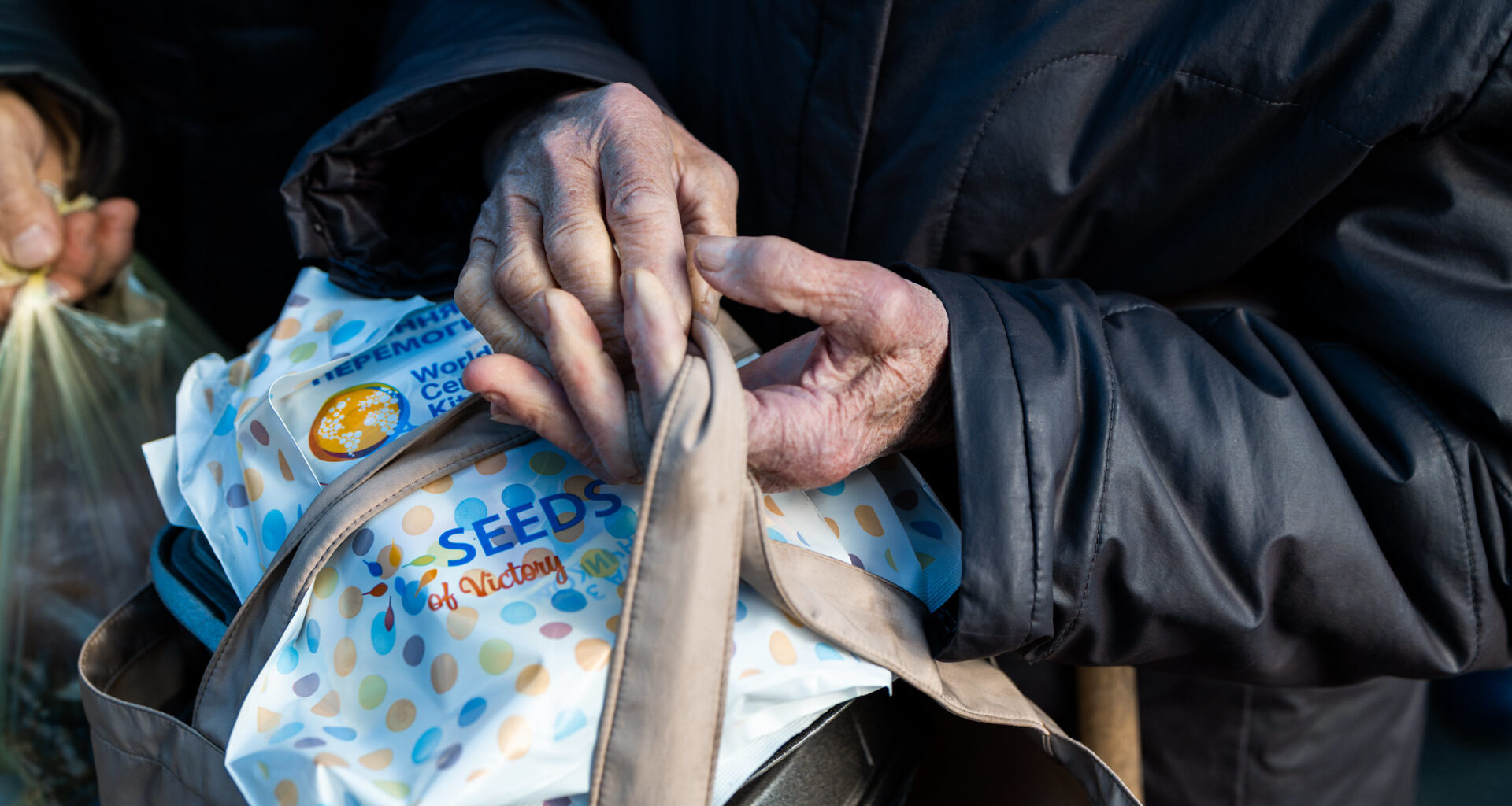
Yuliya Stefanyuk is the World Central Kitchen Response Director in Ukraine. A former caterer, she now oversees food supplies, the delivery of meals and provisions, the setup of community kitchens, and, more recently, the distribution of seeds to help those affected by the war grow their own food and rebuild resilience.
Orlando Lovell: Thank you for taking the time to join us at The Common Table, Yuliya. Let’s start by asking you what the current food situation is like in Ukraine from your perspective.
Yuliya Stefanyuk: We have different situations on the frontline and in the central or western part of Ukraine. Unfortunately, the lack of electricity during the winter had a huge impact. Most people couldn’t work normally during the blackouts, and farmers struggled to feed the animals and keep them warm. So we are trying to find different types of solutions, and other countries support us with generators, fuel, and batteries. In general, we don’t have a critical food situation in most parts of Ukraine, but the World Central Kitchen works specifically in frontline areas where access to fresh food, fresh vegetables, and good-quality food is really complicated. Our role is to work with different types of communities, from delivering hot meals to food kits, seeds, or chickens – we’re trying to adapt.
Sophie Lovell: Your seed kit programme grew directly from a moment in the Kherson region in 2023, where communities weren’t asking for food, but for seeds. How did that shift things in terms of the difference between food aid and food agency? Do you make a distinction between them, or do they both go together?
Yuliya Stefanyuk: In the late winter of 2023, we were in a village, delivering food, and we saw how beautiful the gardens there were. I am a Ukrainian – I obviously understand that every house in a Ukrainian village is supposed to have a garden and a small greenhouse. People survived during the Soviet time because they were able to rely on themselves by planting their own vegetables, fruits, and trees.
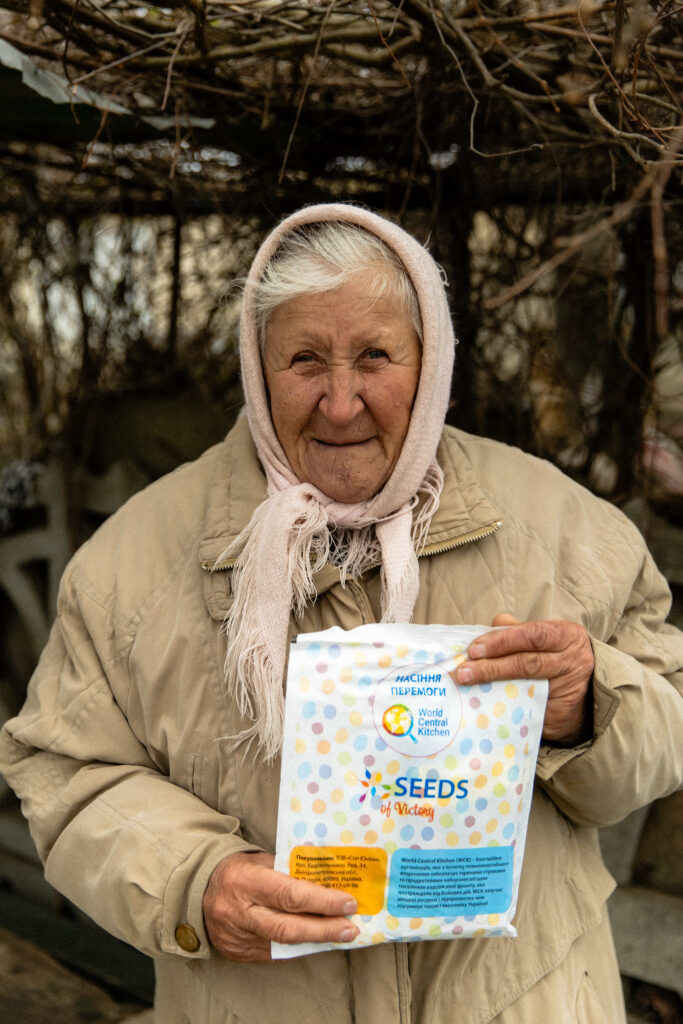
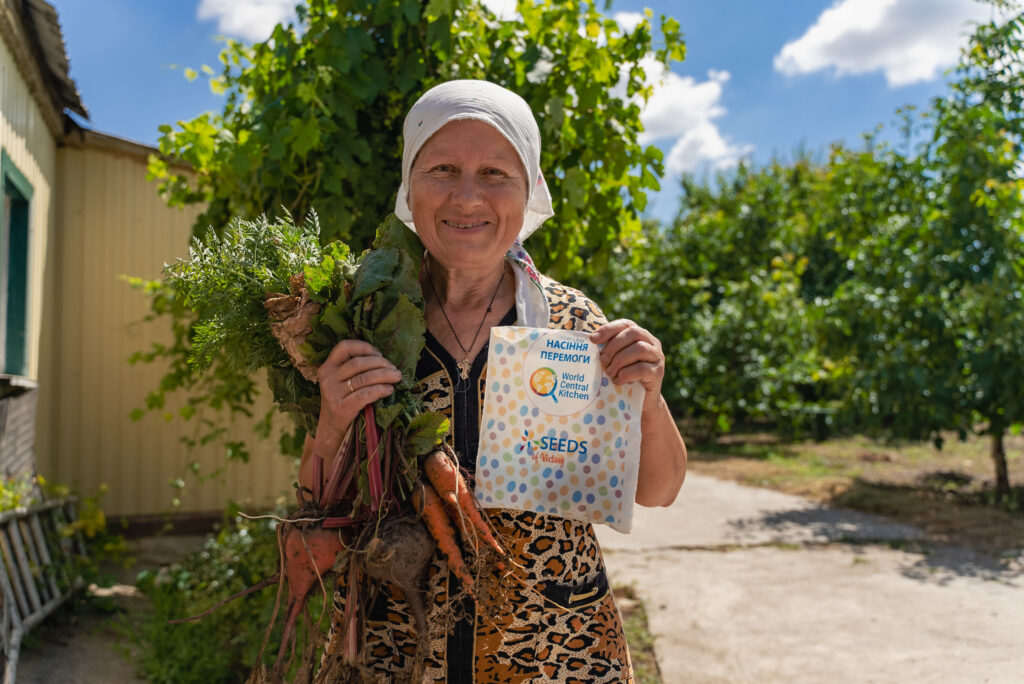
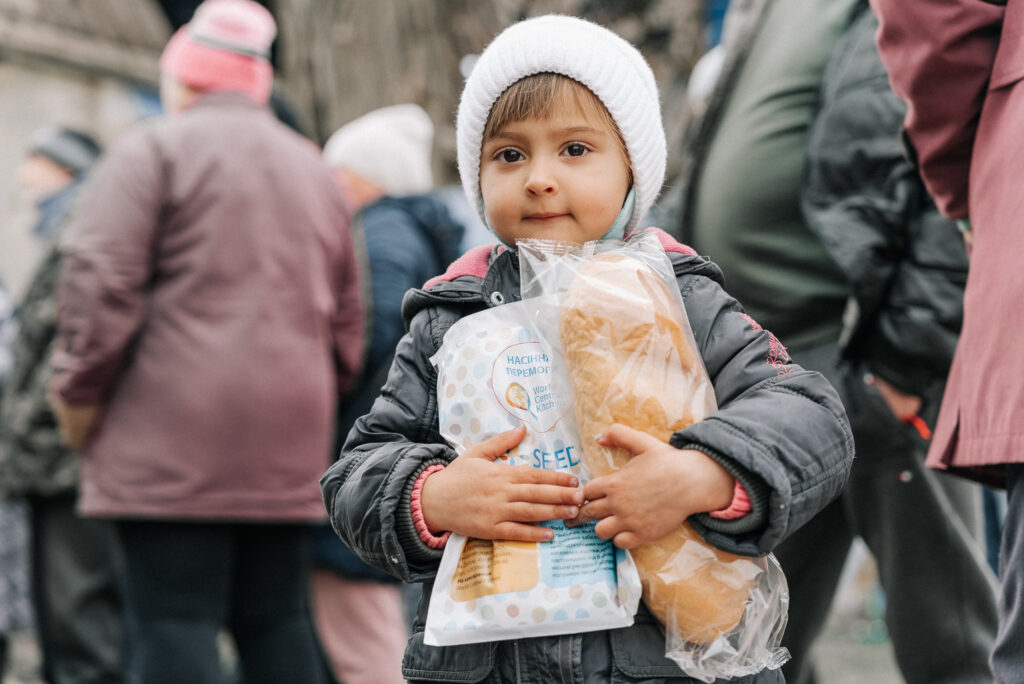
The request from the families in the Kherson region was, “Can you support us with fresh vegetables? We would like to grow our own tomatoes, cucumbers, and peppers.” We were happy to support them. The following March, we started distributing seed kits, which we called Seeds of Hope, mostly in the south of Ukraine, and other regions along the front line where it was still possible for people to stay. One of the reasons we decided to do this on the front line is that it’s unfortunately moving, so we don’t know exactly if we can reach this region with food in the winter. It’s safer to know that people can survive growing vegetables, too. This way, we can cover all needs.
One of the reasons we decided to do this on the front line is that it’s unfortunately moving, so we don’t know exactly if we can reach this region with food in the winter.
Sophie Lovell: We published a story a while ago about resilience through food preservation in Bulgaria. Is there a strong tradition of bottling and pickling in Ukraine as well?
Yuliya Stefanyuk: Yes! Back in Soviet and post-Soviet times, people were trying to survive during the winter, and that’s why pickling and preparing ready meals like concentrated borscht became so prevalent here. We are planning to support these efforts next autumn, because we have noticed that it’s still very important for families to pickle and preserve food. It’s a part of how the community stays together and can feel united. You know, Ukraine is a family-based country. Relations between families are very strong – cooking together is a part of our resilience.
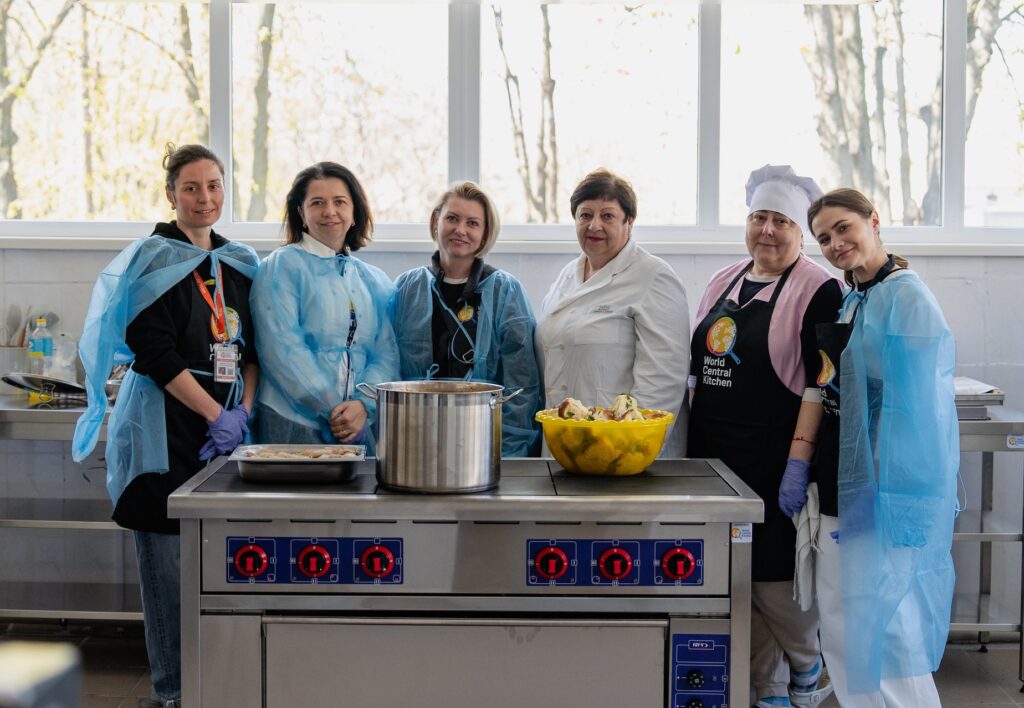
Ukraine is a family-based country. Relations between families are very strong – cooking together is a part of our resilience.
Sophie Lovell: Do you think, in general, that humanitarian food agencies underestimate the importance of that kind of cultural memory and cultural identity when bringing aid? Or are they mostly just involved with the primary need of getting food to the people?
YS: I think most organisations just focus on the emergency. The food they deliver is basic and simple, which is good. It’s important. What is different about the World Central Kitchen is that we have a great culinary team, including chefs, who are thinking ahead and trying to adapt to local culture. Because the organisation was created by chef Jose Andrés, the focus is not just on nutritional needs. For him, it’s really important to build long tables at which people can sit and cook and eat together, even in shelters.
Orlando Lovell: You yourself come from a catering background, right?
Yuliya Stefanyuk: Yes, we were doing events for up to 2,000 people, private parties, weddings, etc. I had 20 staff that worked with me every day, and depending on the event, we could have 200 – 300 waiters, chefs, and so on. I started providing food aid directly on the first day of the war, and we were cooking around 30,000 meals per day in Lviv. Understanding logistics and how to serve food safely are a very important part of this work. Also, the Covid epidemic helped prepare us, because we needed to organise a new type of food delivery. Most of our partners around Ukraine are from catering businesses because they have this logistical knowledge and know how to be flexible. When we support a community with food after a missile attack, we never know how long the food needs to last.
When we support a community with food after a missile attack, we never know how long the food needs to last.
Sophie Lovell: What has surprised you about which elements of the Ukrainian food system have held through the war, and which ones maybe haven’t?
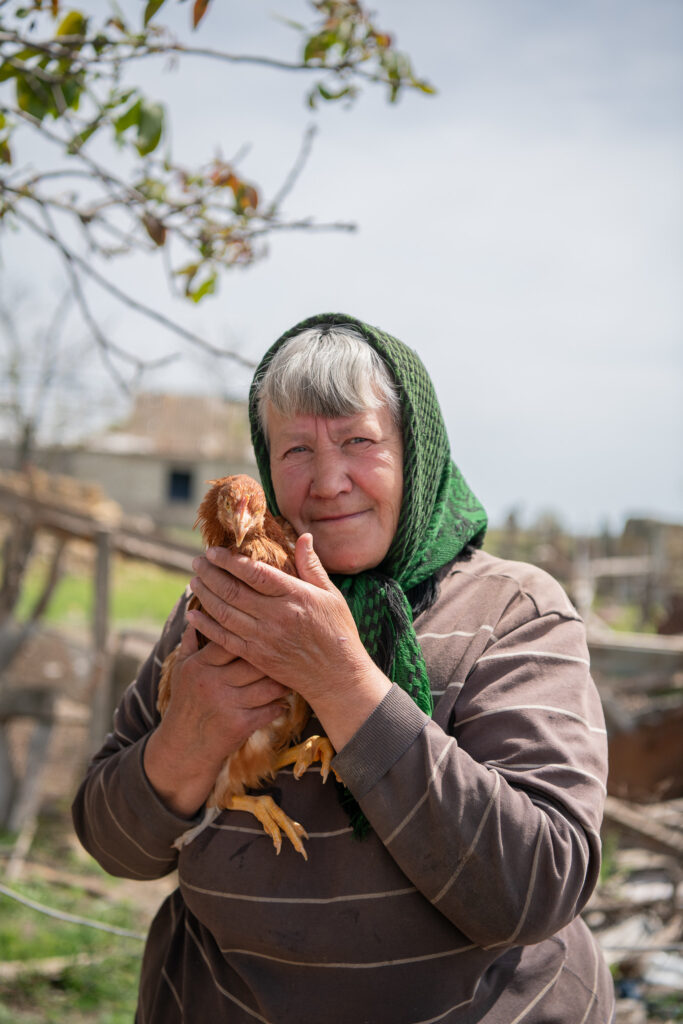
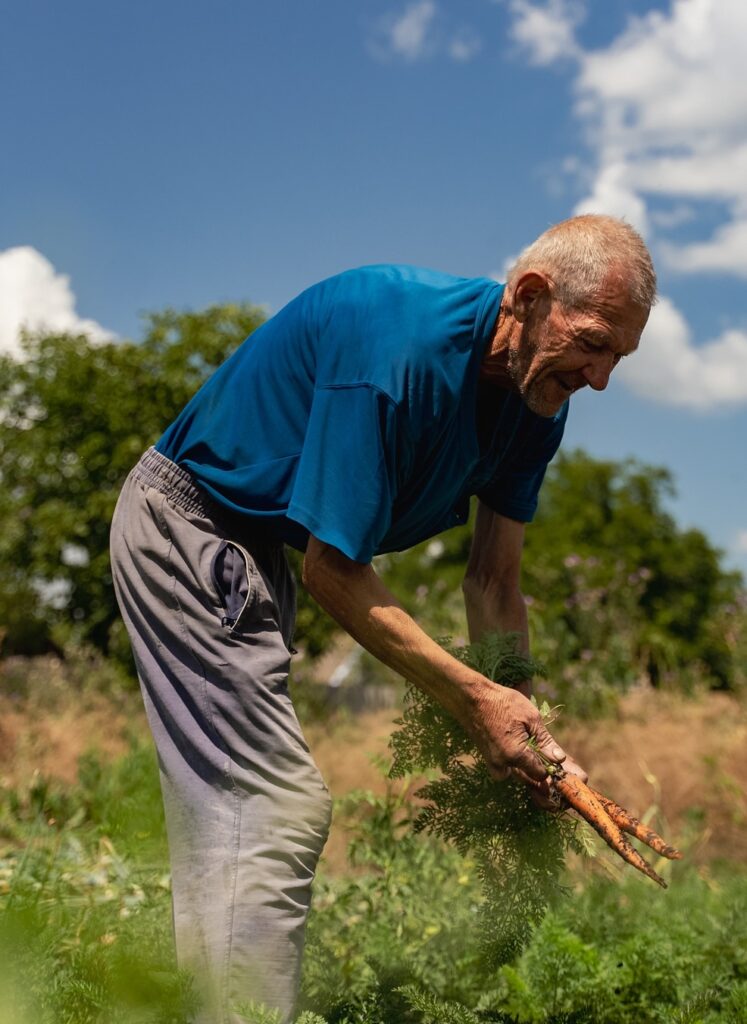
Yuliya Stefanyuk: The biggest issue is that the areas which are liberated are full of ammunition and mines. People wanted to return to their fields and their gardens, and it was a big problem. The government started cleaning these lands, but I heard a lot of stories about people being killed in their gardens because it was spring and they wanted to start planting. So the biggest issue is to clean the land, because even under the shelling, Ukrainians continue to grow their vegetables. Sometimes we hear stories that people won’t leave their homes because they have chickens or ducks that can’t go to the shelter, and they won’t leave them.
Orlando Lovell: That must be so hard, not being able to care for your own vegetable gardens because, as you say, it is so much part of the Ukrainian identity.
Yuliya Stefanyuk: I travel a lot throughout Ukraine, and for me, it is really painful to see the warning signs for mines in villages. Can you imagine living in a village for many years and then only being allowed to walk along a small corridor through it, because of the mines, whilst your gardens are running wild on either side? It’s really hard, especially for the kids.
Can you imagine living in a village for many years and then only being allowed to walk along a small corridor through it, because of the mines?
Sophie Lovell: Cereals are one of Ukraine’s biggest exports. What is the situation with commercial crops like wheat, corn and barley at the moment?
Yuliya Stefanyuk: It’s a huge logistics challenge that has been pretty complicated for us since 2022. We used to deliver by sea. There was a Black Sea initiative [The ‘Initiative on the Safe Transportation of Grain and Foodstuffs from Ukrainian Ports’, was an agreement between Russia, Ukraine, Turkey, and the United Nations, signed on 22 July 2022. Russia pulled out of it in 2023. Ed.] which meant ships carrying food could sail under UN protection. But there are constant Russian drone attacks on grain ships at the port of Odesa. So everything has to now be delivered by train, but for the past six months, Ukrainian railways facilities have been hit by drones too. We can still produce a lot of grain and wheat, but taking it out of the country takes longer, and it increases the prices. But we are lucky. We have the partners and other countries, like Turkey, who support delivery outside the country.
Sophie Lovell: Let’s go back to garden seeds. Who decides what goes into the World Central Kitchen’s seed aid kits, and where do the seeds come from?
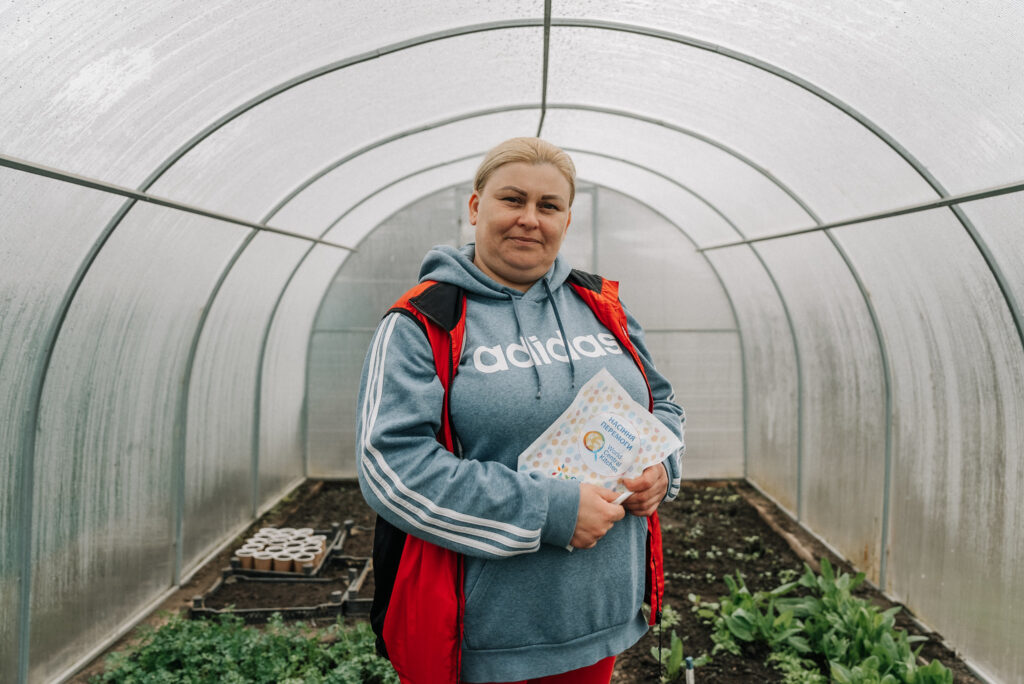
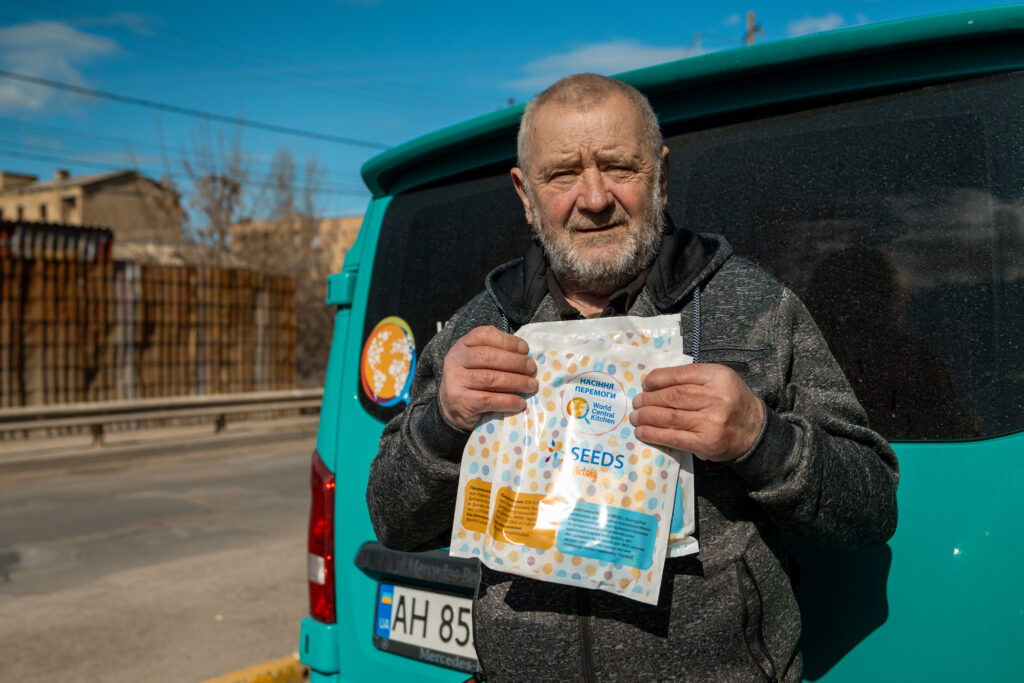
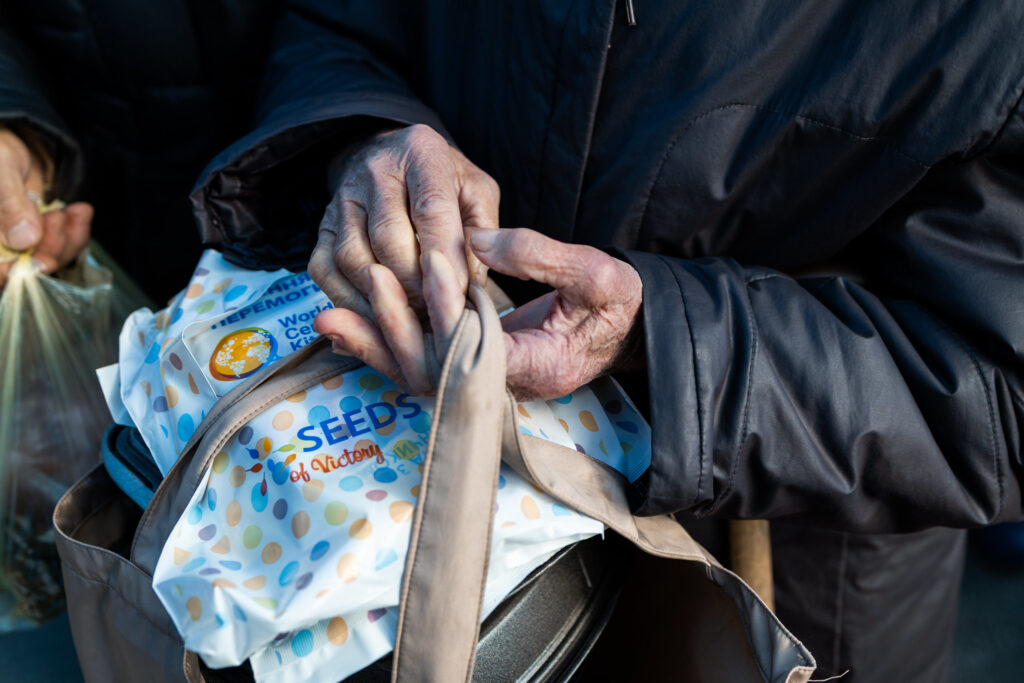
Yuliya Stefanyuk: All the seeds are from Ukraine. We buy everything here to support local businesses, too. There are different types of seeds. When we started with them in 2023, we just thought about what we would like to eat, what would be tasty. Now we have adopted adaptive kits for different regions of the country. In the south of Ukraine, we grow watermelons, but in other areas, you can just grow potatoes because it’s too cold or the soil is poor. Basically, we are trying to define the frequently used vegetables, which can grow in different types of climates, based on people’s feedback.
All the seeds are from Ukraine. We buy everything here to support local businesses, too.
Orlando Lovell: You described the Seeds of Hope programme as something that’s empowering families to grow their own food and reduce reliance on aid. So it’s a long-term resilience program as well as immediate aid. What role, if any, do you see the World Central Kitchen playing in the larger, long-term reconstruction of the food system in Ukraine?
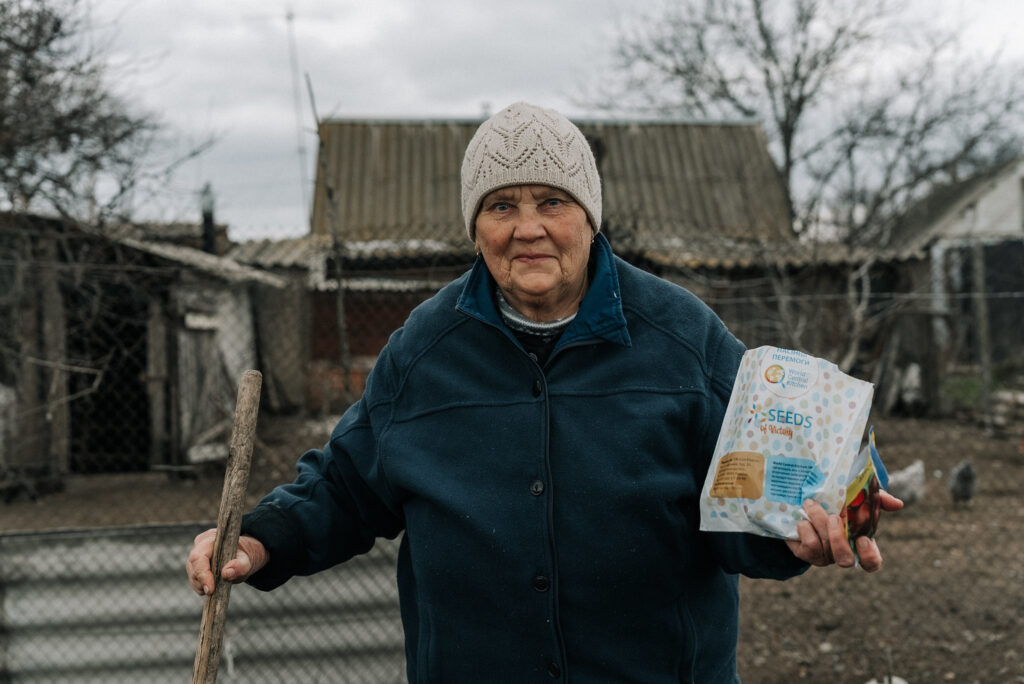
Yuliya Stefanyuk: Our organisation was built for emergency support anywhere in the world. In Ukraine, we still have different types of threats. We have an emergency team which responds after a missile attack, for example, and we have this sustainable, more regular support with food kits and the seeds project, which is about helping to support resilience. We also have a programme for building community kitchens for the shelters, which is an example of how we want to build something to improve the quality of people’s lives in the shelter. It also means that when aid organisations decide to stop operations in the country, people can still use this kitchen for themselves.
The seeds project is about helping to support resilience.
Sophie Lovell: What would you want food system designers and policy makers in Europe to understand about what you’ve witnessed on the ground? What would you want to tell policymakers and people who organise or work with food systems that they should really prioritise and think about?
Yuliya Stefanyuk: It’s a really complicated question to answer, but maybe first of all, it’s important to understand the damage to Ukraine’s ecology that this war has caused and what will happen to it after the war, because the land is poisoned by mines. Also, using generators for electricity is very bad for the environment. So I would focus on more long-term solutions, such as providing access to green energy and teaching people how to clean up their land correctly.
It’s important to understand the damage to Ukraine’s ecology that this war has caused and what will happen to it after the war, because the land is poisoned by mines.
Orlando Lovell: We have another question about the seed kit programme: do you know if it will be expanded to other crisis zones, or if it will become a permanent part of the World Central Kitchen’s emergency response kit?
Yuliya Stefanyuk: When the World Central Kitchen responded to the recent hurricane in Jamaica, they used our experience with the seed kits, too. Our team shared how we created them, how we branded and packaged them. It was a great example of how our expertise supported other communities in countries 1,000 kilometres from Ukraine. This is the great thing about the World Central Kitchen: we really listen to what local communities need and then learn from other communities how to share our expertise.
This is the great thing about the World Central Kitchen: we really listen to what local communities need and then learn from other communities how to share our expertise.
Sophie Lovell: Is the seed programme also being used in Gaza?
Yuliya Stefanyuk: Yes, but it’s hard. There is no land where they can plant. We are mostly focusing right now on cooking hot meals because there’s a lack of places where people can cook for themselves. In Gaza, as in Lebanon right now, there is a huge issue with all the IDPs [Internally Displaced Persons] since this Middle East crisis started.
We really believe in the power of family, of communities, and the support of different countries for each other. It’s the only way we can overcome these threats and challenges to us all.
Orlando Lovell: Is there anything else you would like to tell us or mention that we haven’t covered?
Yuliya Stefanyuk: I would just say that Ukraine’s great resilience over years is an example of how people work hard to protect their land, protect their normal life. It’s been four years now with this war, and the rest of the world is maybe tired of hearing about it. So I am grateful that you are asking questions and that you are trying to learn from us. We are ready to share, because it’s important. The world has become crazy, and who knows what it’s going to be like in the future, how oil prices will impact us all and so on. We really believe in the power of family, of communities, and the support of different countries for each other. It’s the only way we can overcome these threats and challenges to us all.
Yuliya Stefanyuk is a humanitarian leader, strategist, and social entrepreneur based in Ukraine, currently serving as Response Director for World Central Kitchen’s operations in the country. Born in Lviv, she holds a degree in Sociology from the Ivan Franko National University of Lviv. Yuliya began her career in publishing and hospitality, serving as Commercial Director of The Old Lion Publishing House and later as Managing Partner of FEST Catering, Just Lviv It!, and Food Mission, part of the renowned Ukrainian creative holding !FEST. Since the start of Russia’s invasion in 2022, she has played a key role in food relief efforts, leading WCK’s mission as Country Director and Senior Advisor before stepping into her current role as Response Director in January 2025, where she oversees large-scale food assistance and emergency deployments across Ukraine.
World Central Kitchen (WCK) is a non-profit NGO founded in 2010 by chef José Andrés, initially in response to the Haiti earthquake. Operating across more than 50 countries, it deploys rapidly to disaster and conflict zones to provide meals, partnering with local restaurants and suppliers to scale up quickly. Ukraine has been one of WCK’s largest operations: the organisation began serving meals within a day of Russia’s full-scale invasion in February 2022 and has since delivered over 295 million meals to communities across the country, including frontline areas in the east and south. WCK has also responded to earthquakes, hurricanes, and other crises globally, and has served over 600 million meals in total.