Dr Debal Deb and The Last Harvest is a documentary about one man’s decades-long battle to rescue India’s indigenous rice diversity from oblivion. It follows journalist Dan Saladino as he visits Basudha Farm in Odisha, where ecologist Dr Deb has conserved over 1,460 rare rice varieties collected from remote tribal communities.
From the 1960s on, in a drive to industrialise the country’s agriculture, India’s 20th-Century Green Revolution may have massively increased production in the short term, but it also caused the disappearance of over 90 per cent of indigenous rice seed varieties, leaving fields genetically brittle and nutritionally hollow. Rice is one of the world’s most vital crops and also one of the most at risk from failure due to climate change. At his Basudha Farm in Odisha, ecologist, scientist, and farmer Dr Debal Deb has been working to save as many of these indigenous varieties as he can.
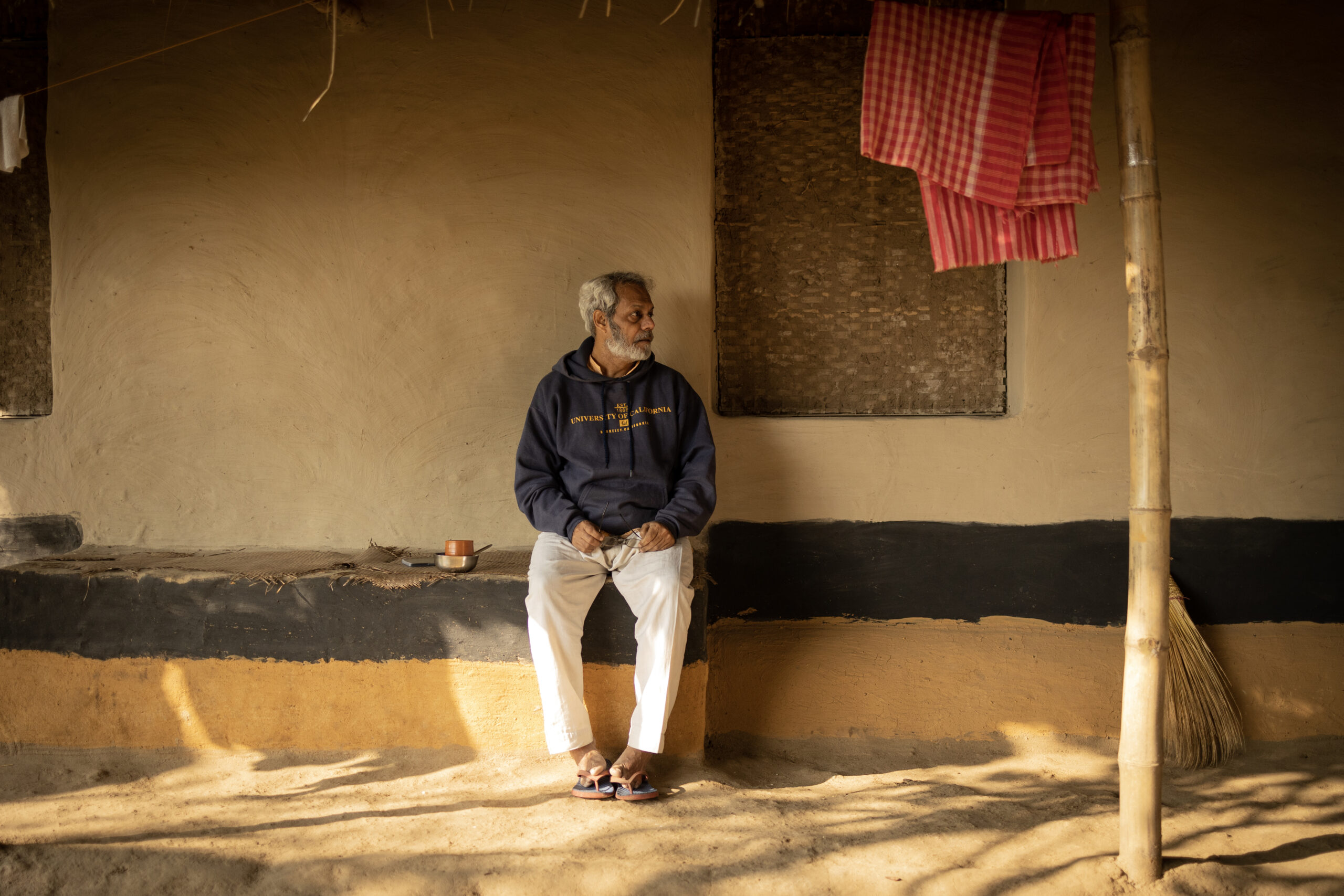
For Deb, food production is a battleground for heritage preservation and systemic overhaul. He has gathered and safeguarded over 1,460 heirloom strains from local farmers across three decades, each adapted through generations to local soils, climates, and needs. These rice varieties challenge the uniformity of industrial agriculture by embodying a food production model rooted in diversity rather than yield-maximising monocultures.
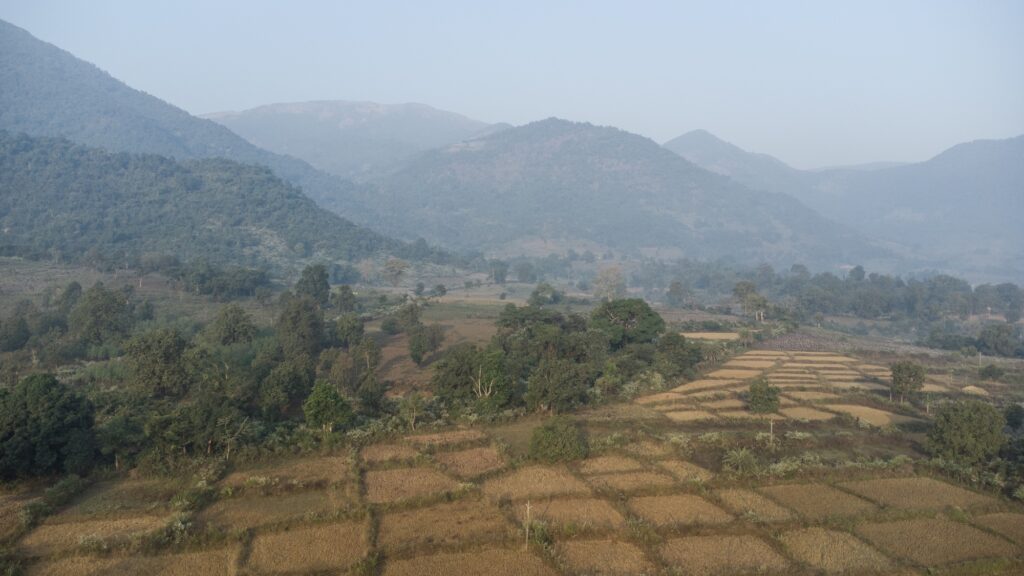
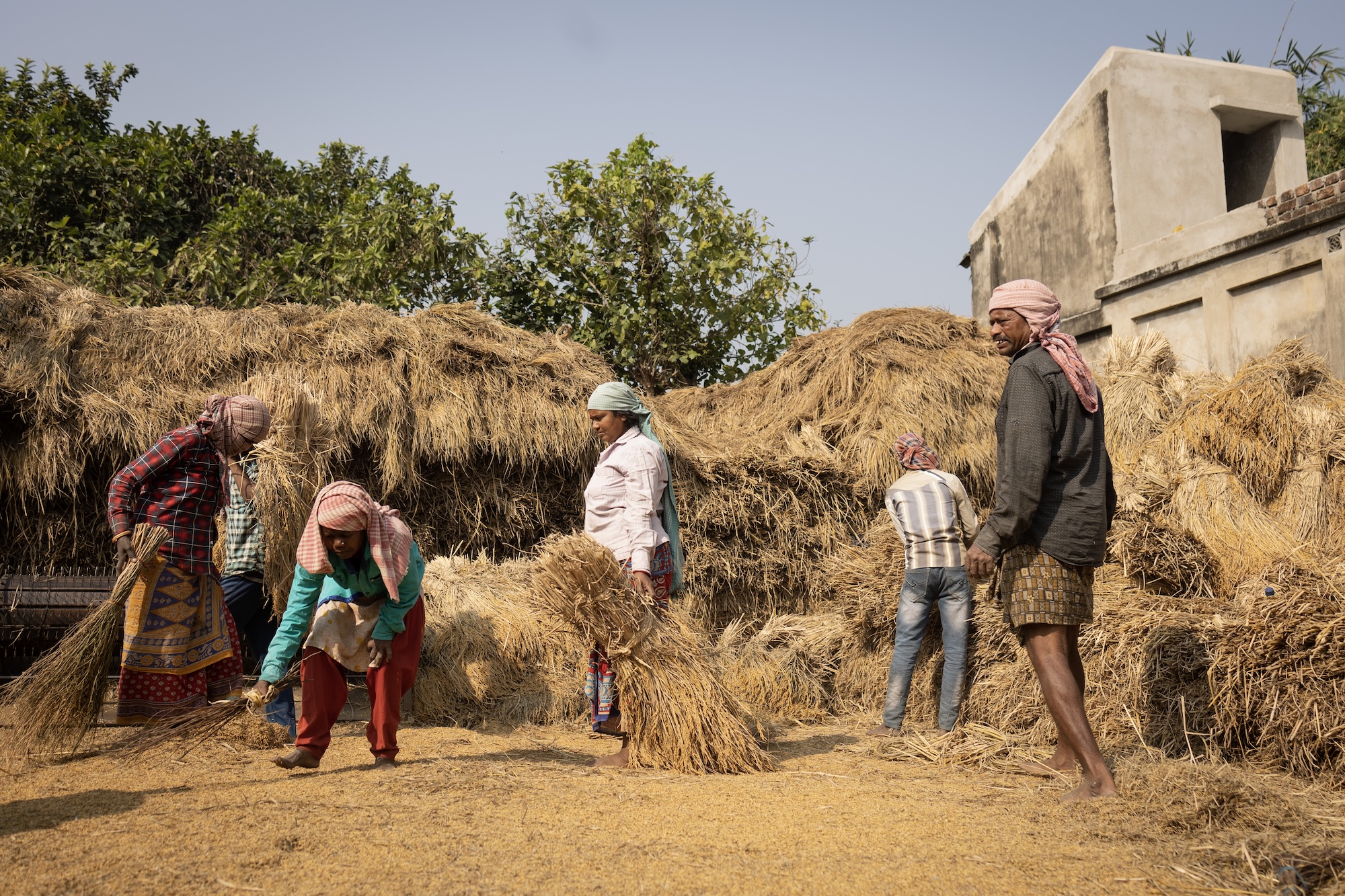
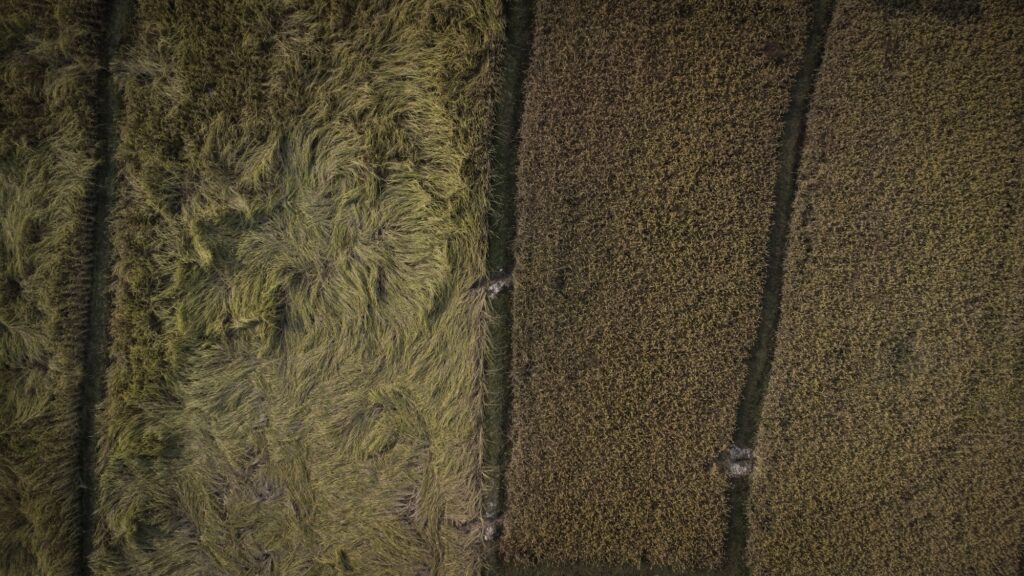
In this new documentary by the Gaia Foundation, journalist and author Dan Saladino visits Deb to learn how indigenous rice varieties outperform modern high-yield hybrids in both resilience and nutrition. Strains that are flood-tolerant or drought-hardy can allow rice harvests to survive climate extremes that devastate Green Revolution crops, while others contain especially high iron levels or medicinal properties for diabetes and anaemia. Deb’s mission is not about nostalgia; it’s about food production strategies for a climate-stressed future, where one fungal outbreak could erase crops feeding billions.
Deb’s life’s work is “A living repository of diversity, human innovation and agriculture spanning millennia”, says Dan Saladino in the documentary. These varieties don’t just carry genetic information, their keepers carry knowledge of sowing rhythms, cooking rituals, and seed-saving lore honed over millennia. Rice isn’t a mere staple; it’s sovereignty. Deb repatriates seeds to source villages via his nonprofit Vrihi, handing control back to communities eroded by corporate patents and government subsidies for hybrids. Farmers receiving them aren’t passive recipients but stewards reviving fields, diets, and stories their grandparents knew. All of this without government funding or support from major NGOs.
After 25 years of commitment to the project, Deb says he no longer has the stamina to continue and cannot afford to pay his team a living wage, so this year is to be his last harvest. In order for the community to continue saving seeds in a way that is not dependent on him, he created the Vrihei community seedbank.

Deb’s seed bank is no Svalbard fridge; it is a living repository, as Saladino narrates:
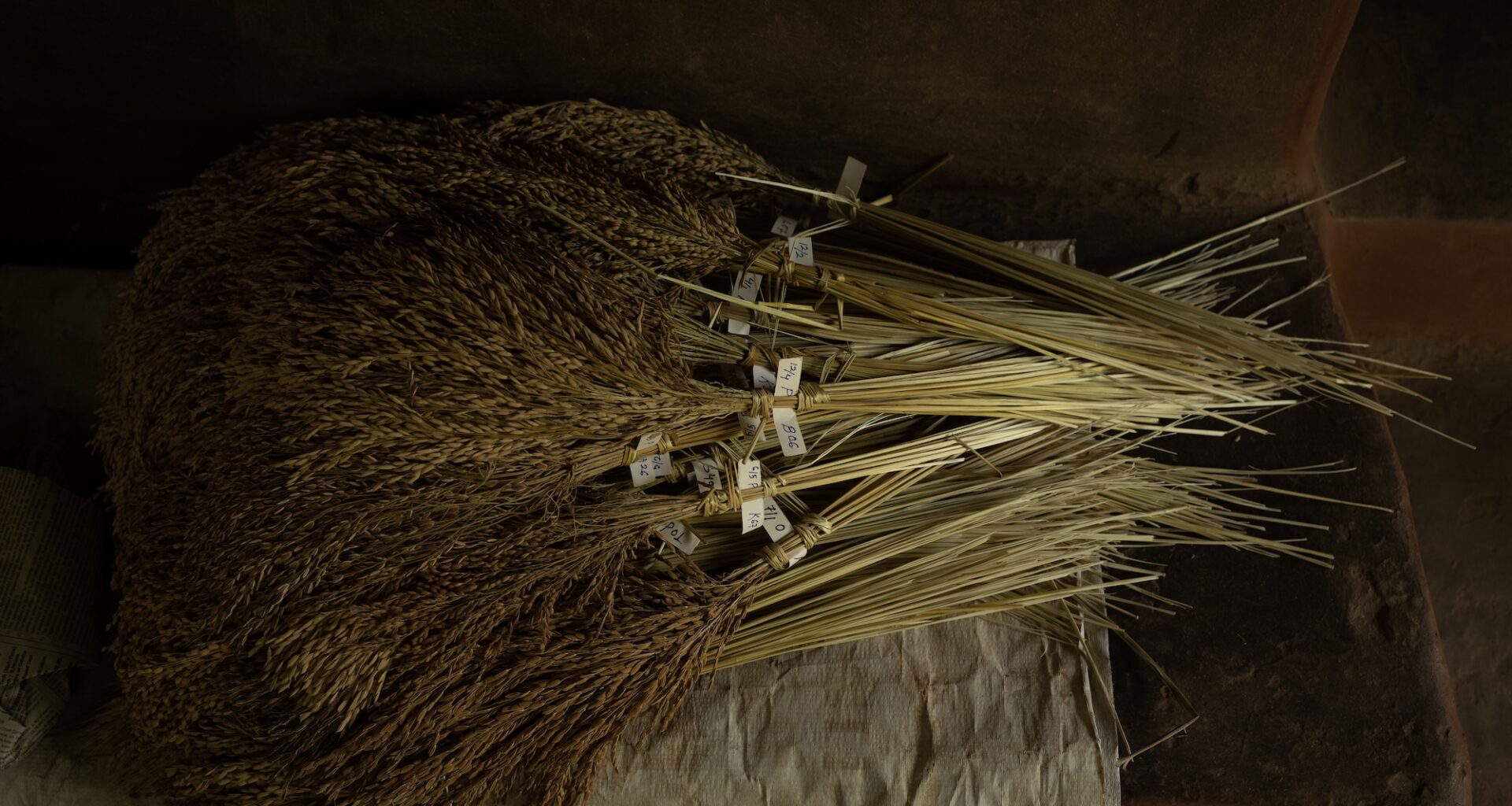
“Inside a small, modest mud brick building sits one of the most valuable rice collections in the world. The building is part of a family home to ensure the seeds are under the protection of the community. For added security, the names and origins of each sample are identified by number only, and the code is kept by Debal. The contents of these pots represent the work of generations of farmers, their decisions, their selections, a process that has taken thousands of years, which in turn gives today’s farmers options for the future.”
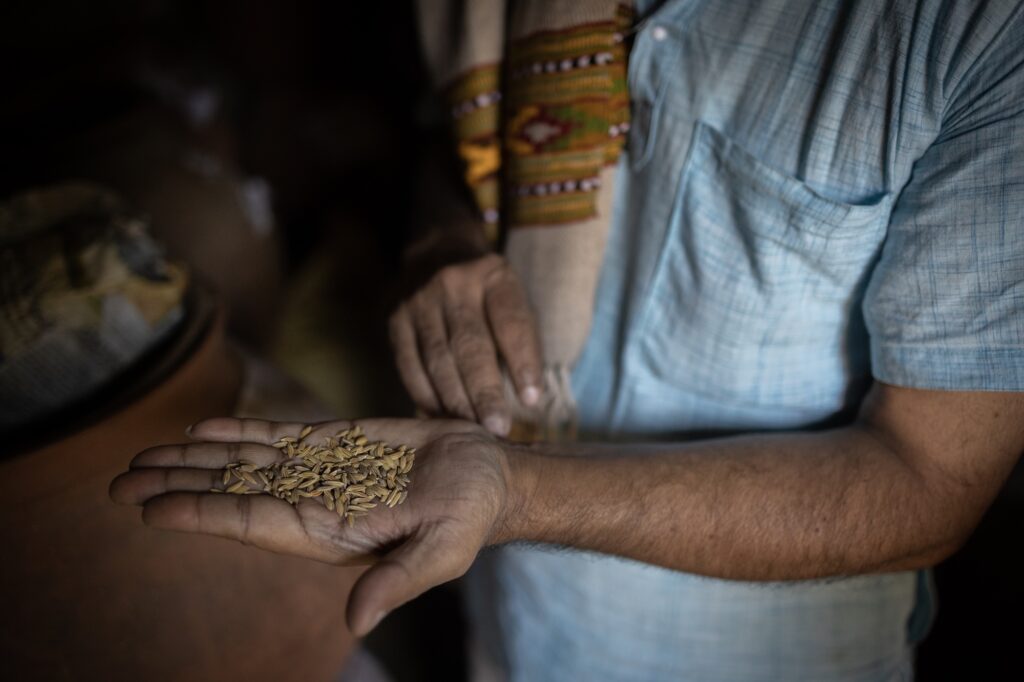
“At Vrihei, farmers can share their own seeds and collect those deposited by others”, he continues. “It is an exchange system, no money involved”, says Deb, “in these 25 years, [we have] distributed seeds to over 17,000 farmers.” In this way, the varieties continue to be protected and passed on. This is Dr Debal Deb’s extraordinary legacy.
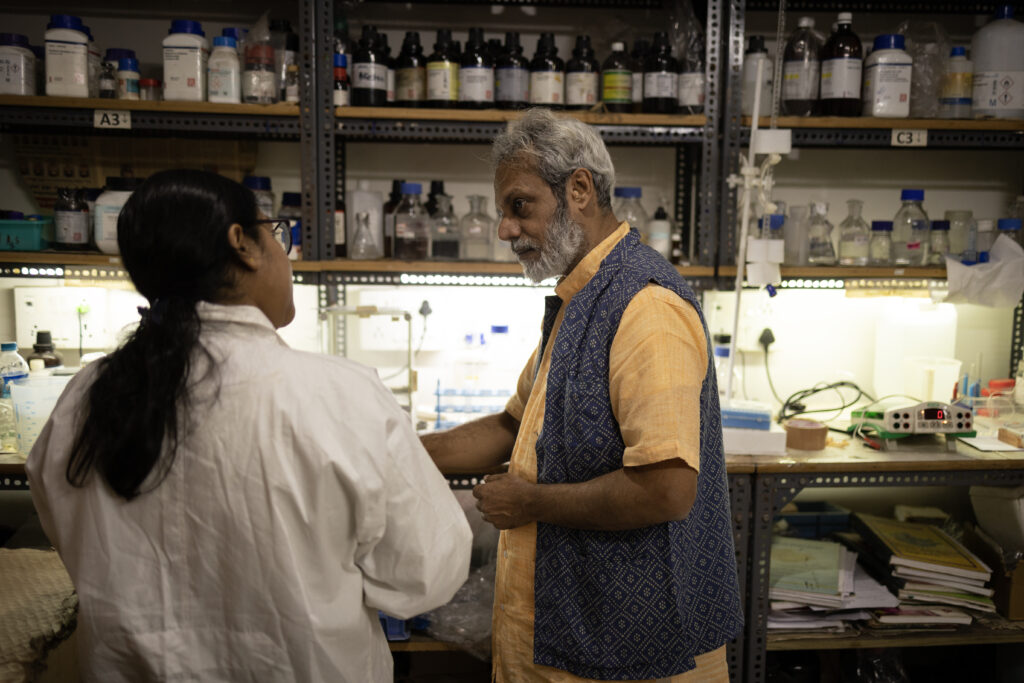
After his last harvest as a farmer, Deb plans to share this bank amongst a group of 22 farmers who have volunteered to keep the project going. Deb will not be retiring, though; the DNA sequencing of the varieties he has collected will continue in his lab, and he will remain as an advisor to the farming community.
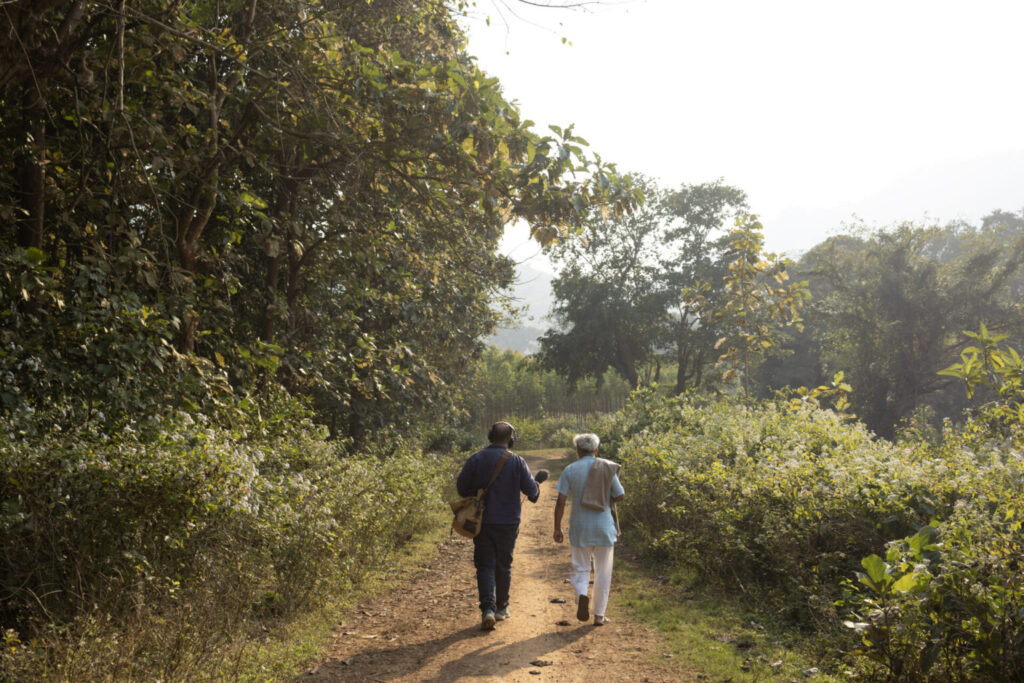
“I hope his legacy will continue through the efforts of the farmers he’s trained”, says Saladino, “The seeds they’re now responsible for would have been lost a long time ago without Debal. We all need to know Deb’s story more than ever. Like the rice he saved, his work and his ideas are too precious to be lost.”
Dr Debal Deb and The Last Harvest is a film by Jason Taylor for The Gaia Foundation; story by Debal Deb and Dan Saladino; supported by the Gaia Foundation, the A Team Foundation and Savitri Trust.
Dan Saladino is the author of Eating to Extinction: The World’s Most Endangered Foods and Why We Need to Save Them, which won the Wainwright Prize for Writing on Conservation. During his twenty-five-year career as a journalist, he has been a news reporter, investigative documentary maker and presenter of BBC Radio 4’s The Food Programme, receiving the James Beard Foundation Award for food journalism. His focus is now on global food security and the decline in biodiversity.
Title: Dr Debal Deb and The Last Harvest a film by Jason Taylor for The Gaia Foundation