Have you heard of the EU Soil Strategy for 2030? It was launched in November 2021 as part of the European Green Deal, and its first law, the Soil Monitoring Law, went into force in December 2025. But is it enough to save our soils and ourselves?
Soil is the beating heart of the entire food system, and according to the European Commission’s EU Soil Strategy for 2030, it’s in serious trouble. An estimated 70 per cent of soils in the EU are currently unhealthy, damaged by decades of unsustainable land use, over-exploitation, and pollution. This isn’t a fringe ecological concern; it is life-threatening. Soils harbour more than 25 per cent of all biodiversity on Earth and provide over 95 per cent of the global food supply. They are also the planet’s largest terrestrial carbon sink and therefore the largest buffer against global warming. When the earth beneath us degrades, literally everything built on top, food quality, climate stability, and ecosystem function, becomes structurally precarious.
So what is the EU doing about it? Published in November 2021 under the European Green Deal, the Soil Strategy for 2030 is a legislative and policy framework that, for the first time, seeks to extend to soils the same level of legal protection that is currently given to water and air. It sets binding and voluntary measures to achieve healthy soil across the EU by 2050, with concrete interim targets for 2030, touching public authorities, economic operators, land users, and citizens alike.
A legislative and policy framework that, for the first time, seeks to extend to soils the same level of legal protection that is currently given to water and air.
The core proposals in the strategy framework include dedicated EU soil health legislation, mandatory sustainable soil management practices, restoration of drained peatlands, free soil testing for landowners, and a potential legally binding “soil passport” to foster circular economy principles and the reuse of clean excavated soil.
It is notable that the Soil Strategy 2030 implicates systems beyond agriculture and highlights often-ignored correlations. Soil sealing, for example, the covering of land with concrete and asphalt, drives soil degradation by destroying fertile agricultural land, reducing biodiversity, increasing flood risk, and accelerating warming. This makes urban planning, housing policy, and infrastructure investment directly relevant to soil health and, therefore, the food system as well.
This makes urban planning, housing policy, and infrastructure investment directly relevant to soil health.
The strategy also links explicitly to the EU’s 2020 Farm to Fork agenda, which aims to accelerate the transition to a sustainable food system, particularly with respect to reducing nutrient losses and cutting chemical pesticide use. These are two areas where current agricultural practice often remains deeply contradictory to the stated goals.
If the urgency of saving our soils for our survival is not convincing enough, the economic logic of this strategy is blindingly obvious as well. According to the European Commission, halting soil degradation could generate up to €1.2 trillion per year globally, with the cost of inaction outweighing action by a factor of six across Europe. Nevertheless, the political will to match that calculation remains uneven across EU member states.
The EU Soil Strategy 2030 addresses something commercial interests within the food system have long avoided confronting: that industrial land use has treated soil as an infinite resource rather than a living commons with finite regenerative capacity. Whether the strategy succeeds will likely depend less on its legislation than on whether the cultural understanding of soil shifts from background condition to central actor. That reframing is where the real work begins.
Whether the strategy succeeds could depend less on its legislation than on whether the cultural understanding of soil shifts from background condition to central actor.
According to the EU’s own Actions Tracker, 63 of the strategy’s actions have been completed, 23 are in progress, and four have been withdrawn. Completed actions include things like harmonised EU-wide monitoring of soil organic carbon, an inventory of European soil microbiota, assessment of measures to halve nutrient losses, and the revision of the Urban Wastewater Treatment Directive. That might sound a lot, but most of these are monitoring, reporting, and knowledge-dissemination tasks, not transformative interventions on the ground.
The strategy’s most important concrete commitment was a dedicated Soil Monitoring Law, promised by 2023, and which finally came into force in December 2025, but was significantly watered down throughout the process. Originally called the Soil Health Law, the Soil Monitoring Law now fails to set any legally binding targets, neither for 2050 nor for any intermediate steps. The objective of achieving healthy soils by 2050 is therefore now non-binding and functions more as a vision than a legal requirement.
Originally called the Soil Health Law, the Soil Monitoring Law now fails to set any legally binding targets.
The EU Soil Strategy 2030 was born under the European Green Deal’s peak ambition, but since its conception, the political winds have shifted considerably. Farm protests across Europe in 2024 put pressure on the Commission to ease environmental requirements on agriculture, and the Green Deal itself has been selectively retreated from. The withdrawal of a parallel legislation plan, the Integrated Nutrient Management Action Plan (INMAP), which was supposed to reduce nutrient pollution and better recycle nutrients by targeting farming practices, such as manure management and fertilisation, is a further indication of the weakening of legislation in Europe that was designed to protect our futures
Yes, the EU Soil Strategy has generated a degree of institutional infrastructure such as monitoring systems, research networks and a nascent legal framework, but the gap between its stated ambition and its legislative outcomes is large and growing. Sad to say, it doesn’t look like top-down treatment of our soil’s health problem is going to save the beating heart of Europe’s food system.
The Common Table
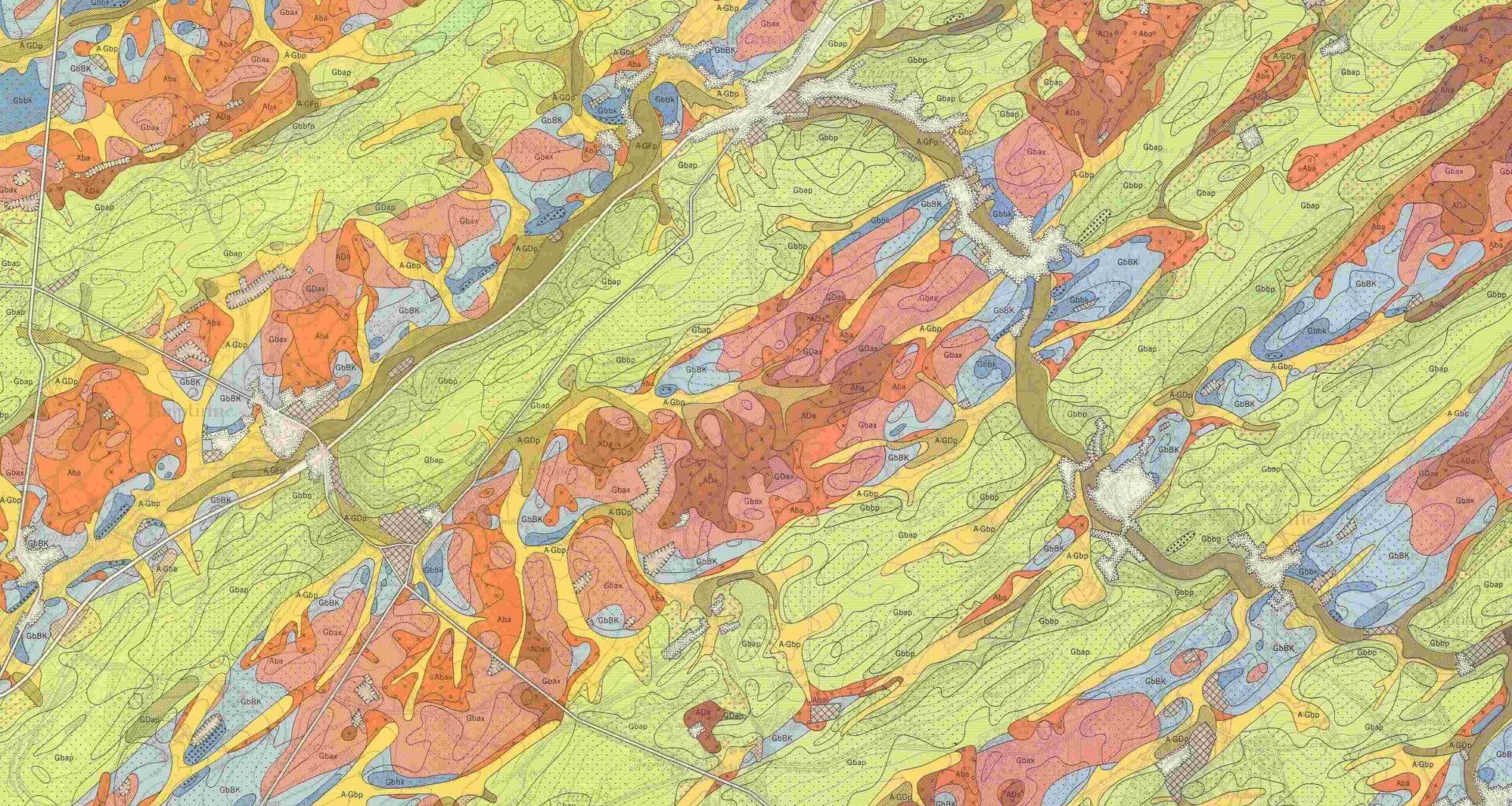
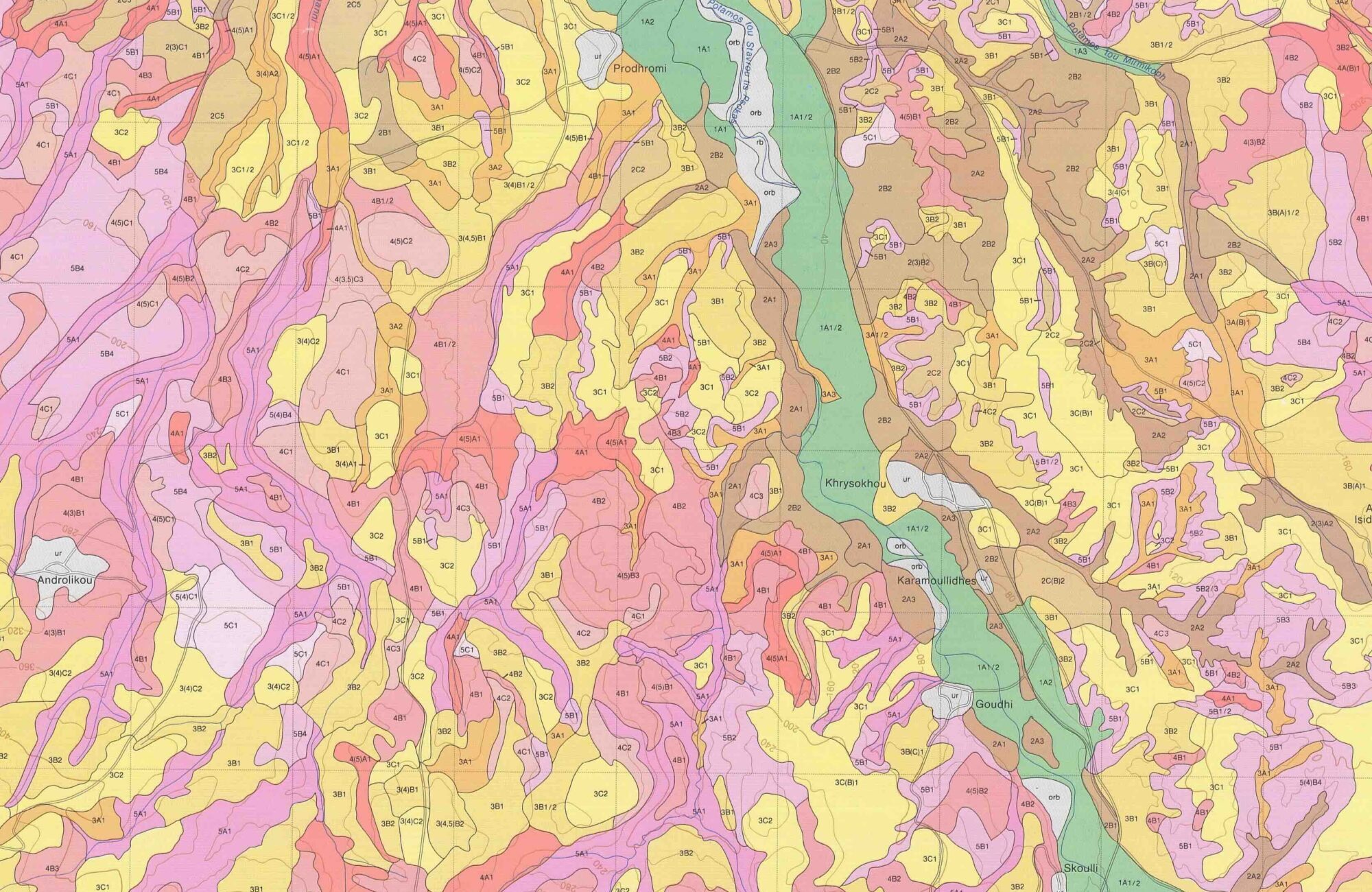
Tile image: European Digital Archive of Soil Maps (EuDASM)