Vessel is a creative collective based on the Greek island of Aegina. Their mission is to “develop, learn, and share new creative practices in the face of uncertain futures”. In 2026, they began working with scientists to map the underwater seagrass meadows surrounding the island and share their findings with the people whose activities are impacting them in new ways.
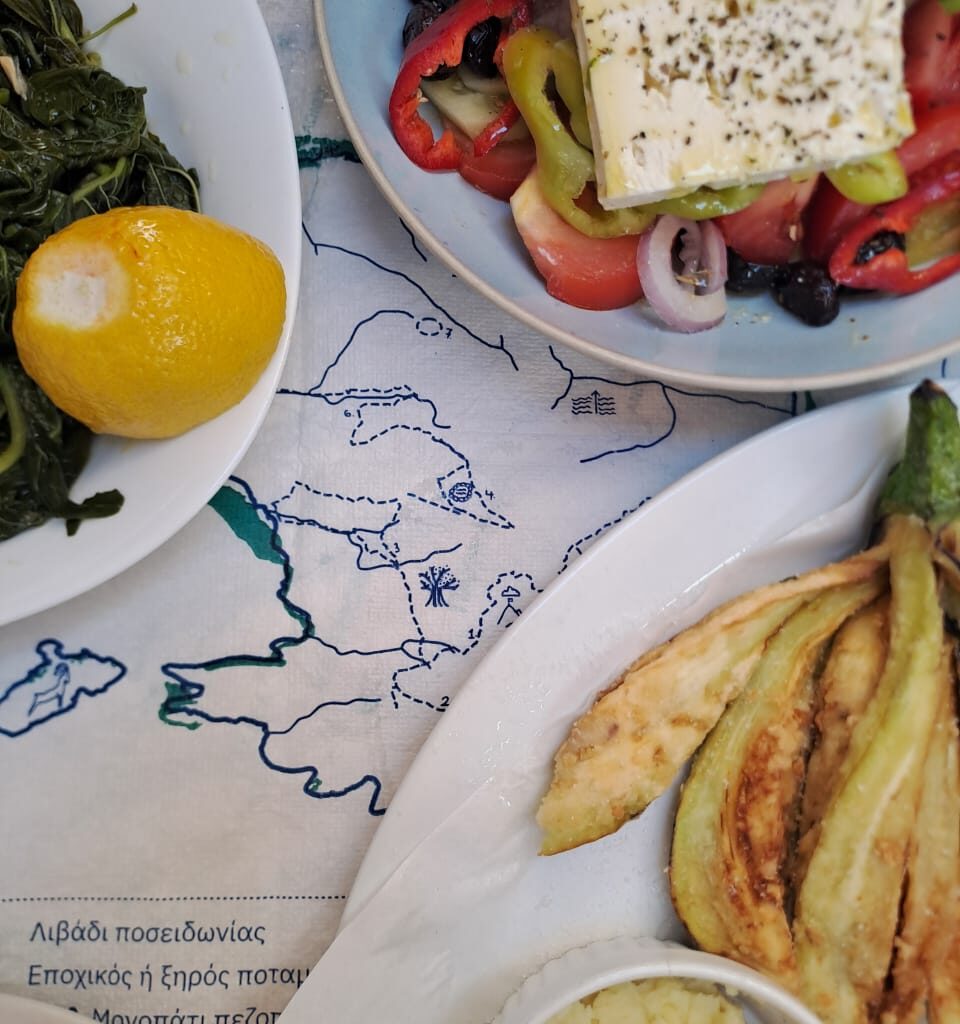
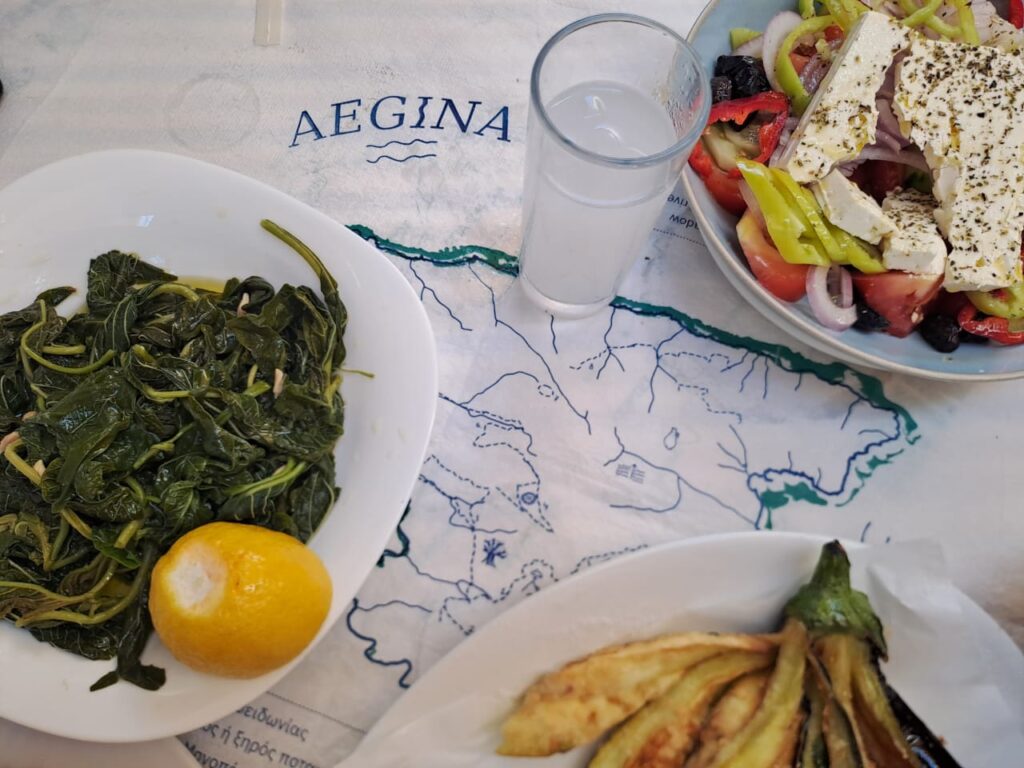
Vessel transcribed their Aegina seagrass research onto a hand-drawn map of the island, alongside a network of hiking paths, the island’s precious weather courses, ancient olive groves, the local pistachio agriculture and other points of interest for islanders and tourists alike to explore. The maps were then printed onto paper tablecloths typically used by local restaurants in the area and restaurateurs were invited to lay their tables with them.
Directly adjacent to Athens, Aegina is one of Greece’s most-visited islands. As one of the driest places in Europe, it is also experiencing serious environmental issues due to climate change, not least water shortages exacerbated by the thirsty local pistachio agriculture. Less visible is what is going on under the sea in the green seagrass (Posidonia oceanica) meadows surrounding the island. Global warming and fishing practices are also having a considerable impact on these rich habitats for local sea life, which are also vital carbon depots. “Seagrasses are fundamental to ocean ecology, creating habitats, stabilising shorelines, producing vital oxygen, and drawing down carbon”, explains James Bridle, one of the project initiators at Vessel, “but they’re also under threat from human activity, damaged by ships’ anchors and fish farms, and vulnerable to climate change.”
Seagrasses are fundamental to ocean ecology, creating habitats, stabilising shorelines, producing vital oxygen, and drawing down carbon.
The goal of the ongoing Vessel Seagrass Project, says Bridle, is to “research the seagrass meadows as well as other ecological systems on Aegina, such as agriculture, animal habitats and water resources, and present the results to the public in a fun, accessible, and informative way.”
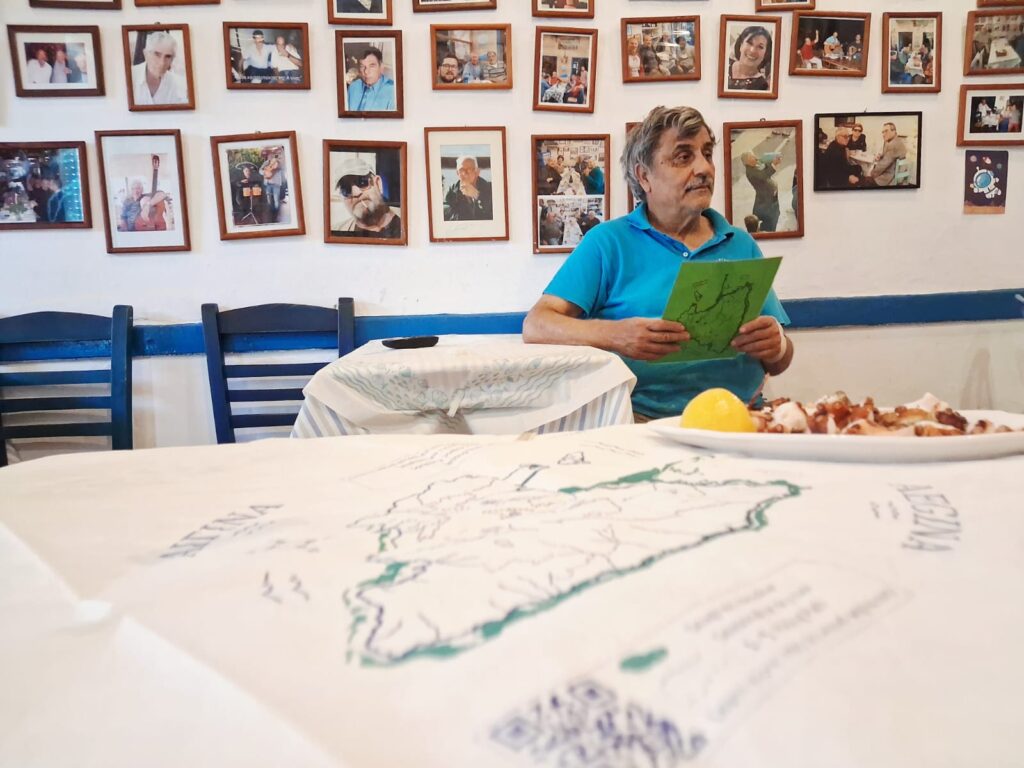
“Paper tablecloths featuring the local area and points of interest are a common feature across the Greek islands”, they add, “adorning almost every taverna table. We sought to use this common form to share vital ecological information, and the feedback has been fantastic, with dozens of tavernas around Aegina using the tablecloths over the summer, for thousands of meals.” This means locals as well as seasonal visitors – tourists here for a day or two, summer residents who stay a few months of the year, and yachtspeople who come ashore for a meal – are all made aware of and drawn into a better understanding of the island’s ecology in a non-confrontational way.
Vessel is literally putting seagrass on the map, making this mostly invisible species, which is as important to the island as its beloved pistachio trees, a point of conversation.
By expanding and increasing interdisciplinary collaboration between scientists, creatives, local businesses, residents and visitors for a more collective approach to increasing habitat awareness and protection, Vessel is literally putting seagrass on the map, making this mostly invisible species, which is as important to the island as its beloved pistachio trees, a point of conversation.
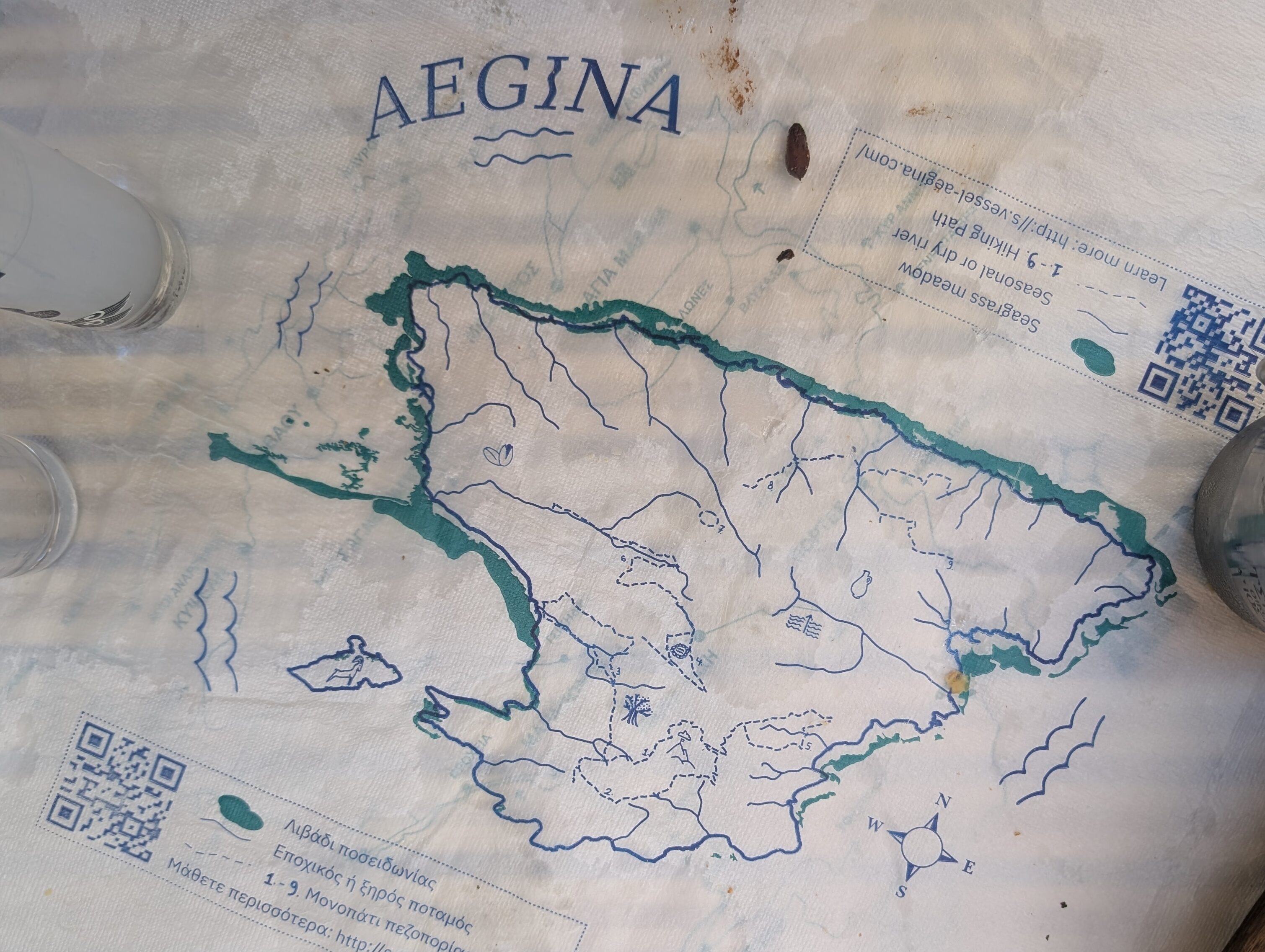
“We see this project as a first phase in our research, and the first step in public engagement”, adds Bridle. “The tablecloths have just one clear call to action: please don’t anchor boats in, or otherwise disturb the seagrass meadows. The tablecloths exist to make their extent visible and to share best practices for living alongside them. Beyond that, we’ll see what happens next, having opened up the possibility of much more work like this in the future.”
Vessel is a collective studio, arts and event space on the island of Aegina, Greece. It is dedicated to exploring traditional crafts and new technologies with a focus on ecological regeneration, non-extractive practice, and more-than-human relations in the context of the Aegean and the broader Mediterranean region. The studio runs creative workshops for students, artists, and their community, about and for their island and produces collaborative, public projects around ecology and regeneration.