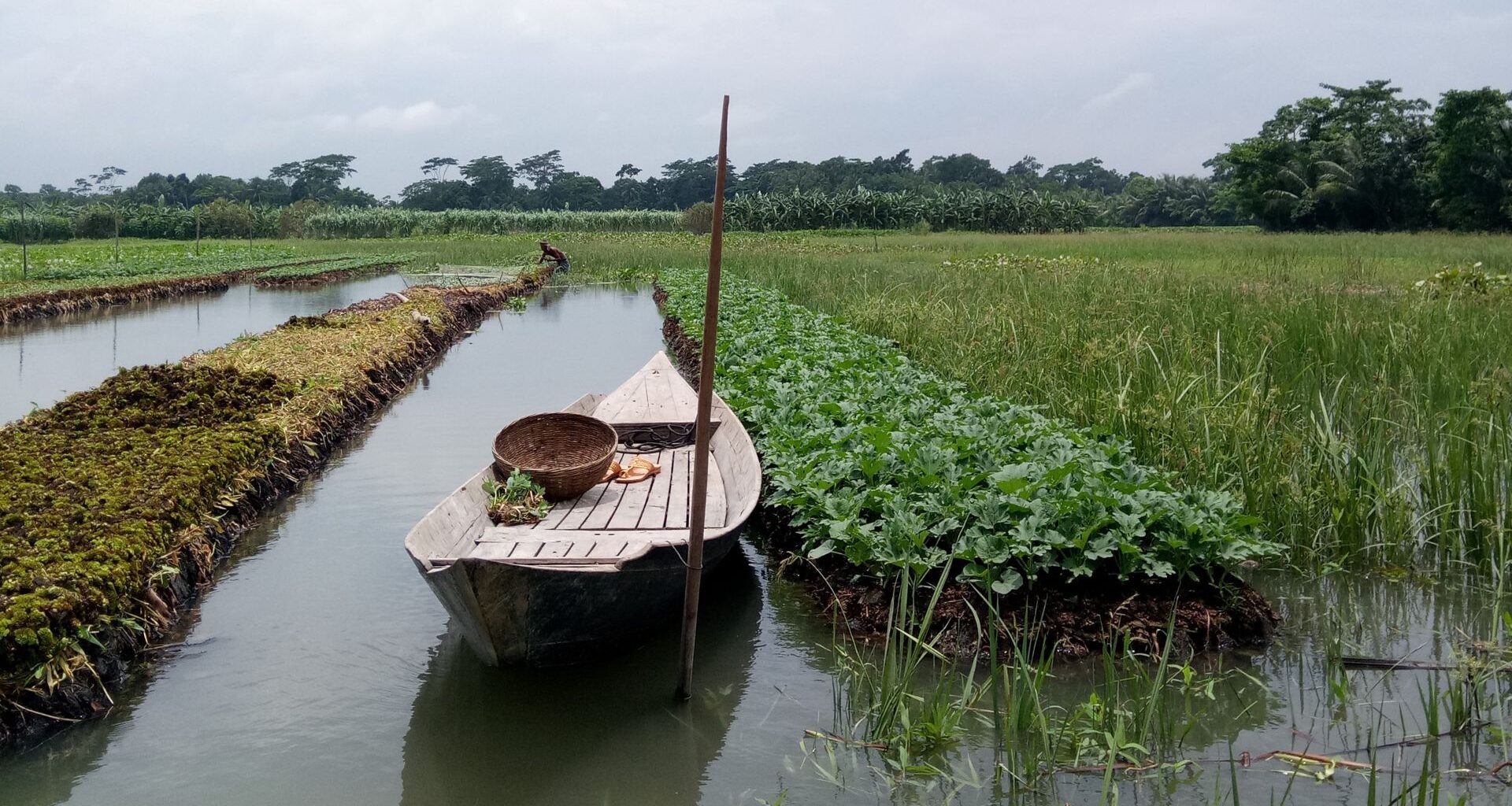
For generations in the flood-prone wetlands of southern Bangladesh, farmers have turned water into rich, arable land by building floating fields from plant materials like water hyacinth and bamboo. As climate change pushes more of the world underwater, this pro-people, nature-based technology is a powerful model for rural resilience and empowerment, writes Vinod Koshti.
In an era defined by the climate crisis, the Global South faces disproportionate impacts that demand innovative solutions rooted in local knowledge and ecological wisdom. Bangladesh, a deltaic nation where floodplains make up over half the territory and seasonal floods regularly submerge arable land for months at a time, farmers have refined an age-old practice that turns waterlogged areas into productive gardens: floating agriculture known locally as baira or dhap cultivation.
Recognised by the FAO in 2015 as a Globally Important Agricultural Heritage System, this indigenous method of cultivation embodies a comprehensive approach to food security, ecological balance, and community resilience that stands in stark contrast to the capital-intensive, high-input agricultural models promoted by corporate agribusiness. As climate change intensifies flooding patterns across South Asia and beyond, the floating gardens of Bangladesh offer critical lessons for sustainable agriculture in an uncertain climatic future.
How they work
At its core, floating agriculture is a form of soil-less hydroponic cultivation. In regions like Gopalganj, Barisal, and Pirojpur, waterlogging can render arable land unusable for up to six months each year; farmers build raft-like platforms using layers of water hyacinth (Eichhornia crassipes), an invasive aquatic weed, combined with other organic materials, including paddy stubs, rice straw, bamboo poles, and coconut coir (fibre). These buoyant structures are stacked over several weeks, decomposing into a nutrient-rich growing medium, providing a platform for growing vegetables, spices, and other crops.
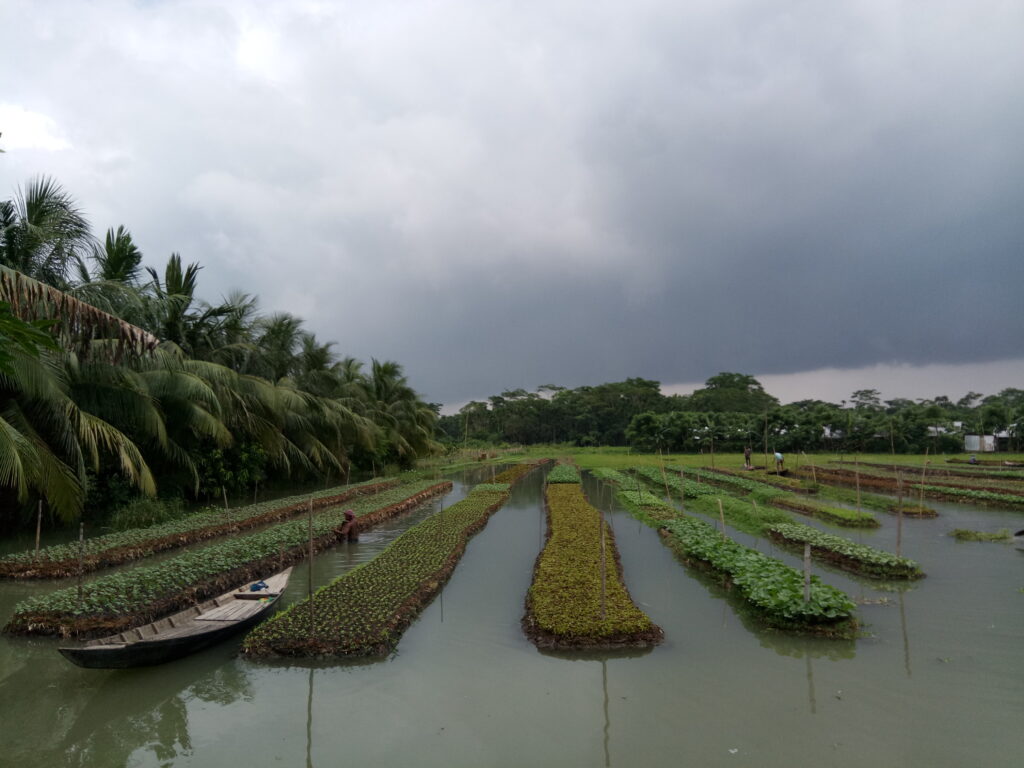
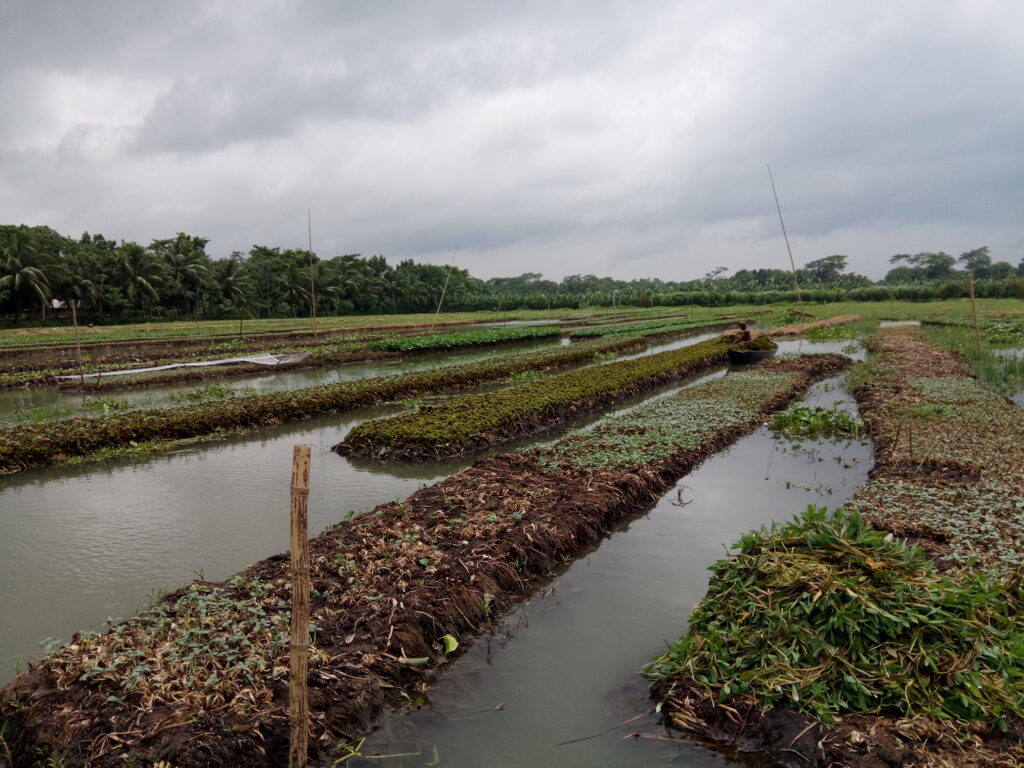
Construction typically begins between June and July, with farmers layering water hyacinths in successive strata at 8-to-10-day intervals. The bottom layer provides buoyancy and stability; the layers above become compost. To accelerate the decomposition process, farmers often incorporate partially decomposed aquatic vegetation, such as water lettuce, duckweed, or immature water hyacinths, into the upper layers of the beds. About 10 days after the final layer is added, seeds or seedlings are planted directly into the raft. The beds are usually narrow and rectangular, because they are easier to tend or move around by boat, with lengths ranging from 10 to 60 metres and widths between 1.5 and 4 metres. Bamboo poles anchor the rafts in place while still allowing them to rise and fall with fluctuating water levels.
Production yields from this integrated system are reliable enough to serve as the primary food source for 60-90 per cent of the people in Bangladesh’s southern wetlands.
The cultivation cycle follows seasonal patterns. During the monsoon (June–October), farmers grow water-tolerant vegetables like gourds, okra, cucumber, eggplant, pumpkin, Indian spinach, taro, and turmeric. As waters recede, the decomposing platforms are transferred to fields where they serve as nutrient-rich mulch for dry-season crops, including tomatoes, cauliflower, spinach, beans, potatoes, cabbage, carrots, ginger, onion, green chilli, and garlic. According to the FAO, production yields from this integrated system are reliable enough to serve as the primary food source for 60-90 per cent of the people in Bangladesh’s southern wetlands.
Variations of these floating gardens are also in use in parts of Myanmar, Cambodia, Mexico, and India. It is often associated with specific indigenous communities who have each given these floating gardens different names: radh in Kashmir, India; pontha in the southeast of India; kaing in Myanmar; and chinampas in Mexico.
Why they matter
The floating garden system delivers multifaceted benefits that address the intersecting challenges of food security, ecological balance, and livelihood resilience. The ecological logic is clear: water hyacinth, which normally chokes waterways and depletes oxygen levels, becomes a valuable input instead of a nuisance. These gardens need little or no synthetic fertilisers or pesticides, which lowers both costs and emissions as well as reliance on agribusiness companies.
Economically, floating gardens enable farming in flood-prone areas, ensuring food security and income generation during periods when conventional agriculture is impossible. Unlike the high-cost technologies promoted by agribusiness corporations, floating gardens rely on locally available materials and traditional knowledge. This makes them accessible to marginalised communities, including smallholder farmers, women, and landless labourers, who often lack the resources to invest in expensive inputs.
Women, who make up a significant portion of the agricultural workforce in Bangladesh, play a central role in floating garden cultivation.
Floating gardens strengthen community resilience by providing a reliable and resilient source of food and income. This resilience is crucial for building long-term sustainability in vulnerable regions. The gender dimensions are particularly noteworthy, as women, who make up a significant portion of the agricultural workforce in Bangladesh, play a central role in floating garden cultivation. The practice empowers them by providing a source of income and food security, particularly in male-dominated rural societies. Additionally, smallholder farmers, landless farmers, and marginalised communities benefit from this farming method, which has a low barrier to entry, thus addressing issues of class and social inequality.
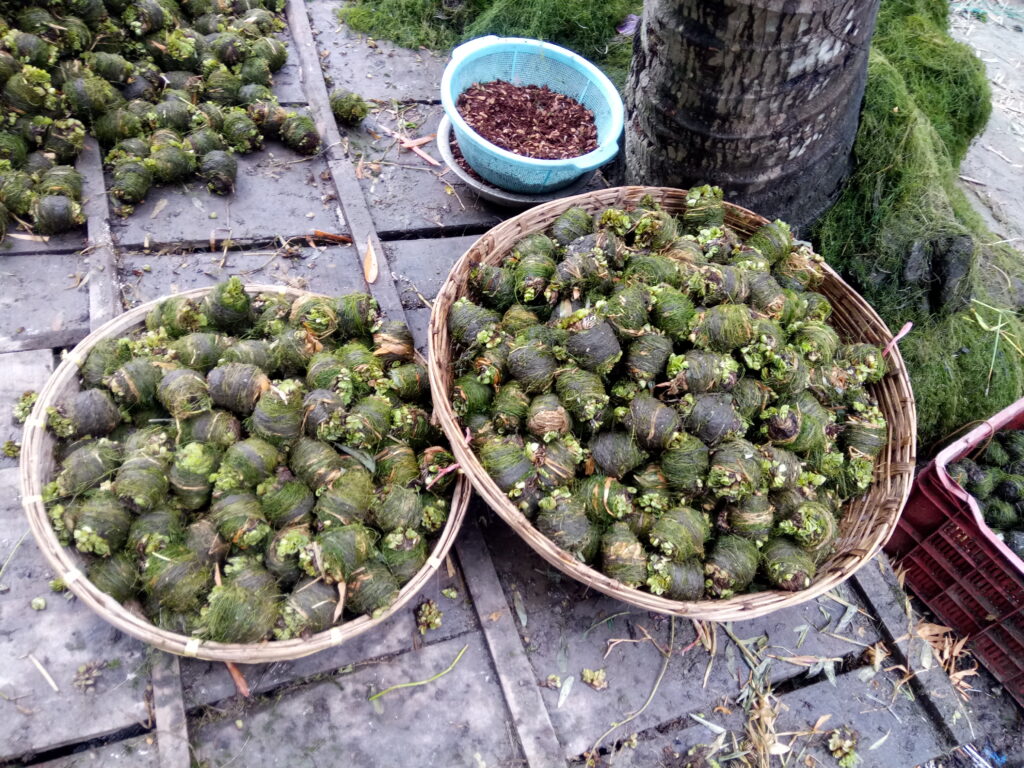
Nutritionally, the gardens also facilitate year-round access to diverse vegetables in regions previously dependent on seasonal harvests. By promoting agroecology and reducing the need for synthetic inputs, floating gardens minimise greenhouse gas emissions. Their localised nature also reduces the carbon footprint associated with transporting agricultural produce.
The advantages and the challenges
The modern success of floating gardens lies in strategic collaborations between traditional knowledge holders and institutional partners. Since the 1990s, Bangladeshi NGOs such as Practical Action Bangladesh and the Bangladesh Rural Advancement Committee (BRAC) have worked to refine and scale the technology by providing technical support, training, and resources to farmers. Their interventions include developing standardised platform designs, establishing demonstration farms, and creating women’s cooperatives for collective cultivation and marketing.
Government support has been equally crucial. The Bangladesh Department of Agricultural Extension offers policy support and funding to promote floating gardens as a climate-resilient agricultural practice. Research organisations, such as the Bangladesh Agricultural Research Institute, conduct studies to improve the efficiency and sustainability of floating gardens. Entities like the UN Food and Agriculture Organisation and UN Development Programme provide funding and expertise to support climate-resilient agriculture projects, including floating gardens.
Small-scale farmers can scale up production by renting out larger gardens, earning four times as much as they did from operating traditional rice paddies.
According to Practical Action Bangladesh, farming families either use their own land for floating gardens or rent if they are landless. Renting land is actually very cost-effective: for the equivalent of eight USD, a farmer can invest in 20 square metres of buoyant land for 4-5 months. The investment usually pays off within 3-4 months, as it provides up to 16 kg of vegetables with minimal operational costs. Small-scale farmers can also choose to scale up production by renting out larger gardens, earning four times as much as they did from operating traditional rice paddies.
Despite its successes, the system has some limitations. It works well in areas that flood for four to eight months per year, yet permanently waterlogged regions need different approaches, and the availability of materials like water hyacinth and bamboo varies by region. There is also a political dimension: wetlands are common property, but in parts of the country local elites have begun asserting control over prime plots near canals, leasing them back to farmers at exploitative rates, disrupting traditional access patterns and exacerbating socio-economic inequality.
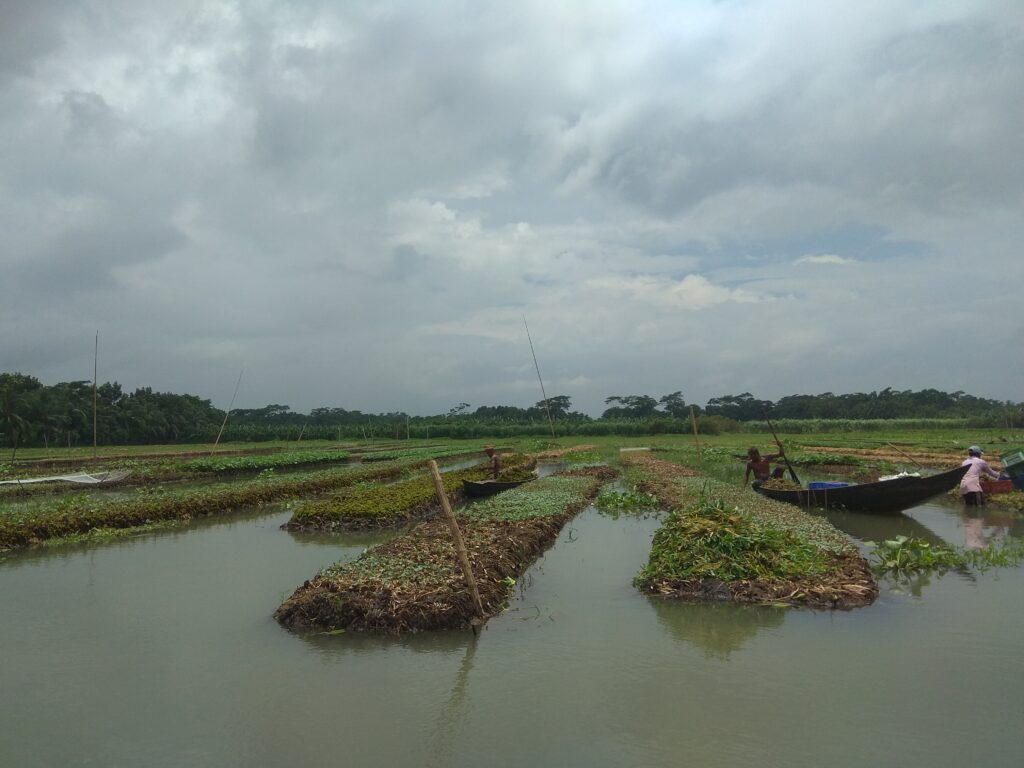
Climate change is posing new challenges. Increasingly erratic rainfall sometimes strands gardens on dry land or overwhelms them with unusually high floods, and saltwater intrusion in coastal areas is pushing researchers to develop salt-tolerant crop varieties and adjustable depth platforms. Whether the system can adapt as fast as the climate is changing remains an open question and a challenge.
Global lessons and transformative potential
The floating gardens of Bangladesh transcend their function as a technical adaptation to seasonal flooding. They represent a holistic paradigm of sustainable development that harmonises ecological balance, economic justice, and cultural preservation. As climate impacts intensify globally, these systems demonstrate how vulnerable communities can be leaders rather than victims in adaptation efforts.
The floating gardens of Bangladesh represent a holistic paradigm of sustainable development that harmonises ecological balance, economic justice, and cultural preservation.
Floating gardens profoundly challenge dominant agricultural development paradigms. They demonstrate how low-cost, nature-based solutions can outperform industrial agriculture in specific ecological contexts. Elsewhere in Bangladesh, industrial agriculture is characterised by a shift from traditional farming towards more intensive practices, including the use of modern technologies and increased inputs like fertilisers and pesticides.
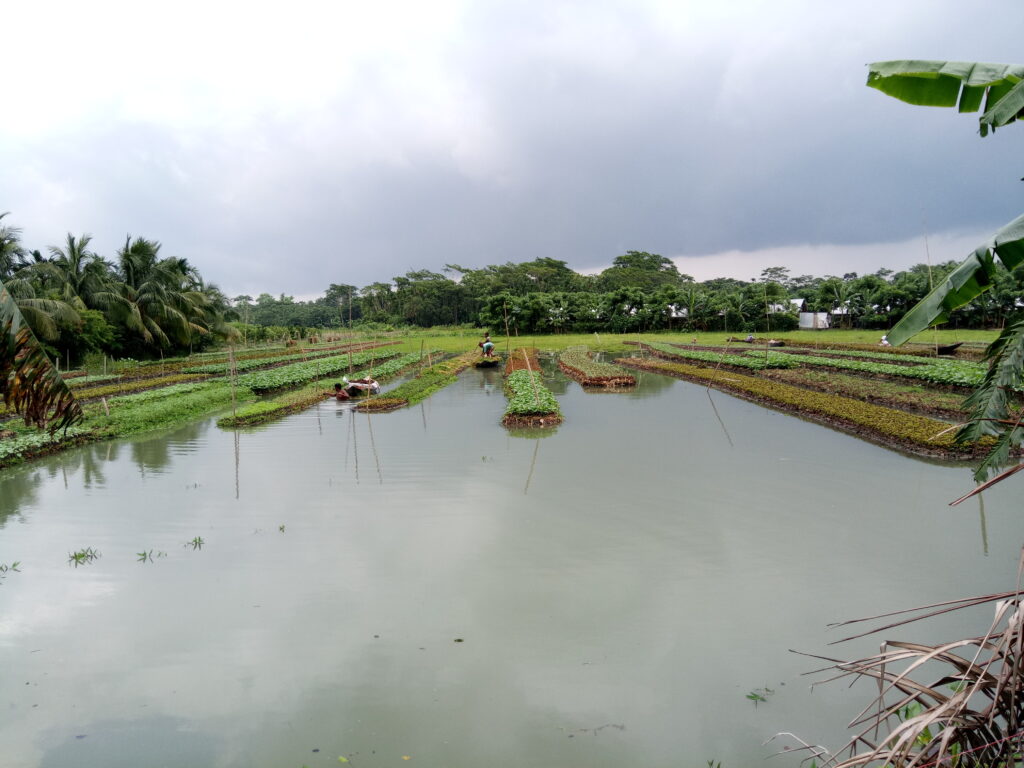
The floating gardens also stand in stark contrast to the high-input, proprietary technologies such as the genetically modified “flood-resistant” crops promoted by agribusiness firms. Several international agribusiness firms operate in Bangladesh, with a significant presence in sectors like seeds, animal feed, and agrochemicals. Some notable companies include ACI Godrej Agrovet Private Limited, BRAC Seed and Agro Enterprise, Bayer, Cargill, and Global Agro Resources Incorporation. The floating gardens concretely realise food sovereignty through decentralised resource usage and farmer-to-farmer knowledge exchange.
True climate resilience emerges not from corporate laboratories, but from democratised knowledge systems that empower communities to innovate within ecological boundaries.
Progressive agrarian and climate movements can draw several critical insights from the floating gardens of Bangladesh. Food sovereignty movements must prioritise agroecological practices that affirm the core values of sustainability, biodiversity, and community resilience, while opposing profit-driven industrial models. Contesting the corporate control of agriculture requires policies that support smallholder farmers and scale up nature-based solutions through alliances between farmers, researchers, NGOs, and policymakers. Governments must redirect funding toward participatory research, training, and infrastructure for community-led adaptation.
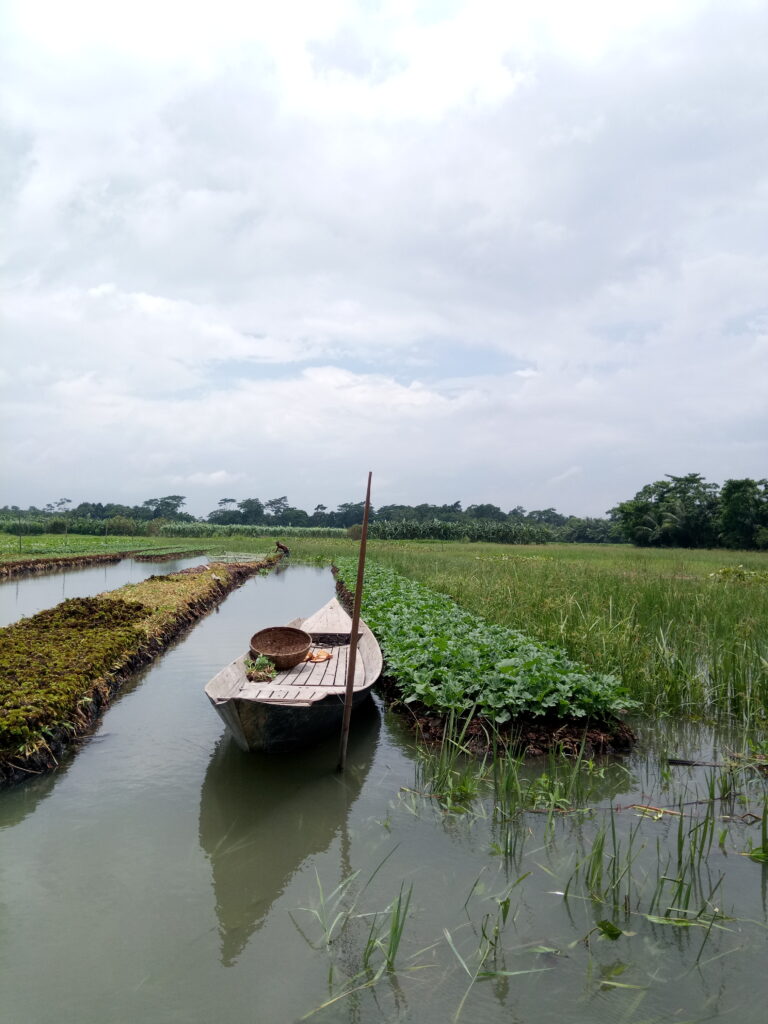
As Bangladesh faces a projected sea level rise of up to 1.5 metres by 2100, floating agriculture will require continued evolution. But its core principles of adaptability, ecological integration, and community ownership will remain universally relevant. These gardens represent more than a cultivation technique; they float atop intergenerational wisdom about coexisting with dynamic ecosystems. Their lessons are unequivocal: true climate resilience emerges not from corporate laboratories, but from democratised knowledge systems that empower communities to innovate within ecological boundaries.
Vinod Koshti is a social development practitioner and researcher working with communities, civil society and social movements in South Asia. Trained in social work at the University of Delhi, his work and writing engage with socio-ecological transformation, inequality, democracy, climate and environmental justice, and the politics of participation and social change.
A longer version of this article was first published by the Rosa Luxemburg Stiftung and is reprinted here with kind permission.
Title image and all other images © Fahmida Akter