To be invited to a meal is to be in someone else’s hands. We sit down at tables we did not set, to food we did not grow, cooked and served by people we may never meet. Who all those hands belong to is a question we rarely stop to ask, especially at a big event, because we have learned to eat without looking too closely and therefore, perhaps, with less gratitude than we should. A review of Lisbon’s inaugural “Dinner of the Year” event by Orlando Lovell.
We know a fair bit about our food. We know the system is broken, that most animals are kept in conditions we would rather not picture, and the reality of where our food comes from is rarely what the label suggests. We are told these things again and again, but at mealtimes we mostly forget, in a good way; we immerse ourselves in the experience, we indulge, and the bigger picture slips away – until it doesn’t anymore.
Earlier this summer, at a workshop with NYU Berlin on Digital Foodscapes and Urban Food Infrastructures, a nutritionist shared that being unable to choose anything in a supermarket, because you know too much about the food system, is a very common side effect of studying nutrition. It takes constant confrontation with information for our perception to shift. And it feels safe to say this is now happening on a growing scale, as people feel inundated with news of failures in the industrial food system at every level and the friction between pleasure and conscience keeps rising. Still, we all know what happens when a plate of food arrives that speaks to our senses – presentation, smell, taste, texture – and distracts us within an engaging social environment – good conversation, care, a sense of sharing. We lean in; we forget everything we were told.
At mealtimes we mostly forget, in a good way; we immerse ourselves in the experience, we indulge, and the bigger picture slips away.
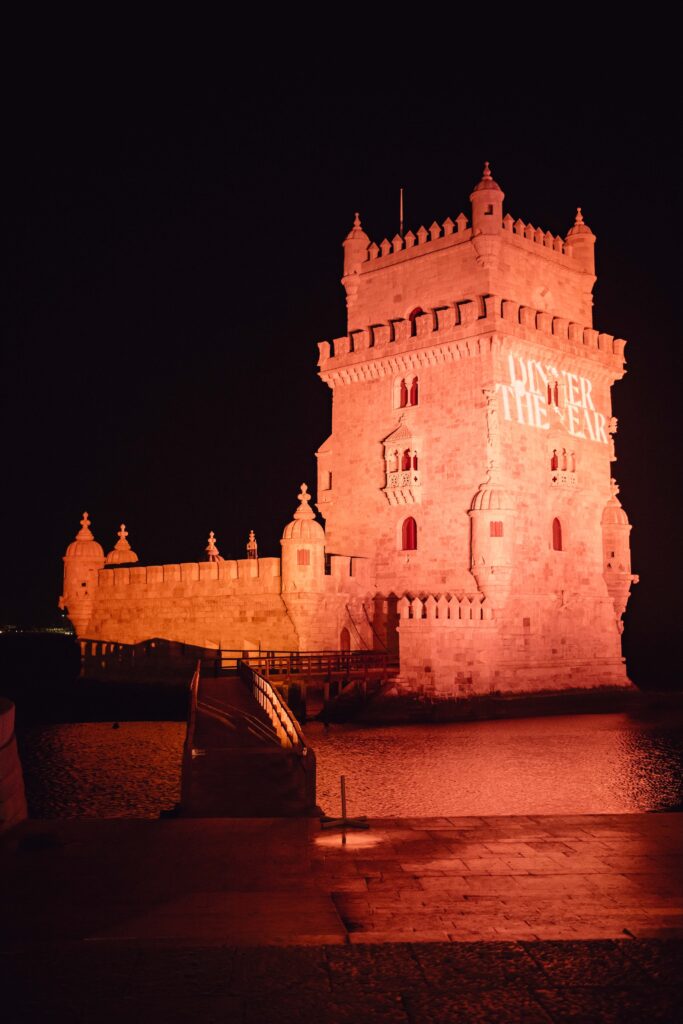
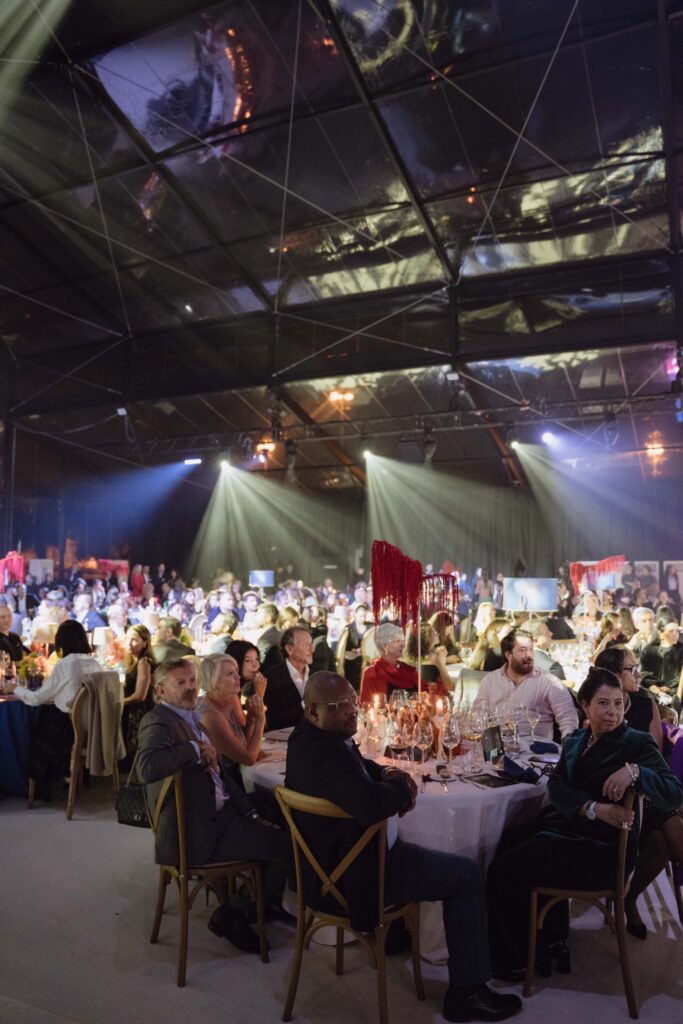
Lisbon’s confidently named “Dinner of the Year”, the first in a planned annual international series, see-sawed between knowledge and indulgence. Drenched in blue light, the evening was a sensorially overwhelming multi-course dinner experience for 650 guests, featuring international star chefs, music, performance, dance, and fireworks. The spectacle unfolded inside a vast tent structure, just a few steps away from the Tagus River and the city’s limestone landmark, the Tower of Belém, an icon of Portugal’s “Age of Discoveries and maritime heritage”.
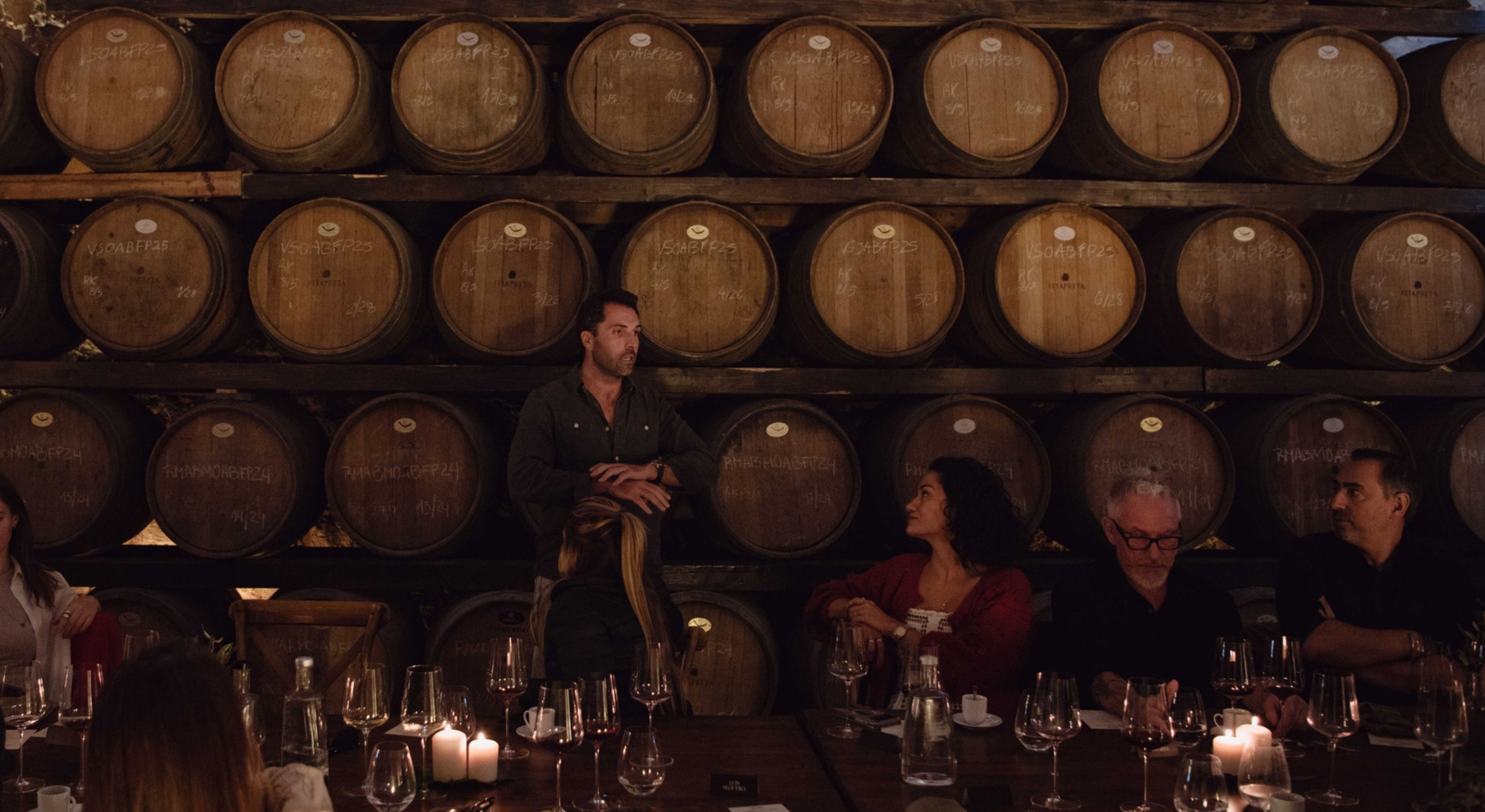
The days leading up to the event, for a small but international press and chef group, of which I was part, were filled with sponsor and tourism activities, ranging from a visit to the beef producer Best Farmer – who spoke about working with Temple Grandin, the animal behaviourist known for humane livestock design – to a long lunch at the Fitapreta Winery, where the owners talked about the struggles of harvesting in extreme heat and a changing climate. The next day included a morning walk through Banco Alimentar (The Portuguese Federation of Food Banks) with its founder Isabel Jonet, who shared honest insights into her work to get excess food from a dysfunctional, waste-based system to those who rely on it, through 21 independent food banks. Isabel purposely keeps the organisation politically independent, building the food bank entirely on donations, as she told us: “we are ‘from’ no one, we are from everybody, giving to those who need”.
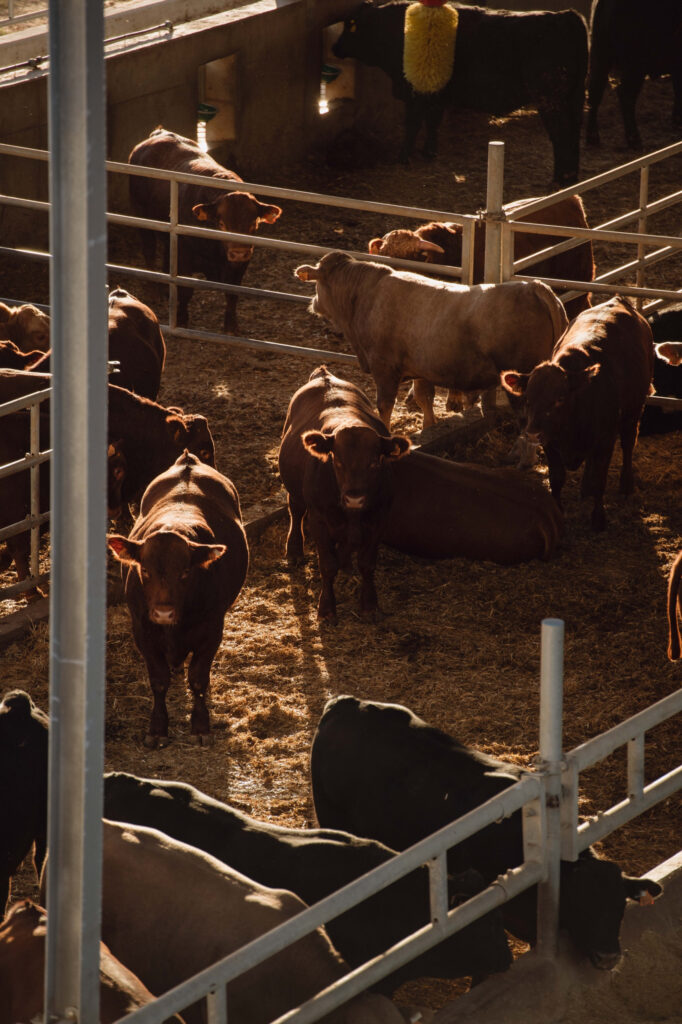
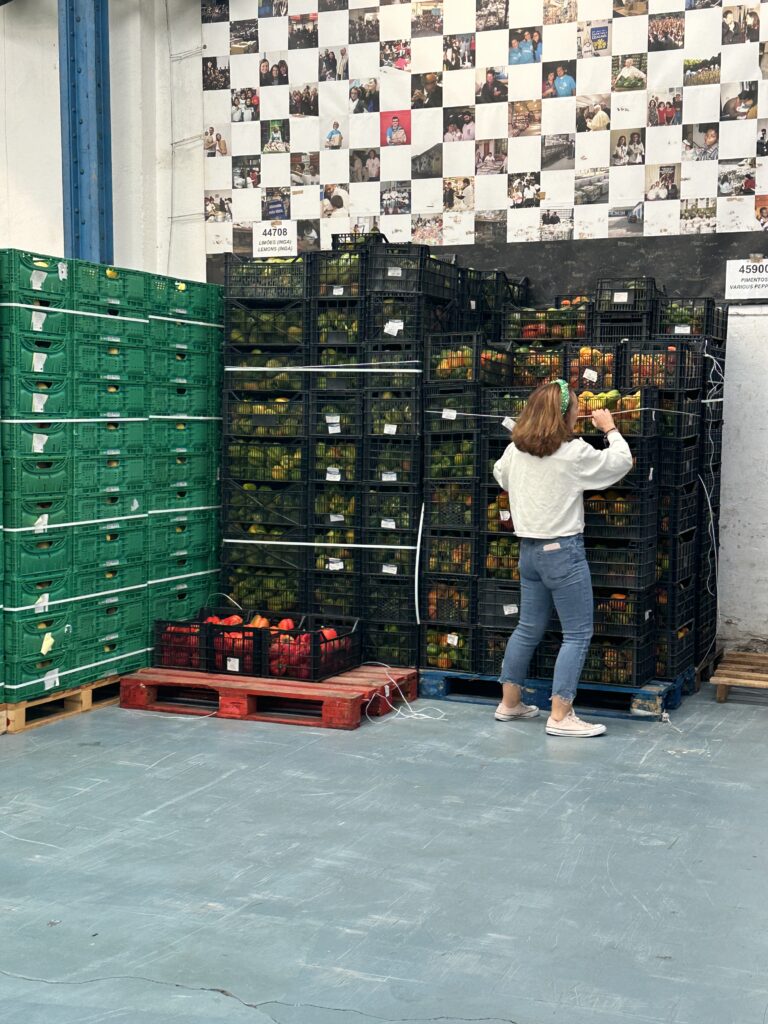
These selected insights into some of the people behind the dinner event represent the network of individuals who work daily within the multi-system failures that are our current reality.
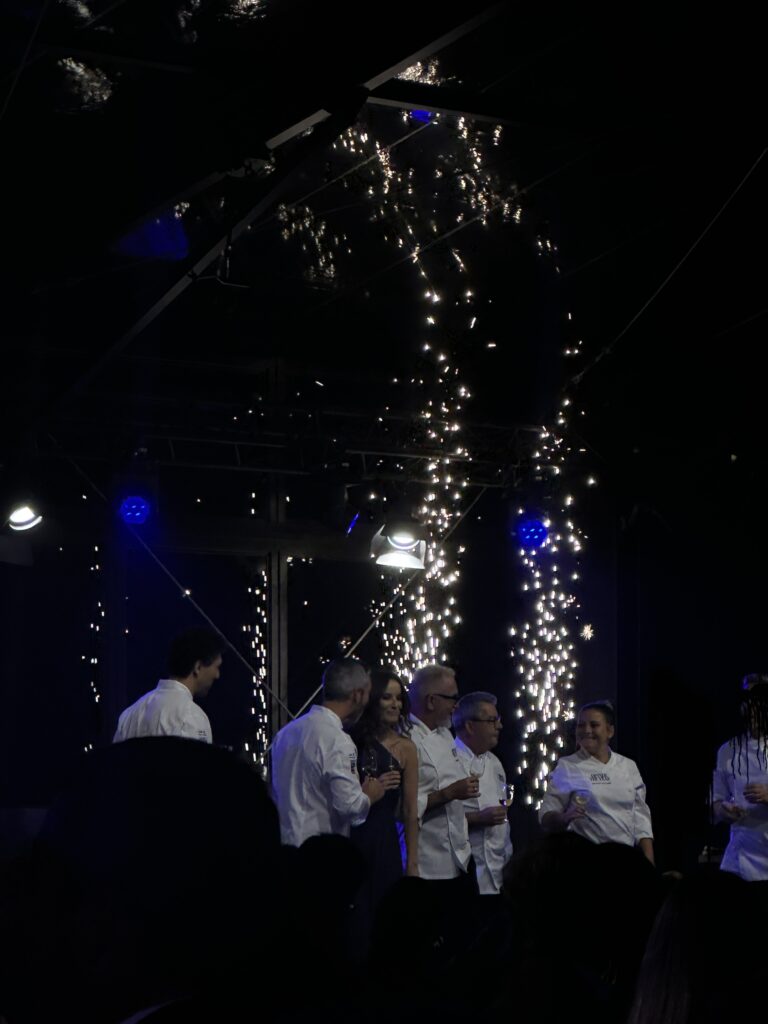
On another level, these selected insights into some of the people behind the dinner event represent the network of individuals who work daily within the multi-system failures that are our current reality. The world-class chefs invited from Portugal (Noélia Jerónimo, Rui Paula, Henrique Sá Pessoa), from Brazil (Jéssica Trindade, Claude Troisgros, Rodrigo Oliveira), and from Miami (Michael Schwartz) are also no strangers to the food system they work in. Inside the bubble of the tent, Lisbon’s who’s-who sat through a Michelin-level dinner staged for hundreds of black-tie guests, struggling to connect across divided tables and exaggerated show moments. Yet despite all its ambition and spectacle, the dinner neither translated the urgencies that anyone in touch with the food system feels, nor invited forgetting.
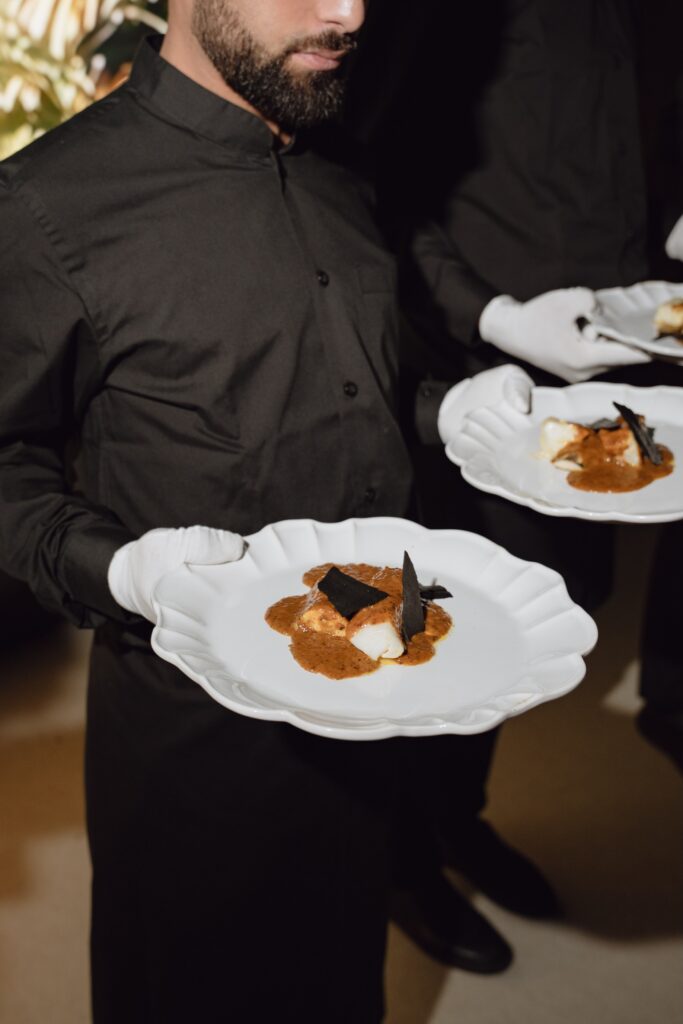
Jéssica Trindade & Claude Troisgros
Yet despite all its ambition and spectacle, the dinner neither translated the urgencies that anyone in touch with the food system feels, nor invited forgetting.
In a press preview interview, Francisco Mello e Castro, the CEO of the events company All In and initiator of the “Dinner of the Year”, shared his vision of having “leaders, creators and visionaries of tourism and gastronomy, not only foodies” at the event. He continued: “Both from São Paulo and Miami, we have a strong community in Portugal. They are people with purchasing power and who like to have fun.” (The price for a table for 10 guests at the event ranged from 3,000 to 4,500 Euros). But in times of mass protest against the cost-of-living crisis and growing reliance on food banks across the world, purchasing power needs to be invested in the right direction: towards a collective future with (e)quality and commensality.
What it is already known for, and worth returning for, is a warmth that needs no stage: the stranger who is fed before being asked, the table that makes room, the stories that arrive with the food.
Fine dining has a way of losing sight of the person it is meant to serve. The guest becomes an audience, the meal a performance for the arbiters of taste, and a tool in the chase for “stars”. It’s a value system that’s already failing the people who cook and eat within it. Portugal’s hospitality doesn’t need to join that chase. What it is already known for, and worth returning for, is a warmth that needs no stage: the stranger who is fed before being asked, the table that makes room, the stories that arrive with the food. A dinner of the year showcasing “the art of living” and such special food cultures could have celebrated that.
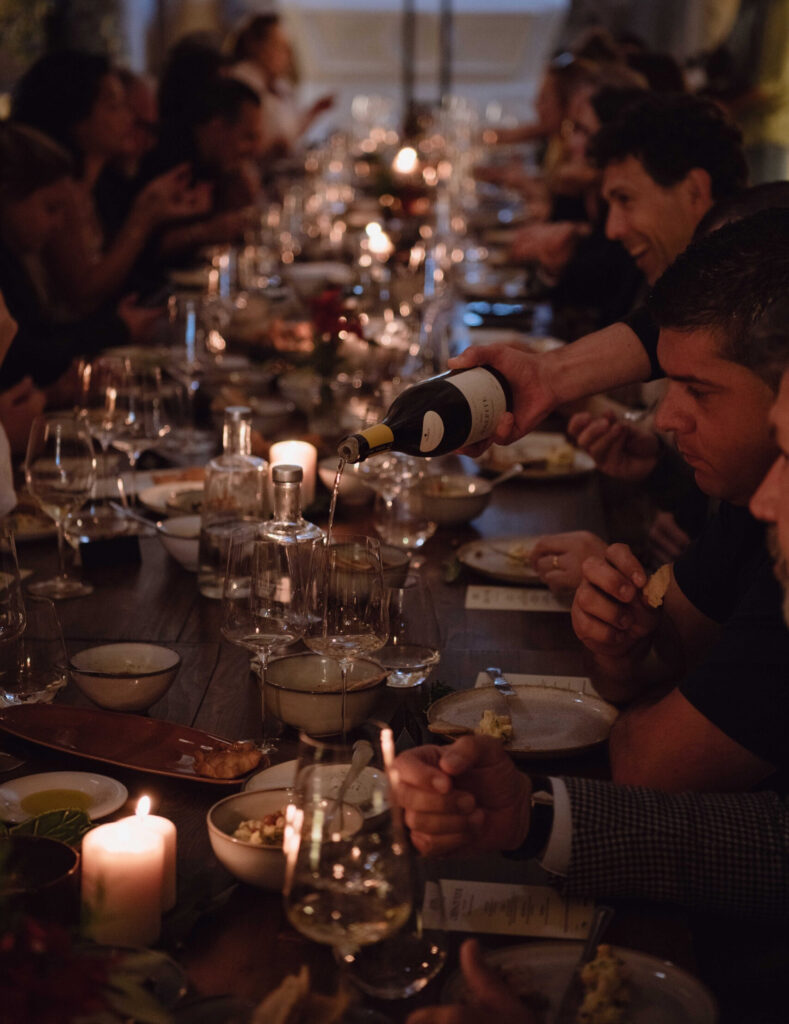
Hospitality in its oldest sense is a wonderfully ambiguous term. It begins with inviting people in to share food, turning potential enemies into protected guests: hospes (guest/host/stranger) and hostis (stranger/enemy). Inviting strangers, or even enemies, to share a meal is one of the most ancient and universally human acts of fostering common understanding, care and community. That notion has long been forgotten in many of our extractive contexts, and not because of scale. A food bank can feed strangers by the thousand and still be hospitality, while a dinner for 650 can leave guest and host never meeting. Good hospitality rests on trust. To put oneself in the hands of the hosts, cooks, and service is to trust them to choose the produce, clean the stations, and serve the food with care. Thereby turning strangers into friends.
Orlando Lovell is the co-founder of The Common Table and has been working within and around food, design and communication for many years. She studied “Food Non-food” at the Design Academy Eindhoven and developed and led the international Food Design platform, the Dutch Institute of Food and Design, together with Marije Vogelzang. She’s exhibited a number of her projects, such as The Politics of Cake, across Europe and has continuously used food as a medium in her teaching practice. Until recently, she was the creative director of the gastronomy group Grill Royal, where she oversaw decisions around food, hospitality and the dining experience on an everyday basis.
Header and gallery images courtesy of organisers.