Artist-researcher Crystal Bennes talks to The Common Table about her new book We Eat the Earth. It’s a documentary art project that critically challenges the implanted idea of the wonders of extractive industrial agriculture with global examples of farmers working towards food production without fertiliser.
The Common Table: In your book, you trace fertiliser’s journey through eight very different places, including occupied Palestine and Western Sahara, places with fraught political histories, past and present, not just agricultural ones. What made you choose these particular sites over other fertiliser-producing or -consuming regions?
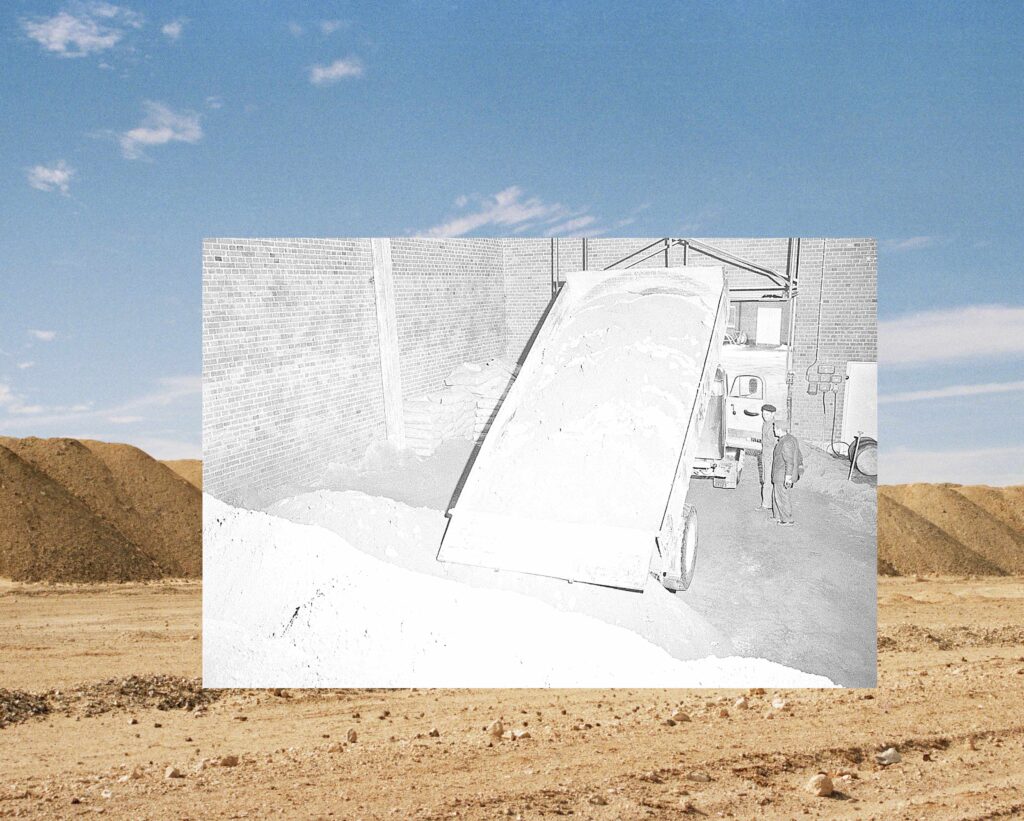
Crystal Bennes: In the global north, I think there’s still a worrying amount of misconception that imperialism, militarism, capitalism and the climate crisis are separate problems rather than interconnected symptoms of political structures that are failing us. From the outset, I knew I wanted to choose reciprocally-linked sites for each of the three main fertiliser nutrients – nitrogen, potassium and phosphorus. There were many places I could have chosen and a lot I left out. In the end, I chose places that I felt were impactful in terms of thinking about how the local and the global intersect in terms of reciprocity and interconnection.
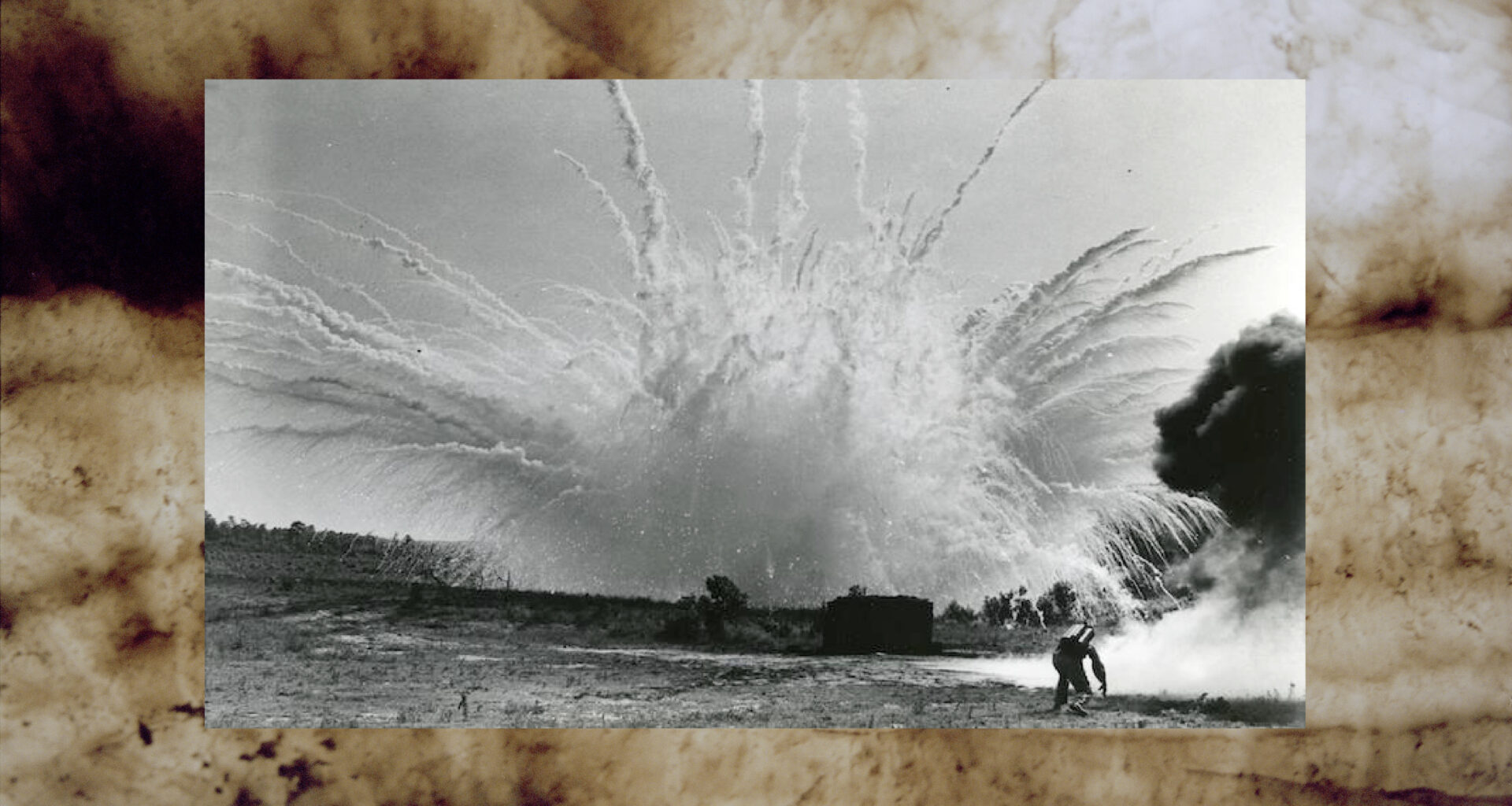
Some of the sites, like occupied Palestine and Western Sahara, speak to the ways in which industrial systems of food production – being extractive practices – are deeply rooted in imperialism, capitalism and militarism. Some of the sites are, in fact, sites of production and consumption, but again, I didn’t want to look at these sites in isolation. I wanted to look at how, for example, political attempts to curb fertiliser-linked environmental pollution in high-consuming regions of Europe are facilitating the rise of far-right farmer politics in the Netherlands. That section of the project also traces direct historical links between the German multinational BASF, one of the largest chemical companies on Earth, and the twin uses of fertiliser as plant food and a weapon of warfare, through chemical gases and explosives.
The final selection was informed by my political commitments and interest in making visible the social, material and political impacts of industrial systems of food production, as well as the environmental harms.
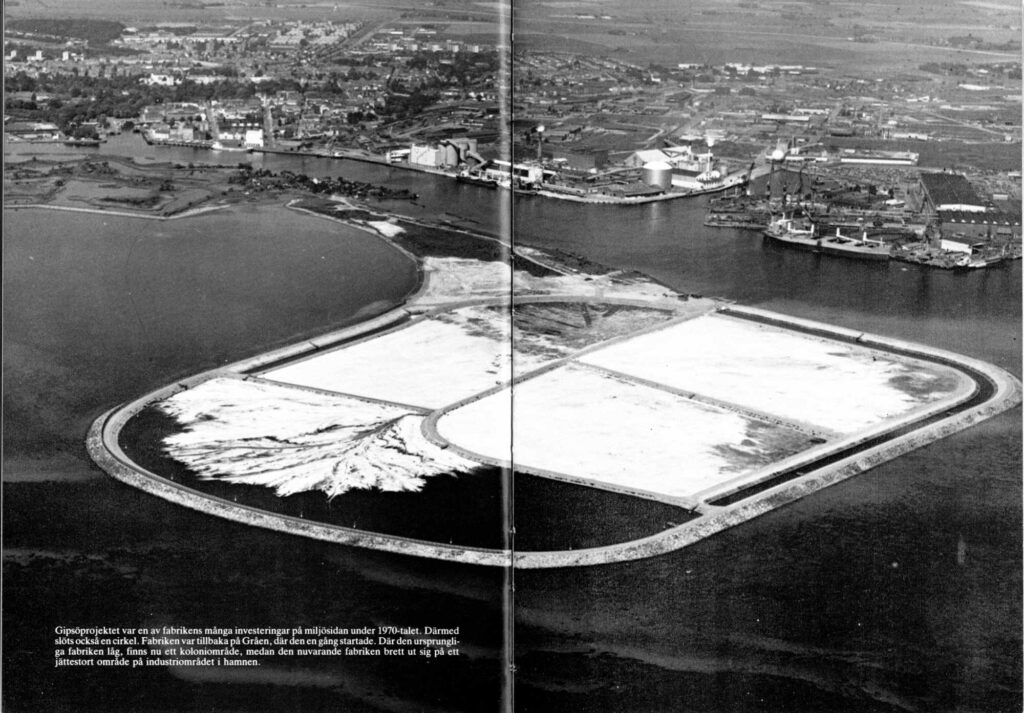
This project began, a bit by accident, through my interest in a tiny island off the coast of southern Sweden. The island is wholly artificial, created from the radioactive waste byproduct of phosphate fertiliser production. It was really through trying to understand how that island came into being, by tracing the material supply chain of phosphate fertiliser production around the world, from sites of extraction to sites of production and consumption, that led me to the specific sites I ultimately settled on. But the final selection was informed by my political commitments and interest in making visible the social, material and political impacts of industrial systems of food production, as well as the environmental harms.
The Common Table: How did visiting the sites in the book change the story you set out to tell?
Crystal Bennes: The section on potassium is a good example to answer this with. I visited a potash mine in Boulby, in Yorkshire, which, comparatively speaking, is more environmentally friendly and low impact than traditional mining operations. I intended the site to be part of my hopeful future section, but it wasn’t until after visiting that I realised the mine was owned by Israel Chemicals Limited, a company that traces its origins to British Mandate Palestine and is today involved in supplying white phosphorus munitions to the Israeli and American militaries. Sometimes it happens that I arrive at a location with a sense of how it fits into the story I want to tell, only to realise that there’s a very different path I want to follow.
Sometimes it happens that I arrive at a location with a sense of how it fits into the story I want to tell, only to realise that there’s a very different path I want to follow.
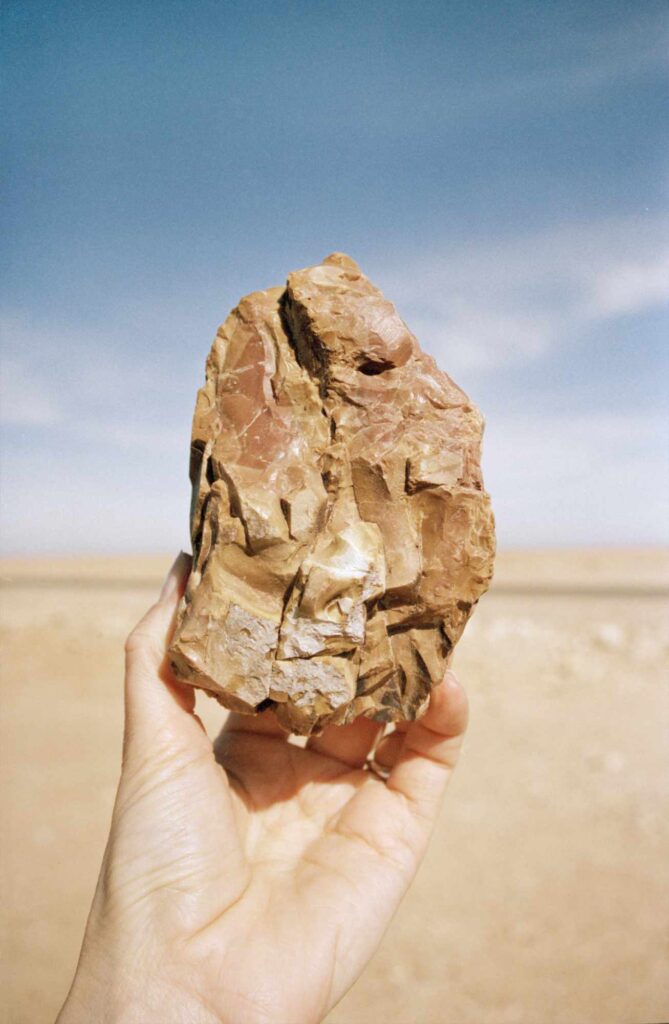
The Common Table: Some of your past work (on malpractice and the effects of commodities trading on resources such as copper, cobalt, and cotton in the amazing O, for example) maps material flows similarly. Is We Eat the Earth an extension of that method applied to fertiliser, or did this subject demand a different approach?
Crystal Bennes: We Eat the Earth is definitely an extension of similar methods from O applied to the specific commodity of fertiliser. But in O, I deliberately looked at the commodity trading companies and how European and American legal and financial structures empower these companies to extract resources and wealth from the Global South, to facilitate corruption, pollute environments and harm communities with impunity.
O speaks to the harms caused by some of these trading companies, most of which many people have never even heard of, companies like Glencore, Gunvor, and Trafigura. O was largely desk and archive research, including many declassified documents from court cases, newspaper reports, newsletters and statements from activist groups. The geographic spread of that project was much larger, and the output was a constructed archive of evidence against the commodity traders, alongside a large Jacquard wall hanging and a film elucidating Switzerland’s role in providing legal and financial cover for the commodity trading companies, almost all of which are headquartered there.
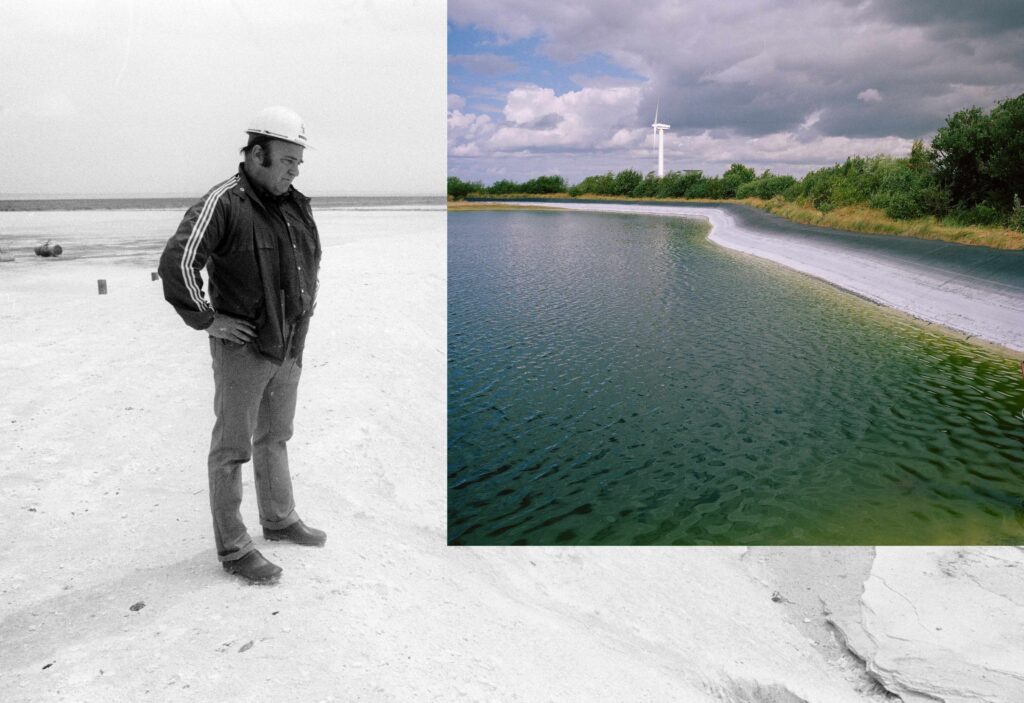
We Eat the Earth was always envisioned as a photographic project, rather than an installation piece, so the approach was somewhat different. I was also informed by a different set of theoretical ideas. Artist Imani Jacqueline Brown’s framing of extractivism as a cosmology, for one, was a big influence. As was Jane Hutton’s book Reciprocal Landscapes, particularly her argument that no site of extraction can be understood in isolation from the place its wealth or waste ends up.
I’m still looking at the commodity and the circulation of the commodity, but I’m spending more time trying to understand and articulate the structural and material violences done to people and places by and through comprehending extractivism in this cosmological sense.
I’m still looking at the commodity and the circulation of the commodity, but in We Eat the Earth, I’m spending more time trying to understand and articulate the structural and material violences done to people and places by and through comprehending extractivism in this cosmological sense. To go back to the example of ICL above, thinking about fertiliser in this reciprocal way is what allows me to connect a seam of potash in Yorkshire with the Balfour Declaration and dispossession of Palestinians to the supply of white phosphorus weapons currently being used illegally against people in Gaza by the Israeli occupation army.
The Common Table: The book ends with farmers working to produce food without fertiliser. After tracing so much damage, was that inclusion a deliberate counterweight you planned from the start, or something you found along the way and decided the book needed?
Crystal Bennes: This aspect wasn’t there from the very beginning, but it emerged quite early nevertheless. Much of my work involves a forensic unpicking of pretty horrible histories, which is depressing and often draining. I’ve made much more of an effort in the last two years – for my own sanity and effectiveness as much as anything else – to learn about and draw inspiration from people making life otherwise, not exactly outside of, but certainly in resistance to, the suffocating structures of capitalism, imperialism, and militarism.
The Common Table: Can you give us a couple of examples of the farms you visited?
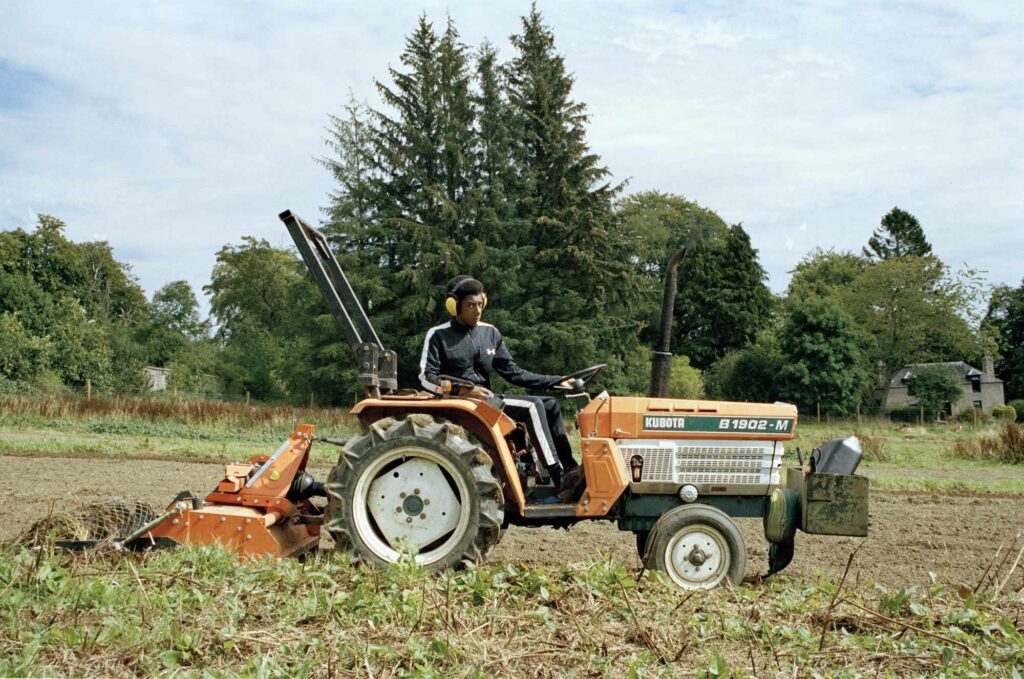
Crystal Bennes: The first fertiliser-free farm I learned about was Tolhurst Organic in southern England, via George Monbiot’s 2022 book, Regenesis. Tolhurst doesn’t use any industrial or organic fertilisers, and it was fascinating to visit the farm and get a better sense of how they approach plant nutrition and soil health.
They don’t use animal manure because scientific testing they did showed that antibiotics remained active in soil even after being rotted down. They’re also concerned with the material impact of any extended supply chains – so questioning the impact of where the feed comes from for animals supplying outside manure.
It’s a very thoughtful and thorough approach. Instead of feeding the soil with fertilisers, their methods are grounded in overall soil and ecological health, practices like intercropping, green manures and ground covers, wildflower banking, crop rotation and rest. None of this is revolutionary. It’s just that the profits demanded by industrial agriculture no longer allow for these kinds of methods, leading to all kinds of crises with biodiversity decline and loss of soil health.
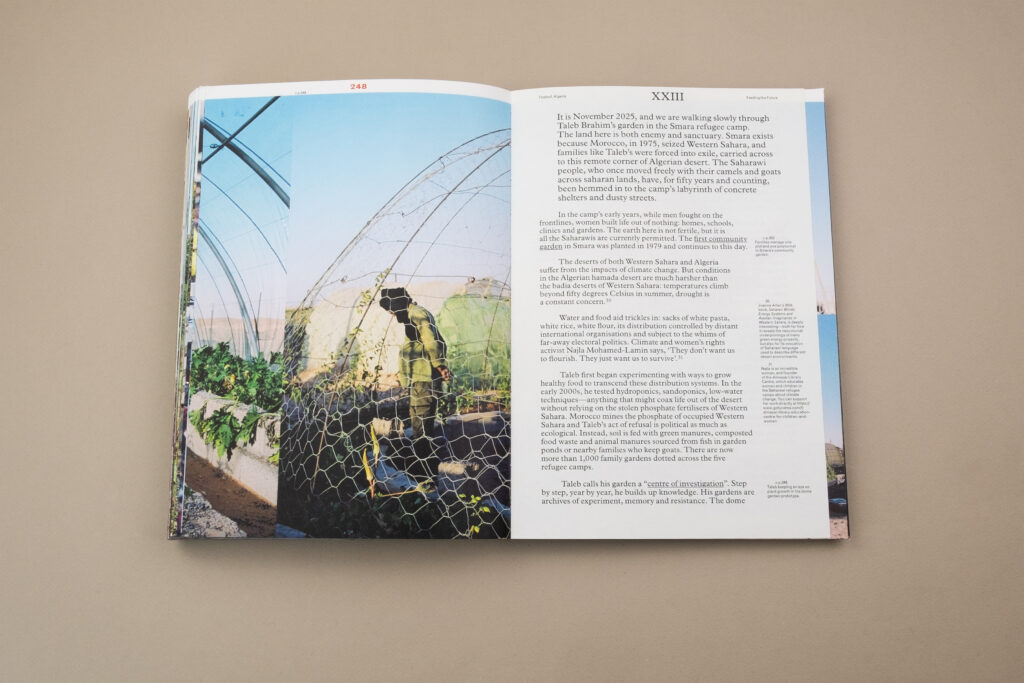
Later on, when I was researching the Moroccan colonisation of Western Sahara – in large part to secure mineral resources – and the dispossession of the Saharawi people to refugee camps in Algeria, I encountered the work of Saharawi agricultural scientist, Taleb Brahim. Taleb talked of how, even though the Saharawis were nomadic and not farmers, he was developing methods of growing food in the harsh climate of the desert camps – without using any commercial fertiliser – as a form of political resistance against not only the Moroccan occupation, but also the imperialism of the E.U. and international aid structures. Given the links I was making between phosphate extraction in Western Sahara and environmental pollution in Europe, it felt hugely important to include Taleb’s work in this section.
I could have made the whole book from just these kinds of examples of alternative, sustainable practices, but I do still think that it’s important to not look away from the destructive forces of extractivism so that we are better equipped to fight against them.
Honestly, I could have made the whole book from just these kinds of examples of alternative, sustainable practices, but I do still think that it’s important to not look away from the destructive forces of extractivism so that we are better equipped to fight against them.
The Common Table: You work across visual art and writing, and often spatially. What made you decide to make We Eat the Earth in book form with a written narrative and collaged images?
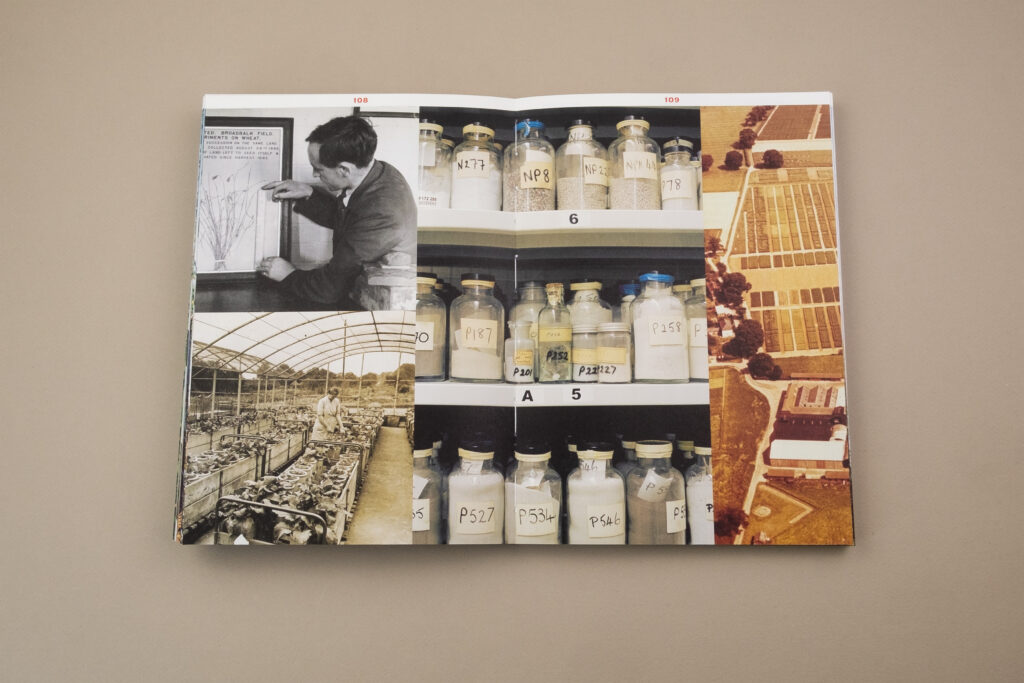
I love making books, but not every project is right for a book. I work across many forms – textile, sculpture, video, installation – and often it’s just a case of waiting until I know I have the right project for a book. For me, this tends to be a photography-based research project. Formally, photography books are often quite strict, linear forms of organising information. You see a lot of books which are page after page of hero images with blank space. That’s not an approach that works for me. I’m much more of a maximalist, but that’s because I don’t think in terms of single, self-contained images.
My visual thinking is spatial and layered. If you come to my studio, my walls are covered in mapped images and texts that link across and through histories and places.
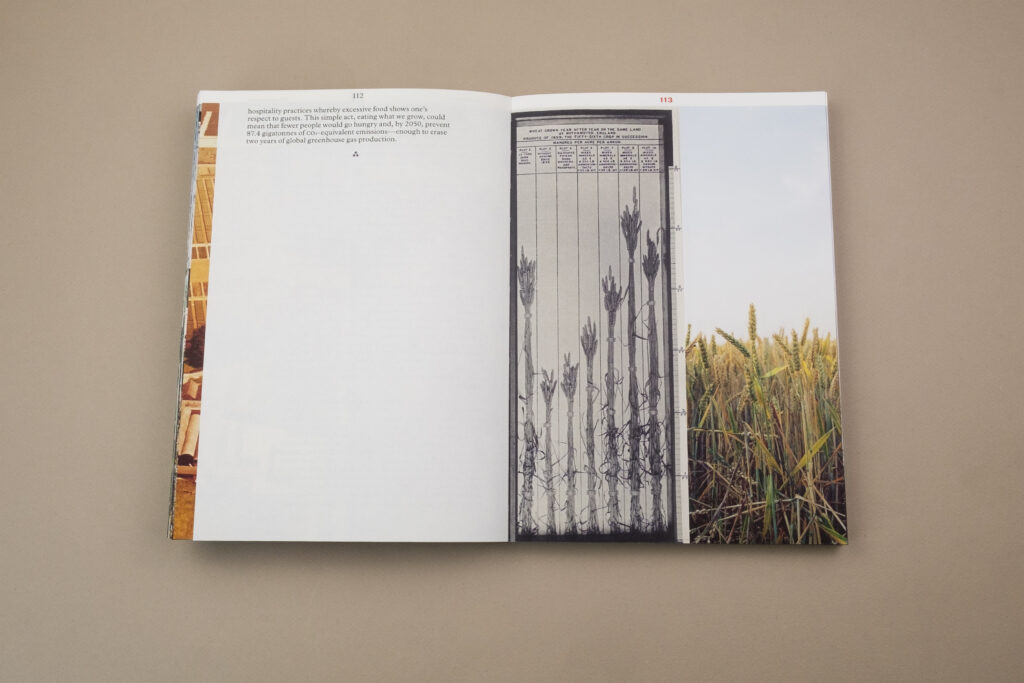
My visual thinking is spatial and layered. If you come to my studio, my walls are covered in mapped images and texts that link across and through histories and places. So, for me, the book is also an exercise of reading against the linear form, reading against the single image, to read the images reciprocally – alongside the text – so that the connections between the places gradually become visible, or more like impossible to unsee.
This is the second book I’ve made in collaboration with designer Carel Fransen with The Eriskay Connection. Although I worked on the project alone for many years, sequencing, editing and refining the conceptual thinking, the book itself is a real collaboration between myself and Carel. I trust his expertise and sensitivity in relation to taking a project and turning it into an interesting book. It was Carel’s idea to have an unbroken line of images throughout, which is a pretty radical design choice for a photobook, but I think conceptually it works very well with the subject and the material.
The Common Table: After completing your research for this project, do you believe the planet can be fed without fertiliser, without giant-scale industrial agriculture?
Two of the most shocking things I learned during the research for this project were that around five per cent of total global greenhouse gas emissions are directly linked to fertiliser production and use, and that nearly one-third of all food production is wasted. Current systems of food production use too many nutrients for too little food, a huge amount of which is wasted.
Current systems of food production use too many nutrients for too little food, a huge amount of which is wasted.
Over and over during the making of this book, I encountered the unevidenced argument that, without industrial fertiliser, half of the world’s population would die. This is a lazy reformulation of the argument some scientists have made that, without the 20th-century invention of synthetic nitrogen, the Earth’s population might have naturally capped at around four billion people instead of over eight billion.
So not only do I believe that the planet can be fed without industrially-produced fertiliser and industrial agriculture, but I believe it to be absolutely imperative. About 44 per cent of the Earth’s habitable lands are used for agriculture. But the vast majority of these lands are used to grow crops for livestock and biofuels, and to raise livestock for meat and for dairy. Given that meat and dairy production are fertiliser-intensive while providing a comparatively tiny percentage (around 17 per cent) of the world’s calories and (38 per cent) protein, fertiliser production contributes to appalling social, political and environmental harms without actually feeding the planet.
Given that meat and dairy production are fertiliser-intensive while providing a comparatively tiny percentage of the world’s calories and protein, fertiliser production contributes to appalling social, political and environmental harms without actually feeding the planet.
However, I wouldn’t necessarily say that I support blanket calls for fertiliser-free food production. Saharawi growers in Algeria use fertiliser in the form of organic waste from their own animals and kitchen scraps. And when used as part of industrial systems of food production, organic manures can be just as environmentally harmful as synthetic or mineral fertilisers. It’s important that we understand systemic impacts and local conditions and demand changes accordingly. It’s also important that we advocate for soil health and for food sovereignty, for the use of perennial crops and against food waste, and that we move towards a large-scale shift to plant-based diets. It won’t be one solution alone that solves the problem, but a combination of many different tactics. As Diane di Prima said: “No one way works; it will take all of us shoving at the thing from all sides to bring it down.”
Crystal Bennes is an artist-researcher based in Scotland. Her new book We Eat the Earth: How fertiliser sows inequality, fuels wars & destroys the planet, is a research project addressing how collective human appetites reshape the planet through food production. In it, she traces the material flows of nitrogen, potassium, and phosphate fertiliser across eight sites, from Sweden to Western Sahara, England to occupied Palestine, and Germany to the Netherlands in words and images, exposing the destabilising environmental and political costs of fertiliser production. The book is available to order from her website here.
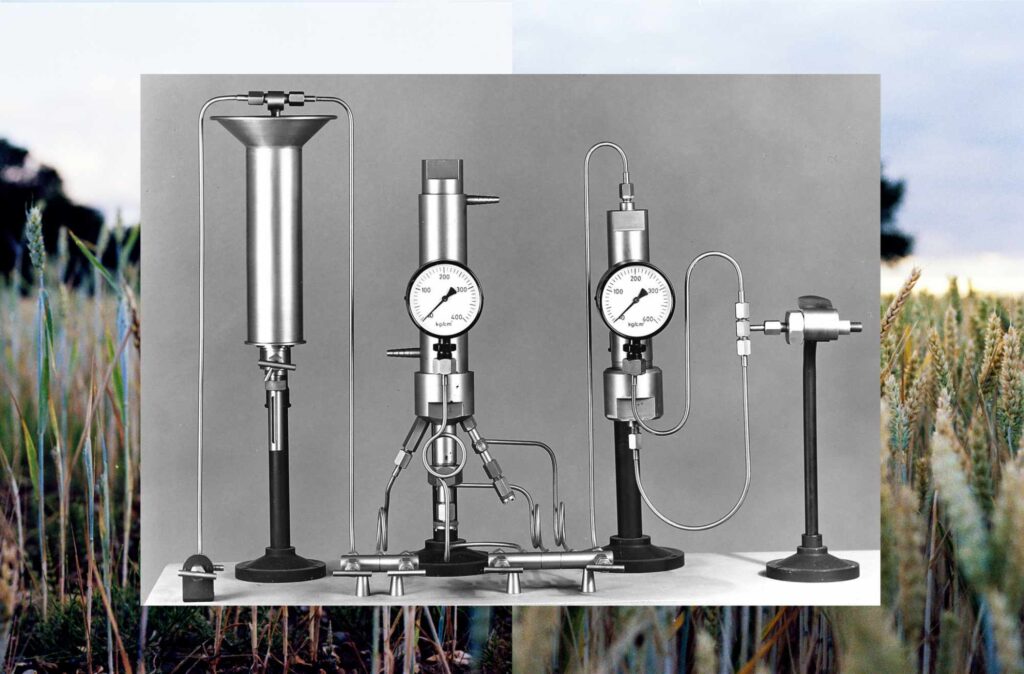
Title image: Collage of two trial plots of the Broadbalk field experiment (the one on the left receiving no fertiliser with the one on the right receiving high levels of fertiliser) over an archive photograph of the test apparatus used by Frans Haber to develop his famous Haber-Bosch method of chemically synthesising nitrogen-based fertiliser, © and courtesy of Crystal Bennes.