Diego Armando Contreras Peralta is a biologist and honey expert from the uniquely biodiverse region of Oaxaca, Mexico. He talks to the Common Table about his project Nunduve, a way of doing business with honey that focuses on educating consumers about honey’s origins and environmental issues, rather than just its flavours and uses. By emphasising the importance of personalised experiences over traditional sales, Diego aims to foster a deeper connection with the land and its bees.
Orlando Lovell: In Oaxaca City, one of the world’s gastronomic hotspots, where food is a major business, your approach to being someone who deals in honey is really unique. Tell us about yourself and how you got here.
Diego Contreras: I come from a family that belongs to the fields of Oaxaca. I studied biology in Mexico City and then returned to Oaxaca 11 years ago to start working as a professional biologist in beekeeping, but I also worked with corn, coffee, cacao production, and many other traditional systems of food within Oaxaca. A few years ago, I started my own project called Nunduve, it means Oaxaca in the indigenous language of my parents, who are Mixtec, or Ñuu Davi.
In the beginning, I wanted only to sell things from the fields, like a middleman, but a good one. But then I found that my work is not only about all the knowledge that you can have, but also about how you can share that knowledge with people through experiences. So it’s about creating a chain in which experiences allow us to have education that also gives us curiosity and insights to help people make better choices when they buy these kinds of products. Basically, that’s my thing: an educational approach to open new markets.
Sophie Lovell: Who are you teaching? Are they farmers, schoolchildren, or tourists…?
Diego Contreras: It’s a combination. I mean, my life is a combination. The experiences are mainly for the consumers, clients and tourists, because a producer does not have time to come and have these experiences. This is why I also decided to make a festival about bees every year, which we started last May. I wanted to create a space that was for beekeepers and researchers, for talks, for workshops, etc.
Everything I do is a celebration of bees and their people, and with constant consciousness about all the topics surrounding them. When most people think of bees and honey, they think it sounds like it’s a perfect natural product. But there are serious issues affecting honey production. I’m not just talking about pesticides, but deeper problems that are not easy to acknowledge if you’re not really into bees.

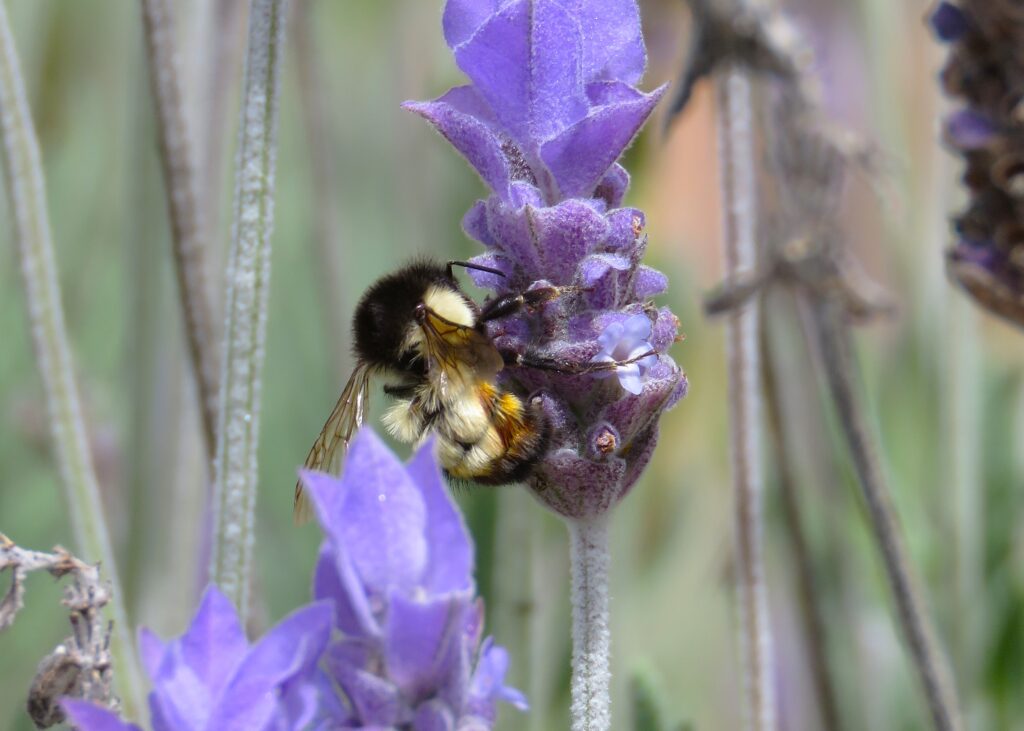
For example, there are over 20,000 species of bees in the world, but the species most people are familiar with is Apis mellifera, the Western honey bee. This is only one species in 20,000, but it is the one used for commercial honey production. And that is a problem because although it is native in Asia, parts of Africa and Europe, it is not native in South America. So if you introduce those bees here, they are basically out-competing the local bees. That’s something that people don’t really think about. So it’s topics like this, alongside everything that the honey can tell you about the landscape it comes from, are the things that I like to discuss, teach, and share.
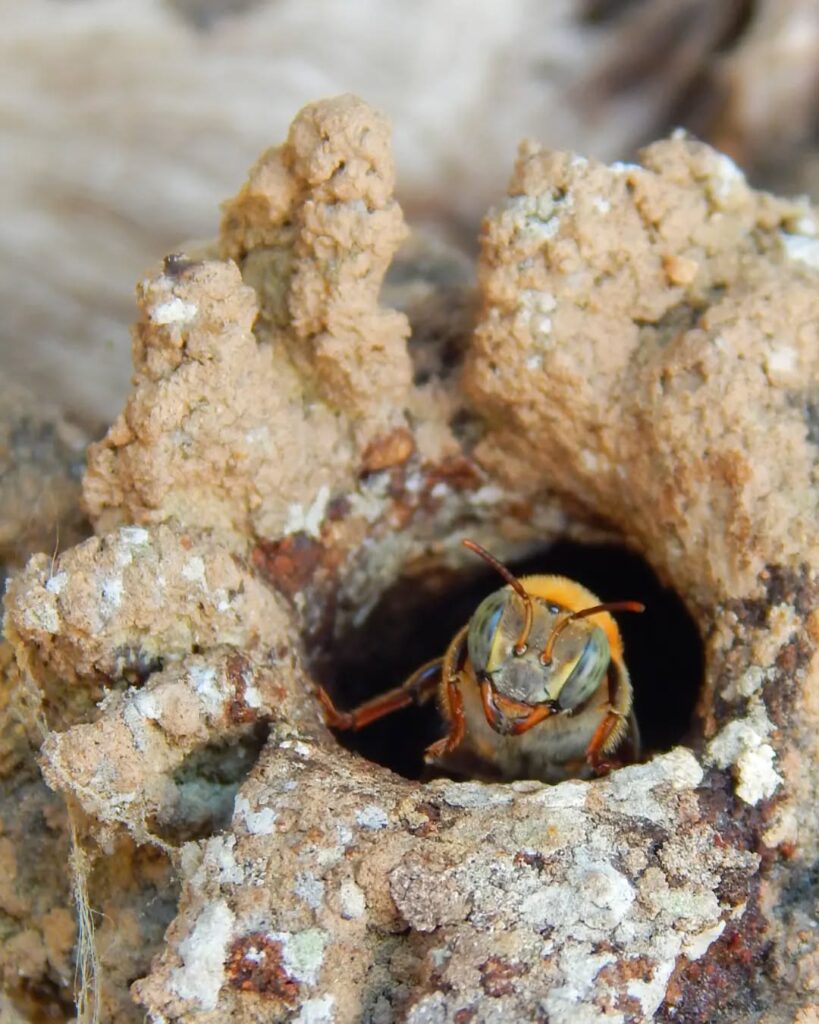
The stingless bee is another example; they’re completely different insects, and there are more than 500 species of them around the world, all of them in the tropical lands, not just Mexico. You can fall in love with stingless bees: they are tiny, have no stinger and produce this honey that is fermented with amazing flavours, some of which are not at all sweet.
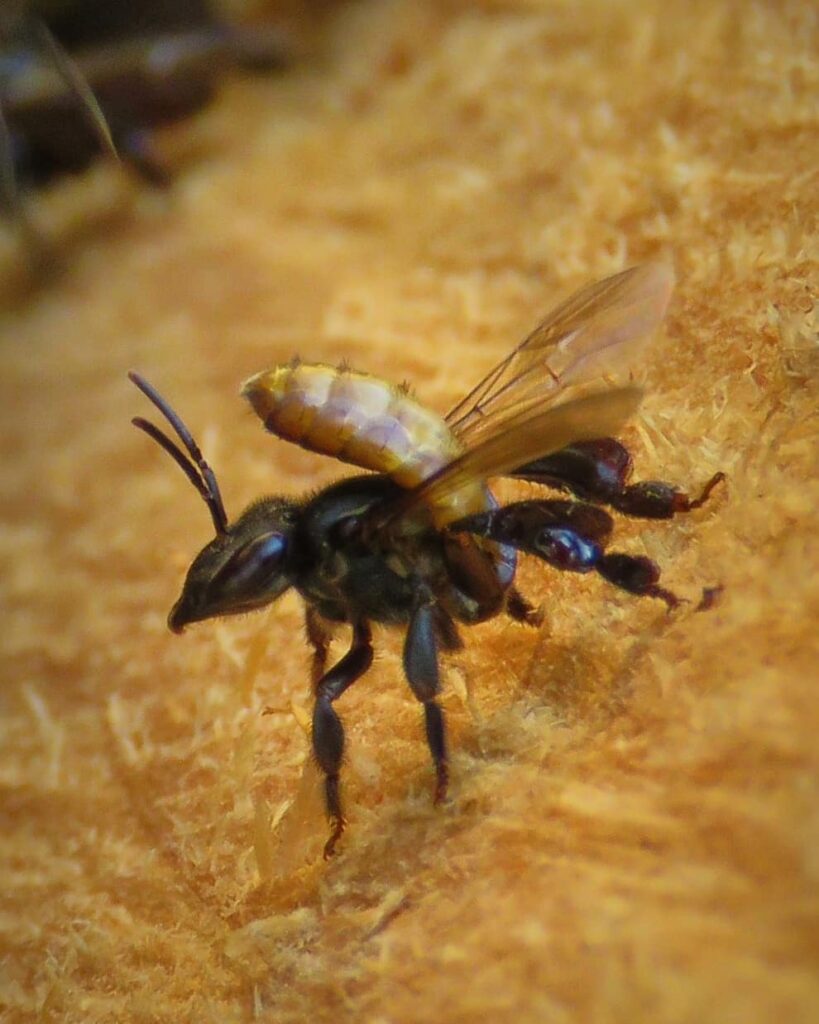
You can fall in love with stingless bees: they are tiny and produce this honey that is fermented with amazing flavours, some of which are not at all sweet.
We have some 2,000 different species of bees in Mexico, but all the attention is on Apis mellifera. This species is an alien amongst the bees; their behaviour is completely different from what other bees are doing. For example, they are the only ones that die after stinging you. They also produce the only honey that is not fermented. We need to talk about these things in order to understand how things were before, in a different world. As crops start to fail and populations start to fail, we need to go back to the old ways and old species, as we do with the seed banks.
Sophie Lovell: Are you just focusing on beekeepers in the Oaxaca region, or would you like to expand on that?
Diego Contreras: At the moment, I am focused only on the state of Oaxaca because Oaxaca is a very complex place. We have so many different ethnicities*, languages, ecosystems, traditional food systems, and all these different landscapes that give us infinite types of honey. That is enough to focus on. I really like being here, where I belong and where I have found this opportunity to work with this place.
I’m not trying to focus on the flavours and the gastronomic approach, because I’m not a chef, and I do not have this background. I have a biology and anthropology background, so what I want to talk about is the relationship with the land, with my friends, and the challenges. It’s not all romantic, right? The story of coffee and the story of cacao, for example, are stories of slavery, even now.
Oaxaca is a very complex place. We have so many different ethnicities, languages, ecosystems, traditional food systems, and all these different landscapes that give us infinite types of honey.
The commercial production of honey started more or less 100 years ago, when humans started to control the reproduction of bees artificially, which is not at all romantic. Everyone is talking about all the bee population collapses. We are blaming climate change, pesticides, the shift in land use, and all that stuff. But nobody is saying that there is a problem with artificial breeding. Nobody’s talking about that because all of us were born into a world of modern beekeeping, where there is no more natural evolution. A big problem with the collapse is that domestic bees are weak. Nobody’s talking about that. So that’s what I want to do: fill in these gaps that we are not discussing.
Orlando Lovell: How did you decide this was going to be your path?
Diego Contreras: If you ask me what I would prefer to be doing, I would prefer being on my own, having a piece of land, maybe becoming a farmer, and not being dependent on this. But it’s what I must do in this world. I decided to stay and do this because people needed someone to stay, and I knew that no one else would do it.
Sophie Lovell: That’s the responsibility that comes with knowing and seeing, right? You’re a communicator. You’re starting something really great. We’ve talked to a lot of people who are starting their own thing, finding their niche in a new ecosystem, or trying to find a better way of doing something. I think, from what we see, finding others of a like mind seems to help them a lot – building that network of people who understand the world in the same way and agree to support each other in finding new ways, even if it is only by sharing their experiences.
Diego Contreras: It is about exactly what you have described. This is about being between different worlds, being a link between different things, and my very real need to understand the processes behind everything. What we know as the world today is a mixture of cultures with a complex history, where we don’t really know where things actually come from.
This is about being between different worlds, being a link between different things, and my very real need to understand the processes behind everything.
Take cacao, for example. Have you ever tried the cacao bean? It is dark and bitter, so we assume the Mexican people who were drinking cacao thousands of years ago were drinking this bitter stuff. But it’s not like that at all. The bean we use to make chocolate nowadays is one that the Spaniards preferred. The original Mexican cacao bean is light and not at all bitter; it tastes nutty, and it was always combined with corn. But nowadays, even we Mexican people think that the Aztecs, Mayans and all these people were drinking a bitter cacao, because a particular variety and industrial production overlaid old traditions and processes. Understanding this is very important for me.
Orlando Lovell: We recently interviewed filmmaker Cass Gardiner from North America about this difference between native knowledge and academic knowledge…
Diego Contreras: It’s very interesting how people come here and share things with me. For the last 10 years, everything I knew was from working in the field or in academia. But since I opened this place, people have come to me with their own knowledge. Two people recently brought me books with completely different perspectives from what I had heard before. One of them was Rudolf Steiner’s book called “Bees” from 1923, in which he says that bees are becoming weak because there’s no more natural selection.
Sophie Lovell: So you are saying honey production has the same issues as other types of industrial farming based on monocultures, like Cavendish bananas, or Holstein Friesian cows?
Diego Contreras: Yes, and we have all been born in a place and time where this industry is normal, and we cannot see beyond that. Rudolf Stenier and other people saw it because it was new in those days. They saw the advantages but also questioned what would happen to natural systems. That’s why I think that sometimes not even researchers are talking about the right issues.
I think that sometimes not even researchers are talking about the right issues.
Orlando Lovell: You mean, they’re not questioning the industrial process because we are all functioning within it? This is what we are trying to do with The Common Table as well; looking at people working towards system change, who are inspecting the whole underbody of systems.
Diego Contreras: Exactly, and that’s my approach.
Orlando Lovell: Do you see a way out? Do you feel part of a dialogue about what to do towards a completely different approach, or are you still at a point where you’re gathering and sharing information and questioning?
Diego Contreras: We need each other. We must understand what we are and what our impact is in this world. It took me years to realise that. The modern world is about being part of the system, the machine. There are difficulties, but once you find yourself and your role, it becomes not about what you want or the machine wants, but what you can do – not for yourself but for others.
Sophie Lovell: We think that’s really important. It’s these interstitial practices, these people, like you, who are between the disciplines and practices, who actually facilitate shifts and change. You’re saying that you get people visiting you here, allowing you to get new input all the time. This is what we get from The Common Table. We’ve changed our thinking so much over the last few years that we’ve been doing this.
Diego Contreras: This world is more like a farm, instead of a free world where animals and humans alike are told, “these are your roles”. It’s not about being yourself anymore. It is hard; the only thing I trust is that I do not understand the whole thing. That’s the only thing I’m sure of.
This world is more like a farm, instead of a free world where animals and humans alike are told ‘these are your roles’. It’s not about being yourself anymore.
I do know that my role is now and here. I spent years complaining and fighting against the system. When I arrived at the communities, my goal was not to be what I am now; it was to spread the word of rebellion, of autonomy today, to the people. But what I heard back was people saying, “all of that sounds great, but I need to sell my coffee”, and I saw that this is also what they need.
At first, I was ashamed of selling, until I realised that it’s not about me. It is like shining a light on the people. They are navigating a real world, more real than mine, with nature as their point of exchange.
I didn’t want to sell anything. I come from a family that had a little store in Mexico City. And since I was a kid, I was selling things to people – only junk. And in academia, you cannot be selling things. So that’s why, in the beginning, I didn’t want to sell things. But the people were asking me to please sell their things. At first, I was ashamed of selling honey or coffee or whatever, until I realised it’s not about me. It is like shining a light on the people. They are navigating a real world, more real than mine, with nature as their point of exchange.
Orlando Lovell: So do you also mediate between the producers in the area and help find outlets for their honeys?
Diego Contreras: No, I did that before – finding someone who can buy lots of honey, lots of coffee, but it never worked out. People always want cheap things, but what we produce in these areas are high-quality things. It was impossible, because they wanted to pay less than half of what the producers were asking for. The honeys that I sell come from very specific areas of Oaxaca, where the producers are working organically, without over-exploiting anything, not even themselves.
The honeys that I sell come from very specific areas of Oaxaca, where the producers are working organically, without over-exploiting anything, not even themselves.
I’m a very sceptical person. That’s why I do not have honey from all the beekeepers here. Only the beekeepers who are my friends, with whom I work and trust. They share their knowledge and their products. You need to start with the right people. The ones that show off, or who want to use the bees and beekeeping as a pretext to be recognised, won’t find a place to root here. The best approach, not only to honey, is to listen to the story of the person. Diversity is the rule. Diversity is the key to understanding the world. So the more stories that we hear, the better the picture we have.
*Oaxaca has the largest indigenous population in Mexico, with over 1.2 million people speaking an indigenous language. There are 16 main ethno-linguistic groups with over 170 different dialects, reflecting a richly diverse tapestry of cultures, customs, food habits and rituals within the region
Diego Armando Contreras Peralta is the son of farmers and merchants from Oaxaca. He grew up in Mexico City but always loved the countryside, nature, drawing, and complex processes. He studied biology in Mexico City, and for 11 years, he has specialised in the promotion and preservation of traditional foods from Oaxaca, with honey, cacao, corn, coffee, and quelites (edible wild greens) being his main areas of focus.
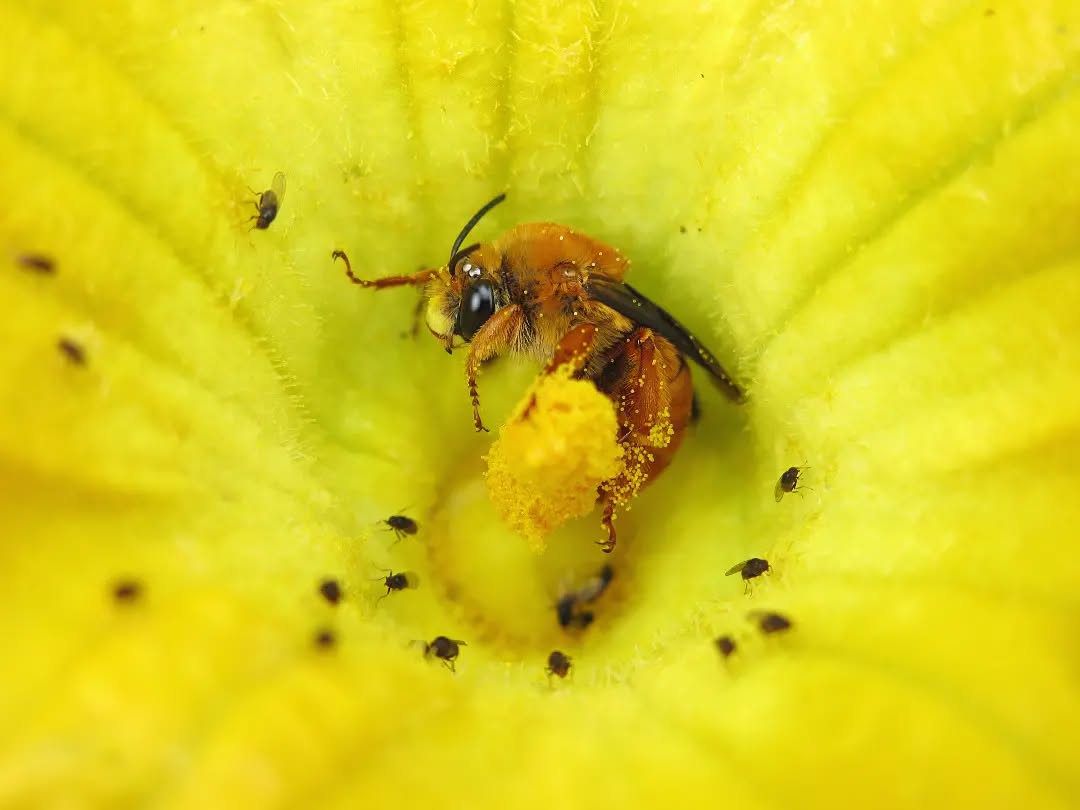
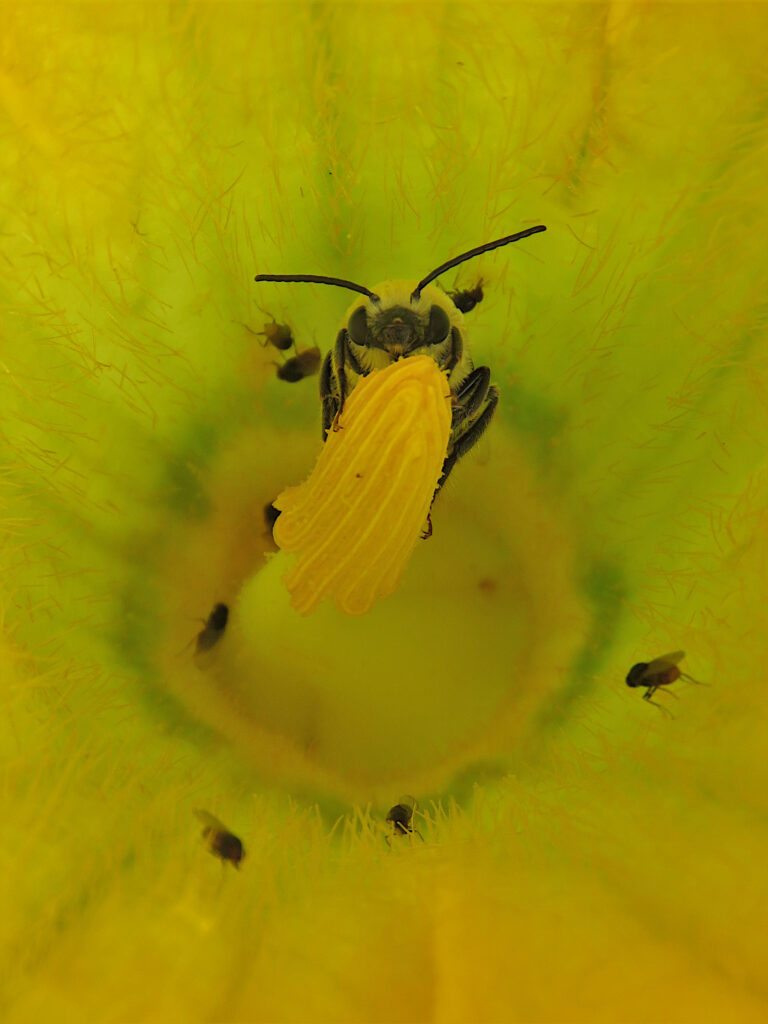
Title image: Xenoglossa sp. (squash bee) sleeping in a squash flower, photo © Diego Armando Contreras Peralta