Chef, writer, culinary student and father, Nathan Farrell, addresses the static, received wisdom of the recipe in formal culinary education. He calls for a decolonised food literacy taught in a way that remembers without freezing and transforms without erasing; one where every ingredient becomes a question.
When most people think of a recipe, they imagine a list of ingredients, quantities, and methods. But peel back the layers, and you find something far older and more human: a pattern of memory. It’s a collection of stories that shape it, the people who made it, the mistakes and triumphs that marked its journey. A recipe is more than the sum of its parts. It can be a site of transmission; of culture, history, lived experience, problem-solving, and ingenuity. As culinary historian Máirtín Mac Con Iomaire notes in his 2009 doctoral thesis, cooks in classical Athens “learnt and transmitted by word of mouth and by example.” Knowledge was kneaded into gesture, not trapped on parchment.
Across centuries, this pattern repeats: Greek cooks shaped Roman tables; Persian spices travelled through Crusader routes; Italian masters taught the French (although this is still debated); and from Escoffier’s brigades to Irish hotel schools, systems of taste and technique spread through migration, empire, and imitation. Every dish we inherit carries the fingerprints of that movement; trade routes turned into taste.
A recipe is less a static formula than a record of relationships. It survives not because of being fixed, but because it keeps changing hands.
A recipe, then, is less a static formula than a record of relationships. It survives not because of being fixed, but because it keeps changing hands. Each time it is cooked, another mark is left behind, a note in the margin, an improvisation born of necessity, a substitution made in exile. In that sense, recipes are alive, living archives that show how culture and hunger have always travelled together.
Claudia Roden understood this long before the term “food studies” existed. For her, recipes are not lists but letters from lost worlds – traces of people who carried their kitchens across borders. Exiled from Cairo, she wrote her first cookbook to remember what could no longer be lived, gathering fragments of memory into a form that others could hold. Her recipes breathe because they are never only about flavour – they are about belonging. They show us that food knowledge moves not through textbooks but through the senses in a mother’s hand on a shoulder, a pinch of spice judged by scent, or the rhythm of stirring that no written line can teach.
Claudia Roden’s recipes breathe because they are never only about flavour; they are about belonging.
Another chef and food writer, Darina Allan, carries that same thread into Ireland. In her book Forgotten Skills of Cooking, she treats butter-churning, curing, foraging, and smoking not as nostalgia but as living heritage. These acts of making are continuities of care, linking one generation’s thrift to another’s resilience. Allen’s kitchen is less a stage for performance than a classroom of memory. What she calls “forgotten skills” are, in truth, languages of survival; ways of reading the land when supply chains fail and the world feels brittle.
Together, Roden and Allen remind us that recipes endure because they adapt. They change accent, ingredient, and vessel, yet carry the same impulse: to preserve life through exchange. When we cook their food, we inherit not just instructions but an attitude; that knowledge is a living thing, passed from hand to hand, body to body, meal to meal.
What she calls “forgotten skills” are, in truth, languages of survival; ways of reading the land when supply chains fail and the world feels brittle.
In formal education, this passing down of knowledge has another name: food literacy. The term was coined to describe the skills, understanding, and awareness that allow people to navigate food systems thoughtfully. Yet I prefer to think of it as what nutrition and diet scholars Helen Vidgen and Danielle Gallegos call in their paper Defining Food Literacy and Its Components, a kind of scaffolding, something that helps us climb, adapt, and repair. It’s not a chart or a checklist; it’s a framework for becoming more capable and conscious through food.
When Roden documented her mother’s gestures, or when Allen taught the slow patience of butter-making, they were building that scaffolding in real time. Each act of cooking links choice to consequence: where ingredients come from, what stories they carry, and how those choices ripple through communities and ecosystems.
True food literacy is a literacy of empathy and ecology, one that joins head, hand, and heart.
True food literacy, then, isn’t about memorising nutrients or recipes; it’s about cultivating awareness. It’s the difference between knowing how to cook and understanding why we cook this way. It’s a literacy of empathy and ecology, one that joins head, hand, and heart.
And yet, within many culinary classrooms, that kind of learning is often missing. Recipes are treated as dogma, not dialogue. Charts replace curiosity, and obedience is mistaken for mastery. Somewhere along the way, the living recipe becomes embalmed. But outside those walls of culinary institutions, a new generation of cooks has already begun to revive it, turning kitchens into laboratories of adaptation, where microbes, waste, and limitations have become unexpected teachers.
And yet, within many culinary classrooms, that kind of learning is often missing. Recipes are treated as dogma, not dialogue.
Outside the classroom, some of the world’s most experimental kitchens have begun to rediscover what older traditions never forgot: that learning happens through the hands.
At Noma, René Redzepi and David Zilber turned fermentation into a language of transformation. Their work didn’t invent fermentation, far from it, they tapped into a knowledge that is ancient and domestic, shared across continents and centuries. Long before Michelin stars and gleaming test kitchens, women tended crocks of cabbage, kept sourdough alive, and buried jars of beans and fish beneath the soil. Every culture has its quiet alchemists. What Noma did was reframe this practice for a different audience, showing how decay and renewal could become a method of thinking as much as a method of cooking. Fermentation, in their hands, became philosophy; a lesson in patience, adaptation, and the unseen worlds that shape us.
Every culture has its quiet alchemists. What Noma did was reframe this practice for a different audience.
Douglas McMaster’s Silo in London takes that philosophy further. His “no-bin” restaurant operates like a closed ecosystem: waste becomes raw material, constraint becomes creativity. Staff learn to design as they cook, questioning every stage of production, from supplier to service. In McMaster’s words, it’s about cultivating “wizard skills”: intuition, responsiveness, and resourcefulness. These are the same virtues that once defined oral culinary traditions: the cook who improvises from what’s available, who treats limits not as failure but as invitation.
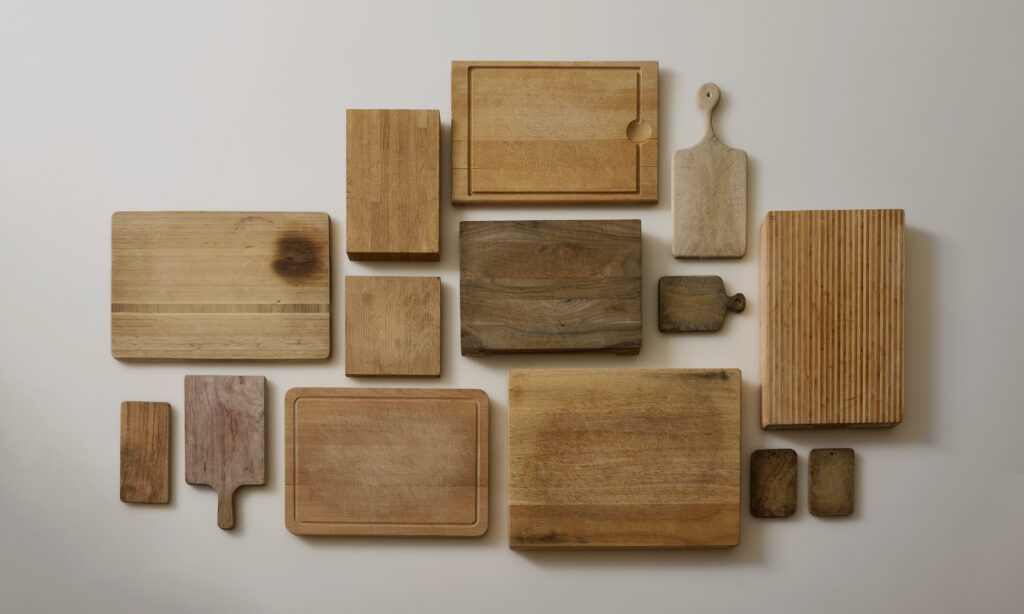
In places like these, the kitchen becomes a site of pedagogy; a living classroom where the recipe is never finished. Knowledge isn’t transmitted from the top down but shared sideways, through process, experimentation, and trust. The microbes, the waste bin, the moment of failure; each becomes a teacher.
In places like these, the kitchen becomes a site of pedagogy; a living classroom where the recipe is never finished.
In formal culinary education, the recipe rarely adapts. It sits on a pedestal; signed, stamped, and laminated, as though perfection could be standardised. In Ireland, and in hospitality schools across the world, the classroom often mirrors the kitchen brigades of nineteenth-century France. The hierarchy is precise, the tone obedient, and the cannon still orbits the same sun: Escoffier, Carême, the French court, the colonial table.
These systems were built to professionalise cooking, but in doing so, they also stratified, separating knowledge from those who cooked at home, those whose hands carried centuries of experience. As chef Máirtín Mac Con Iomaire has shown, Ireland’s culinary education grew from the same lineage: a model imported through empire, maintained through bureaucracy. The language of progress was borrowed from military structures; a chain of command disguised as craft.
The hierarchy is precise, the tone obedient, and the cannon still orbits the same sun: Escoffier, Carême, the French court, the colonial table.
The result is a pedagogy of silence. Recipes are treated as gospel, while intuition, culture, and memory are treated as noise. Students are often taught to follow, not to question. A perfect consommé might earn an “A”, but a conversation about sourcing, seasonality, or ethics often earns nothing at all. This is how a classroom embalms a recipe: by rewarding repetition over critical ethical discourse.
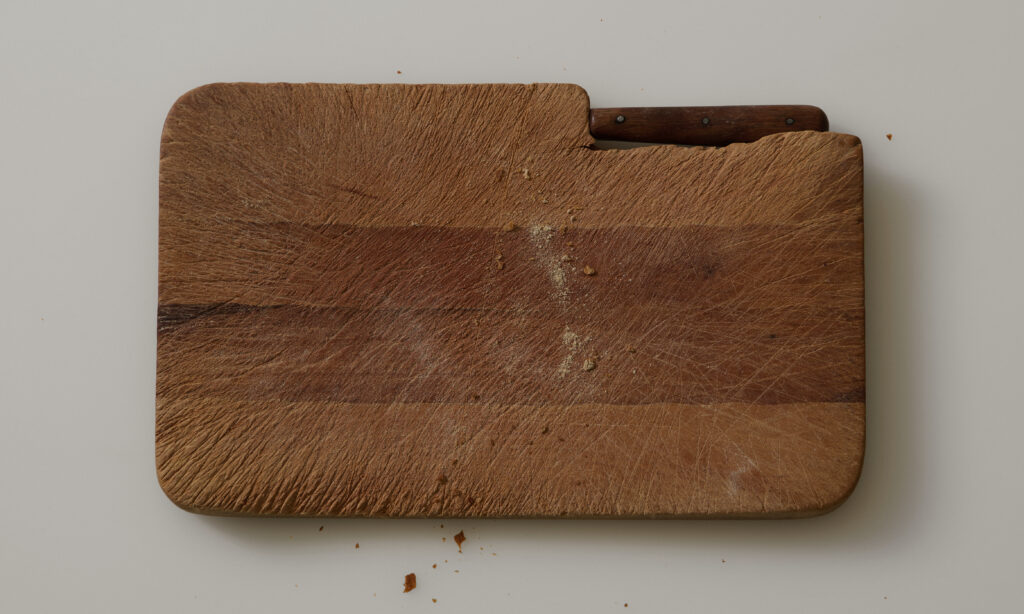
I know this violence, because I have carried it in my own body. I grew up inside systems that prized neatness over curiosity, assessment over imagination, and the stigma around dyslexia perpetuated by my teachers. I learned to survive by adjusting rules that refused to move for me. In every student who whispers their ideas under the roar of a vent, I hear the echo of that survival. Recipes pinned under glass remind me of children pinned by pedagogy; pressed flat, catalogued, denied the chance to grow wild.
Recipes pinned under glass remind me of children pinned by pedagogy; pressed flat, catalogued, denied the chance to grow wild.
What masquerades as neutrality is, in truth, colonial residue – a curriculum that upholds a single lineage as gospel while sidelining foodways that thrived through adaptation. It is not outdated but underexamined; a system still performing the hierarchies it claims to transcend. It extracts creativity for grades, reduces sustainability to slogans, and mistakes control for learning. The cost of that obedience is imagination itself.
If the classroom has embalmed the recipe, then critical food pedagogy offers a way to bring it back to life. It asks us to learn through food, not merely about it, to treat cooking and eating as acts of inquiry into how power, ecology, and culture intertwine. In this model, food is not the subject of learning but its method. Every ingredient becomes a question: Who grew this? What histories does it carry? What choices brought it here?
If the classroom has embalmed the recipe, then critical food pedagogy offers a way to bring it back to life. It asks us to learn through food, not merely about it, to treat cooking and eating as acts of inquiry into how power, ecology, and culture intertwine.
As Branden Lewis and Joy Kcenia O’Neil describe in their 2019 essay, critical food pedagogy invites us to engage the “head, hand, and heart.” It unites thought with action, intellect with touch, and ethics with appetite. Learning, in this sense, is neither lecture nor recipes; it’s a conversation that unfolds through participation. Students learn to see that taste itself can be political; that what feels natural has been shaped by centuries of access, empire and exclusion.
Jennifer Sumner takes this even further. In Eating As If It Really Matters, she writes that food can be “a catalyst for experiential, social, lifelong, transformative learning.” Eating, for Sumner, is a pedagogical act, a way to learn and unlearn, to resist through awareness. When we teach through food, we’re really teaching the ethics of interconnection: that our choices are never isolated, that the local table is linked to the global system.
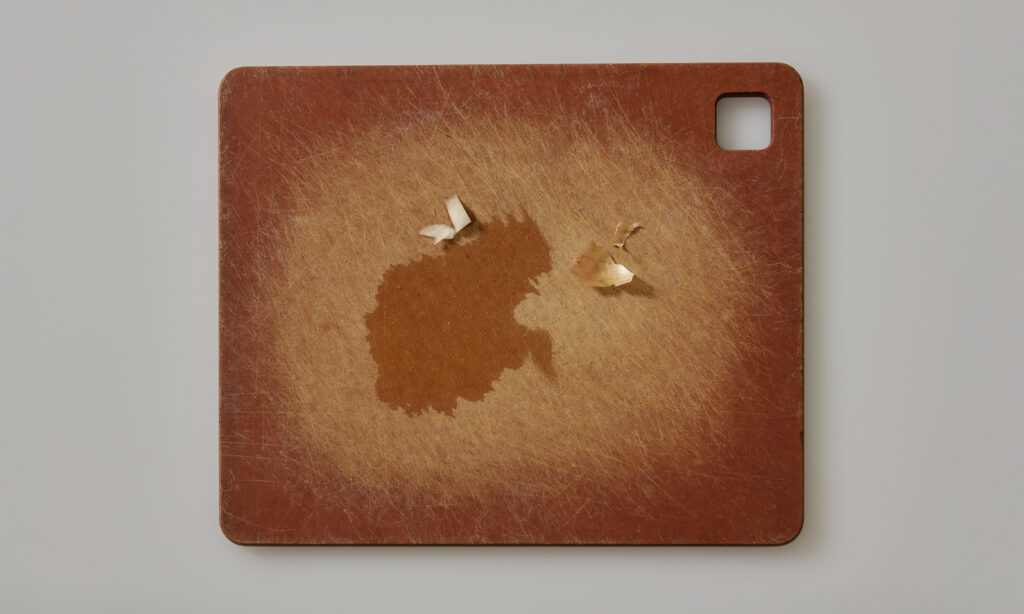
For me, critical food pedagogy means exactly that: learning through food in a way that makes us stop and ask questions, not only about flavour or technique, but about systems. It’s about mixing cooking with conversation: where ingredients come from, who grows them, and what that means for people and the planet. In practice, it’s less about passing on skills than awakening awareness.
In a decolonised culinary education, students would no longer be trained to reproduce a canon but to reimagine it.
In a decolonised culinary education, students would no longer be trained to reproduce a canon but to reimagine it. They would learn not to imitate, but to interpret; to treat tradition as dialogue rather than doctrine. Recipes would evolve in response to context, and knowledge would flow both ways: from the institution to the community and back again.
This kind of education cannot happen in isolation. It must involve growers, eaters, neighbours, and the networks that make food meaningful. It must honour the domestic and the local, not as lesser knowledge but as parallel expertise. It must, above all, restore agency: the right to question, to adapt, to create.
My understanding of authenticity has changed. It no longer feels like a matter of origin or ownership, but of embodied memory. Claudia Roden once wrote that a recipe is a way of remembering what exile tried to erase. I think of that often – how food can become a language for loss and how repetition is not imitation, but survival.
My understanding of authenticity has changed. It no longer feels like a matter of origin or ownership, but of embodied memory.
Authenticity, to me, is neither pure nor fixed. It’s made in relation to change and to what disappears. Just as you can never step into the same river twice – the water moves and so do we – every act of cooking is an act of translation, a small negotiation between memory and the moment. To cook authentically is not to preserve the past in amber, but to respond to it, to listen for what remains and what needs to evolve.
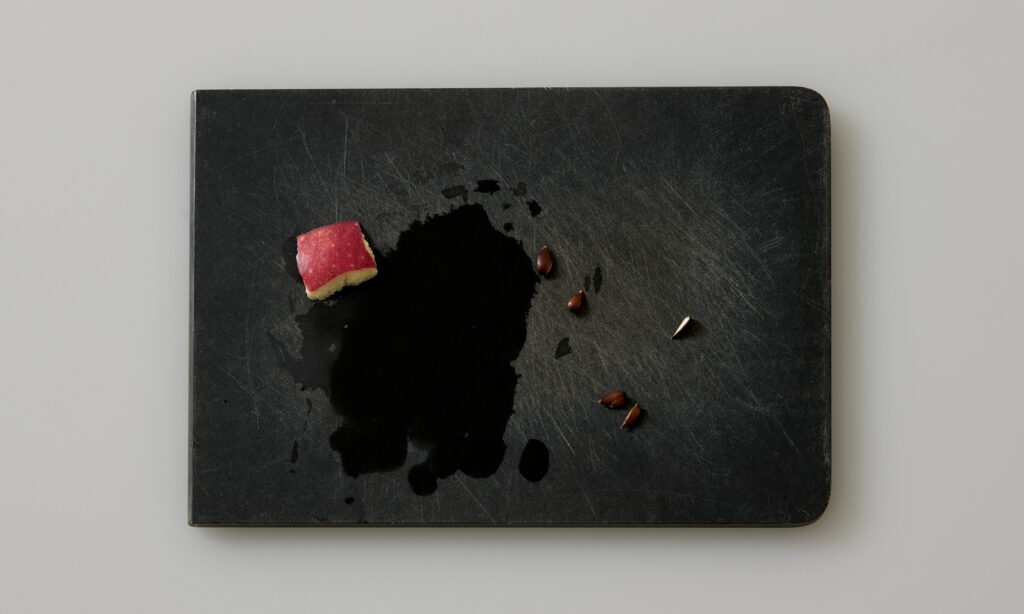
This is the work that a decolonised education must do – to remember without freezing, to transform without erasing. If recipes are living things, then our classrooms need to be that, too. They should be places where knowledge is tasted, tested, and shared; where tradition breathes instead of ossifying. In that sense, authenticity becomes an ethic rather than a claim. It’s about attention, care, and continuity; the courage to let something live instead of keeping it still.
A recipe is never a relic. It’s a hearth fire. It gathers people, warms them, feeds them, and sends sparks into the night to kindle new fires elsewhere.
A recipe is never a relic; it’s a hearth fire. It gathers people, warms them, feeds them, and sends sparks into the night to kindle new fires elsewhere. The beauty of the hearth is that no one owns its flame; we tend it together.
If you want to honour a recipe, don’t worship it. Cook it. Question it. Share it. Let it change you, and let it change again. This is The Living Recipe.
Nathan Farrell is a Dublin-based chef, home cook, writer, and father whose work blends philosophy, food, and the stubborn beauty of everyday life. Currently a Master’s student of gastronomy at TU Dublin, he writes and cooks from the margins of the system, shaped as much by lived experience and late-night reflection as by formal education. Navigating dyslexia and the structures that often overlook difference, Nathan has learned to treat the kitchen as both classroom and language. Whether baking the revolution, developing recipes steeped in myth and memory, or reimagining learning through sustainability, he keeps returning to one idea: that creativity is an act of resistance, and food its most eloquent expression.
Title image and still-life photo series for this story by Studio Willen