Tara Shyam is the Executive Director of Regen10, a global initiative to support the transition to an inclusive, regenerative, and equitable agrifood system. In other words, she’s in charge of an alliance whose mission is to change the entire food system, and they just published a roadmap. A conversation about sharing responsibility as well as direction.
Sophie Lovell: You’ve worked within and across a remarkable breadth of organisations throughout your career so far. What thread connects all of them, and what drew you specifically to Regen10?
Tara Shyam: I’ve actually worked my way through the food system. I started with agriculture and the International Rice Research Institute, then went on to public health nutrition with the Global Nutrition Report, the World Food Programme on homegrown school meals, their enabling environment, and large-scale food fortification; and food loss and waste with the Global Food Banking Network.
At Regen10, I’ve come back for a second helping of agriculture, hopefully with valuable learnings from my journey through my first digestion of the food system. Regen10 is particularly exciting to me because, apart from the food system thread, it’s a multi-stakeholder collaboration – which is very much embedded in every step of my career. This is something I deeply believe in. For all its flaws, the only way you can have systemic change is by having different actors at the same table.
Orlando Lovell: Could you explain what the Regen10 Outcomes Framework is?
Tara Shyam: The Framework is a shared map of what a successful transition to a regenerative food system can and should deliver at both the farm and landscape level – how they interconnect, how they support and complement each other, and where trade-offs will inevitably happen when you prioritise one outcome over another.
Rather than telling every farmer or region to adopt the same practices, it focuses on outcomes: healthier soils, resilient water systems, viable livelihoods, stronger local economies, functioning ecosystems, fairer value distribution, enabling governance and so on. Different places will take different routes to get to the same goals, and that’s fine. We need to be thinking about shared direction, not identical methods.
Different places will take different routes to get to the same goals, and that’s fine. We need to be thinking about shared direction, not identical methods.
Why outcomes? Because context matters. A practice can work brilliantly in one geography and fail in another because of climate, markets, land size, labour, or other factors. We have spent so many years debating inputs rather than measuring whether conditions are actually improving. The outcomes focus shifts the question from “Did you adopt the right practice?” to “Is the land healthier? Is the farm viable? Is the community more resilient?” Basically, “Is it working?” instead of “What did you do?”
Orlando Lovell: Regen10 claims to put farmers at the centre. In practice, when you’re convening governments, businesses, academics and NGOs around the same table, what does that principle actually look like – and where does it get tested most?
Tara Shyam: It means farmers being included from the beginning. Very often, big initiatives – and it’s not to criticise them – bring the farmer in at the end of the process. Having farmers’ voices from early on should be a basic design principle. That’s how we try to design our work.
Where is it most challenged? Almost every step of the way. A farmer has a full-time job farming. Even getting someone to a three-day workshop means three days away from their land – that’s a real cost. It’s about ensuring farmers are not just physically in the room, but that their voices are genuinely heard.
Any farmer of any scale who believes regenerative approaches matter should be able to see their intentions reflected in this framework.
Sophie Lovell: The word “regenerative” means very different things to a smallholder farmer in East Africa and a large agribusiness in Brazil. How do you hold that diversity together without the Framework becoming so broad that it loses meaning?
Tara Shyam: This is a tension that we have to deal with throughout our work. The term “regenerative” lacks a single agreed-upon definition. It means very different things to an indigenous community in the Amazon, compared to a large-scale farmer in India or Thailand. That looseness has an advantage: everyone can find a piece of what they’re doing in it. But it’s also a problem if we’re looking too narrowly at one aspect or another.
At Regen10, we’re not looking to produce an academic definition. Given the diversity of voices we work with, from farmer organisations, conservation organisations, businesses and so on, we decided the better contribution is to ask: “What should a regenerative system look like if it’s really working at the farm and landscape level?” It was not easy to get there, but I think that’s our big contribution to the regenerative agriculture debate. Any farmer of any scale who believes regenerative approaches matter should be able to see their intentions reflected in this framework.
Orlando Lovell: Is there a shared common goal that farmers have already bought into or are you still building that understanding?
Tara Shyam: One of our partners is the World Farmers Organisation, which represents farmers across different geographies, scales, and levels of engagement with regenerative practice. Their input has been essential in terms of representing the farmers’ voices. Beyond this, we have also trialled the Framework on live farms and widely sought feedback from farmers and those interacting directly with them.
We’re looking to shift systems so that the risk is borne collectively by all actors, rather than being pushed onto farmers alone.
That said, we’re not expecting all farmers to pick up and use our framework wholesale. We’re looking to shift systems so that the risk is borne collectively by all actors, rather than being pushed onto farmers alone. The Framework shows where farmers are decision-makers and economic actors, and how much of the system depends on other enabling actors.
Sophie Lovell: You’ve built this framework through years of consultation with people at the very top of the food chain and those at the very base. What surprised you most in that process – something you didn’t expect to be pushed back on, or brought to the table?
Tara Shyam: What continues to surprise me most is that we’re all more aligned than I might have guessed. Often, it’s easy to say, “Do we all agree that change needs to happen? Yes, of course”. And then you go into the details, find out how different you all are, and that change means very different things to different stakeholders. That’s the divergent part of the process.
But now that we have alignment manifested through the Framework, I can say there was much that was not contested across all the different stakeholder groups. It gives me a whole lot of hope that we’re able to align around such a diverse set of dimensions for what a global regenerative system should look like.
Orlando Lovell: How central is justice to Regen10’s work – and how do you ensure it stays non-negotiable rather than an add-on?
Tara Shyam: We have a multi-stakeholder-designed set of principles, and justice and equity are very much embedded in that. These principles were honed by the Regen10 partners and guide all our work.
It gives me a whole lot of hope that we’re able to align around such a diverse set of dimensions for what a global regenerative system should look like.
Sophie Lovell: Food system transformation is often framed in environmental terms – carbon, biodiversity, and climate. But who bears the costs of transition, and who captures the benefits?
We tend to place an unjust moral imperative on farmers to make this transition for the rest of us, but look away once cost and risks enter the discussion. But if we’re all beneficiaries – nutritious food, healthier soils, better water – why aren’t we designing financing that actually supports the farmer? Who brought the value? And who is benefiting from it?
Regen10’s contribution is identifying what a regenerative system could look like, so that farmers and other actors can advocate for the policy environments, financing mechanisms, and supply chain decision-making necessary to support transition and trade-offs. Risk-sharing mechanisms are required for this transition to happen. It can’t all rest on farmers’ shoulders.
Risk-sharing mechanisms are required for this transition to happen. It can’t all rest on farmers’ shoulders.
Sophie Lovell: Let’s pick up on who’s profiting from what situations and who’s losing. A topical point, since the US-Israeli strikes on Iran in late February 2026, is that the Strait of Hormuz has been largely closed, preventing the transport of not just fuel but fertilisers as well. As someone working on food system resilience, what was your first thought when you saw this unfolding?
Tara Shyam: Honestly, my first thought was: “Oh no” because what’s unfolding is causing real devastation. People are living the consequences right now, and many more will be carrying them for years to come. And then, the systems lens kicked in. From where I sit in Southeast Asia, the Strait of Hormuz is a chokepoint where roughly four-fifths of the oil and liquefied natural gas that pass through it are normally bound for Asian markets. So, crises travel. That concentration of risk should never have happened; we need redundancy, not brittle supply lines that allow geopolitics to jeopardise the food on our tables. And yet, I’m not without hope. We have managed shocks and wars before, and with a collaborative systems approach, we can do it again and better.
That concentration of risk should never have happened; we need redundancy, not brittle supply lines that allow geopolitics to jeopardise the food on our tables.
Sophie Lovell: Maybe something good can come out of this, forcing the transition away from fossil dependency.
Tara Shyam: I hope so. This is the moment to zoom out and ask: What does it mean that what happens in Iran affects rice growing in Thailand? Thinking about these bigger systems and broader dimensions really matters. It is our belief that the Outcomes Framework can contribute to that kind of thinking in financing, policy design, and business decision-making, as well as on the ground.
Sophie Lovell: The shift to understanding things, not as discrete objects, but as systems, has really expanded in recent years, especially in the design world. Big picture, systems thinking is becoming a huge field now, not because we didn’t acknowledge the complexity of interconnections between materials, labour, and products before, but perhaps because we now have the technological sophistication and blanket level of communication to work with that complexity on a global scale. Would you agree?
Tara Shyam: Yes, and I think there’s a growing impatience, too. We can’t afford to be fragmented. There’s enough to deal with already. In a way, all of these pressures are forcing more collaboration, deeper listening and engagement with people you thought had very different views, towards a shared direction. I’m a believer in getting us beyond isolated success stories to genuine systemic change. That’s going to require us to be both crystal clear and collaborative.

Orlando Lovell: Regen10 is funded primarily by the Rockefeller, McKnight and IKEA foundations. There’s an inherent tension in philanthropically funded initiatives, whose wealth comes from the current system, advocating for genuine system change. How do you navigate that?
Tara Shyam: Tensions still remain, and there are different pulls in different directions, which should be named. But I prefer to work for change within the paradox than away from the table. What I observe from our and other funders in this space is an intention more grounded than I’ve ever seen before in my career.
At the end of the day, they all want impact, and aligning incentives is what moves things. If they listen deeply to those on the frontline, emphasising locally-led transition and identify where they can catalyse change meaningfully, that’s where big change happens. Catalytic capital, deployed well, punches well above its weight relative to the scale of transformation required. The question now is whether that shift in mindset and approach translates into sustained structural change in how resources are directed, within and beyond philanthropy. That is the work being played out now.
Orlando Lovell: Where, right now, in the middle of all this difficulty, are you finding hope?
Tara Shyam: That growing impatience we spoke of earlier. We just don’t have time to mess around, and that’s forcing more collaboration. It’s an opportunity to do better with less. Also, I know we’re hearing differently from some political actors around the world, but I think the idea that ecological resilience supports economic resilience and vice versa is now more widely accepted, and that gives me hope, too.
I think the idea that ecological resilience supports economic resilience and vice versa is more widely accepted, and that gives me hope.
Sophie Lovell: We’re amazed at the scale of what you’re doing: Working to change the entire global food system. It’s very high on the list of problems so big that most wonder if we can ever hope to fix them.
Tara Shyam: The scale has kept us up at night many times! Is it too big? Are we crazy? But now the Outcomes Framework is here, and we’re seeing people respond to it in ways that are even better than we imagined. We are not competing with other actors well-established in this ecosystem. That’s not the game that we’re playing. We are saying, let’s see how we can amplify good examples while supporting alignment for better decision-making toward shared outcomes.
It’s been exciting, terrifying and ambitious. We’ve had so many difficult and uncomfortable conversations as a partnership. But we sat through that discomfort, and we talked and listened and validated and listened again. It’s not about consensus; it’s about finding the critical mass of what we can align on so that we can move forward together. It’s been really hard, but that’s the only way to get there, right? If it’s all agreement throughout, maybe you’re not asking the right questions in the first place.
Tara Shyam leads Regen10, an international, multistakeholder initiative with more than a dozen partner organisations from different parts of the food system. Its mission is to advance a global agrifood system that inclusively supports healthier people, nature, and climate. Their Outcomes Framework was published in March 2026. Shyam is a specialist in multistakeholder food systems partnerships, with diverse expertise ranging from agriculture, nutrition and school meals to food loss and waste. She operates at the intersection of policy, strategy, and delivery, where her role is to foster food systems transformation by aligning businesses, funders, policymakers and civil society around shared outcomes. She has worked with the UN World Food Programme, the International Rice Research Institute, the International Food Policy Research Institute, the Global Nutrition Report, the Global FoodBanking Network, Johns Hopkins University and UNICEF, among others.
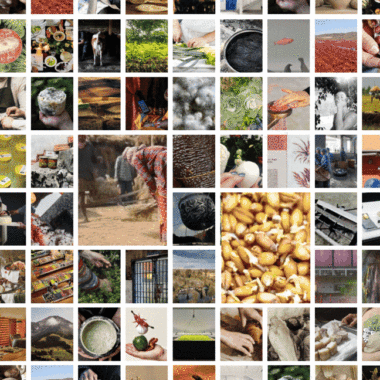
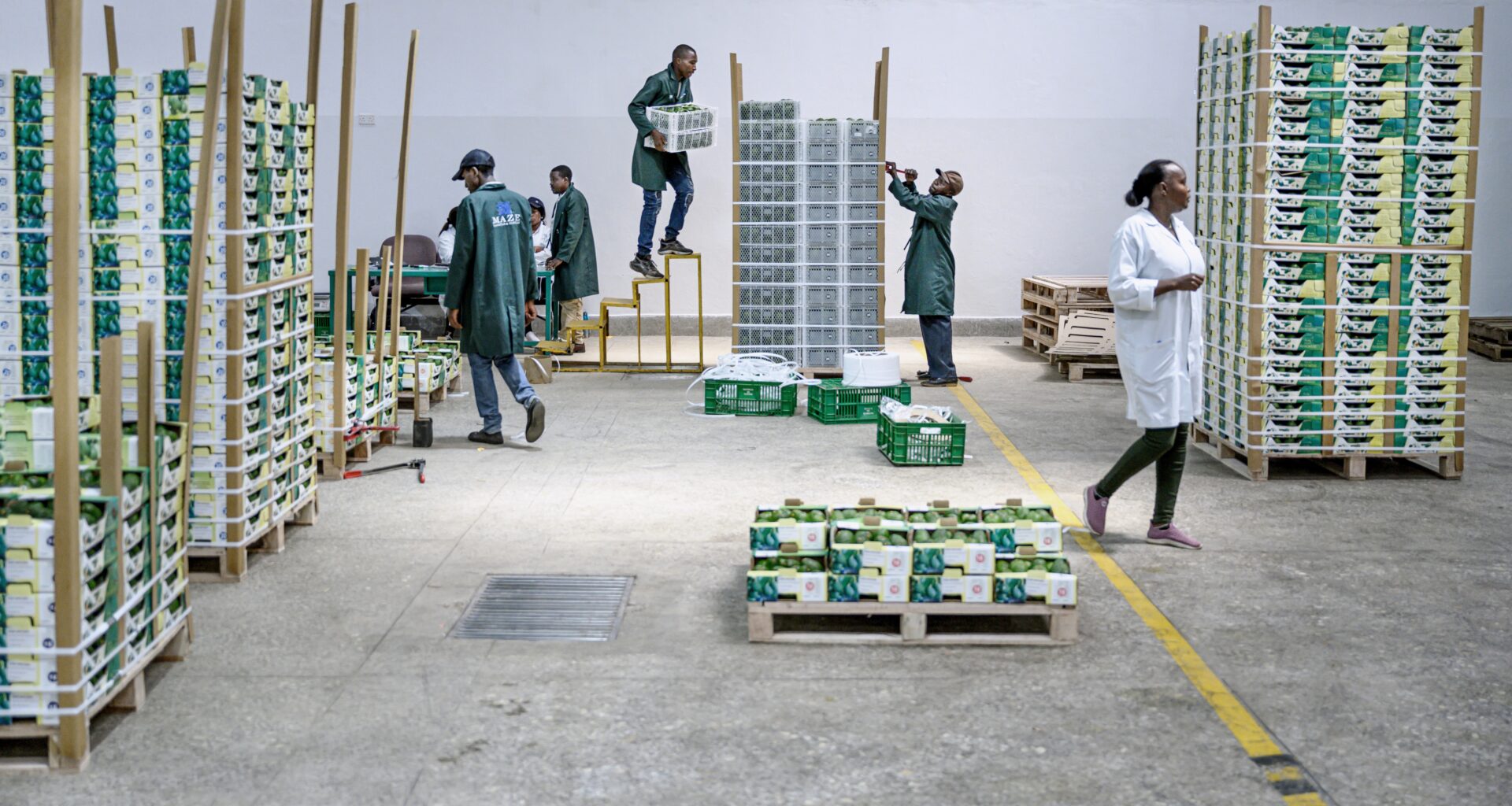
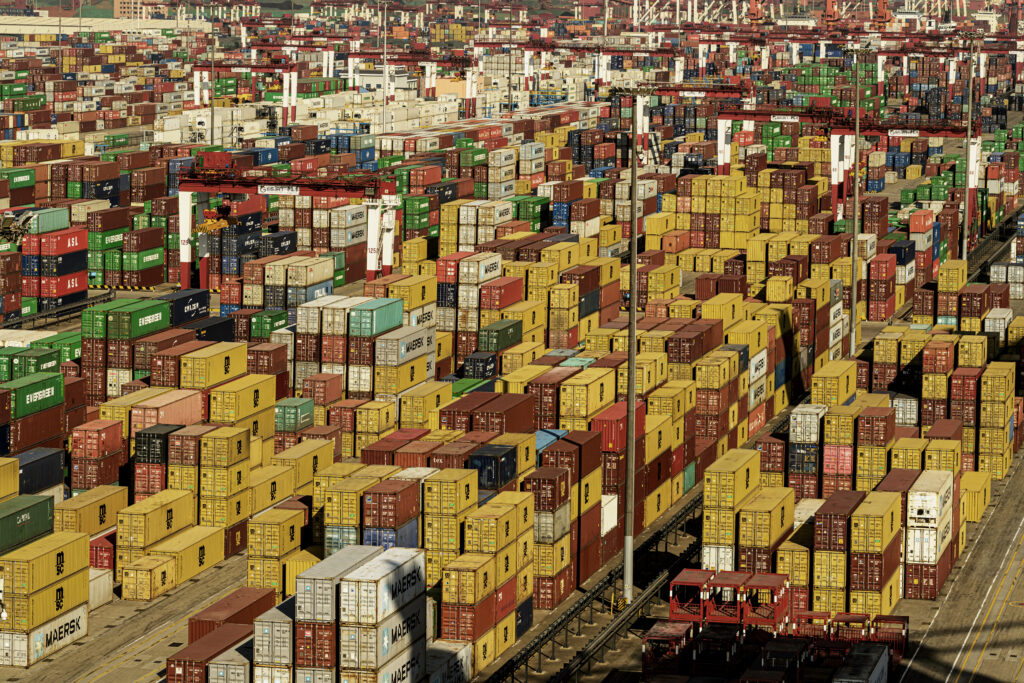
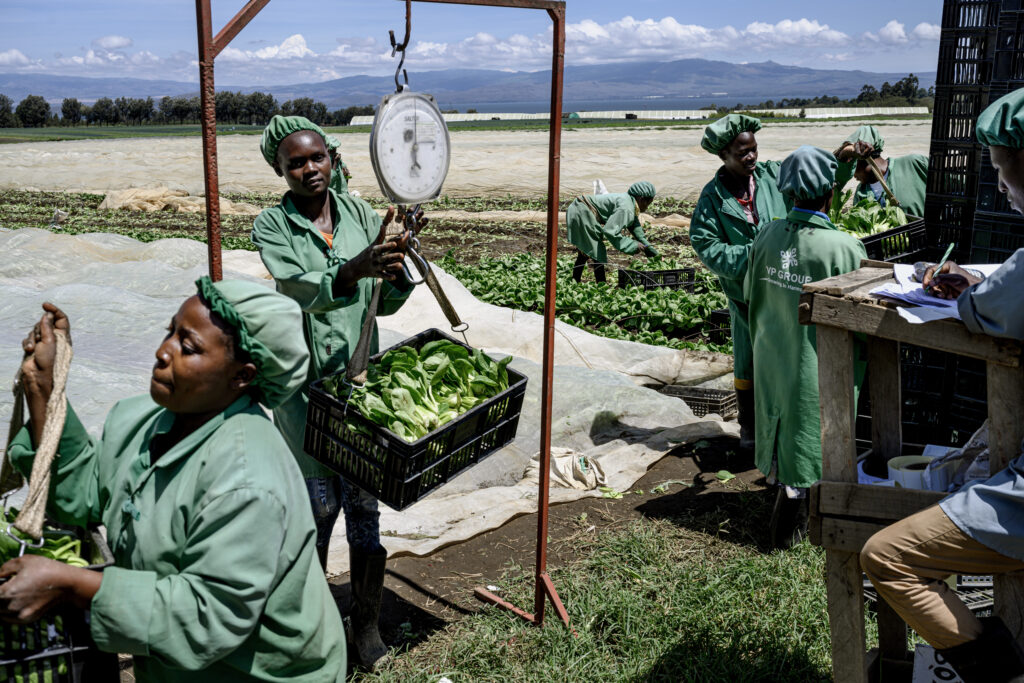
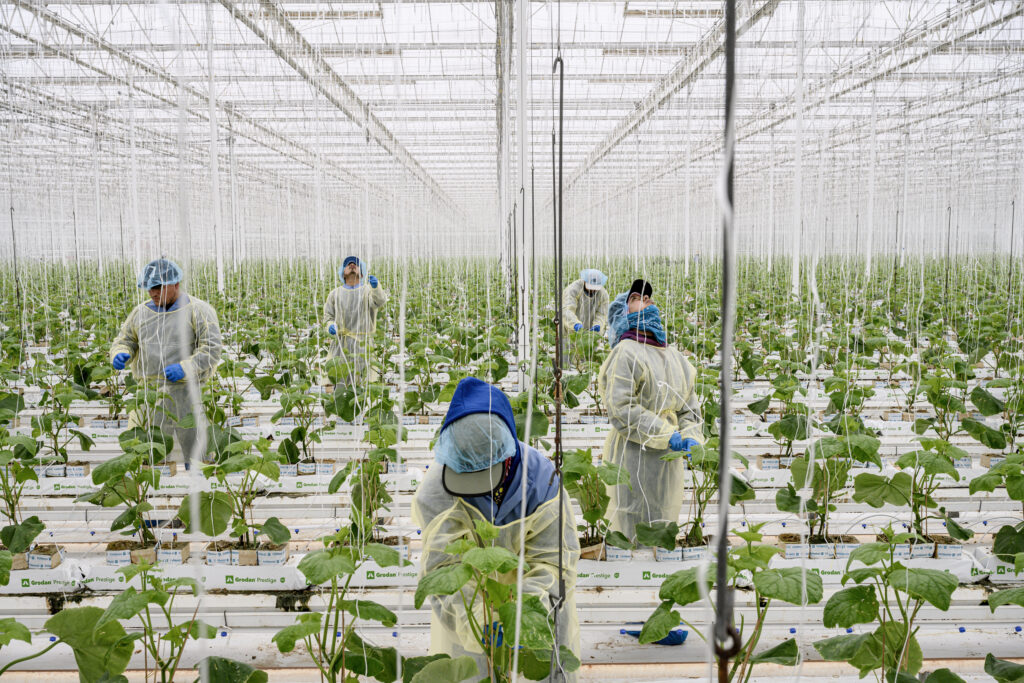
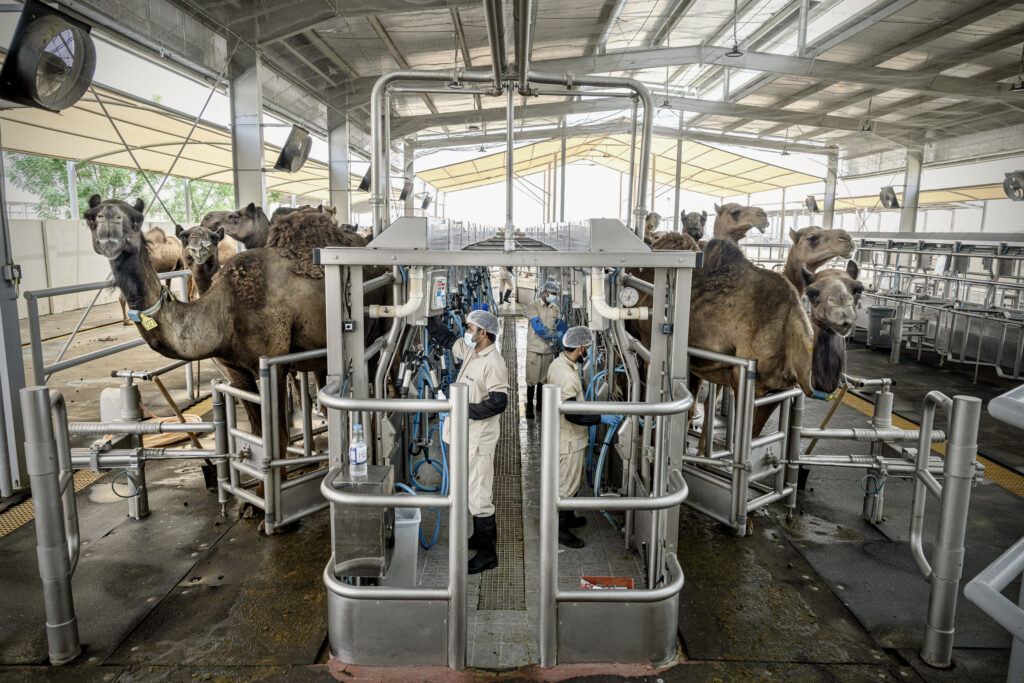
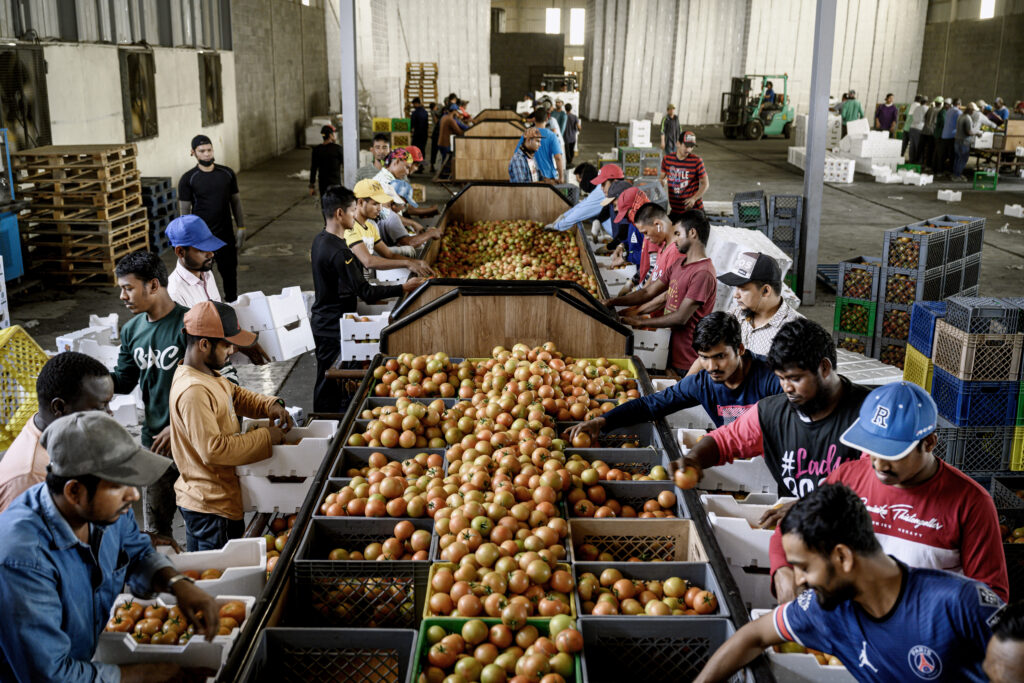
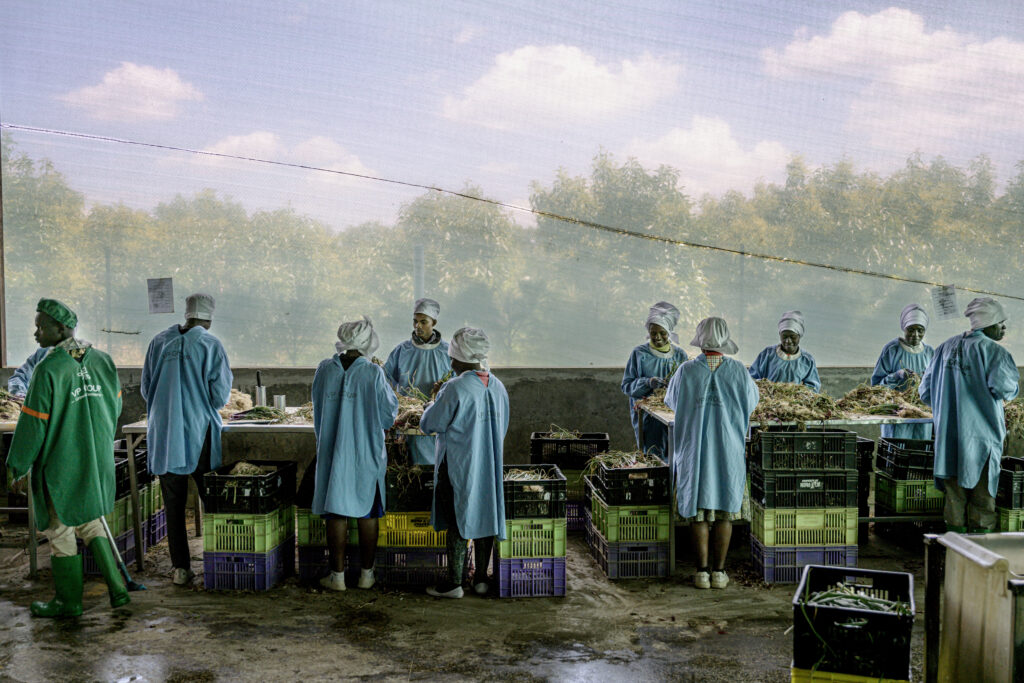
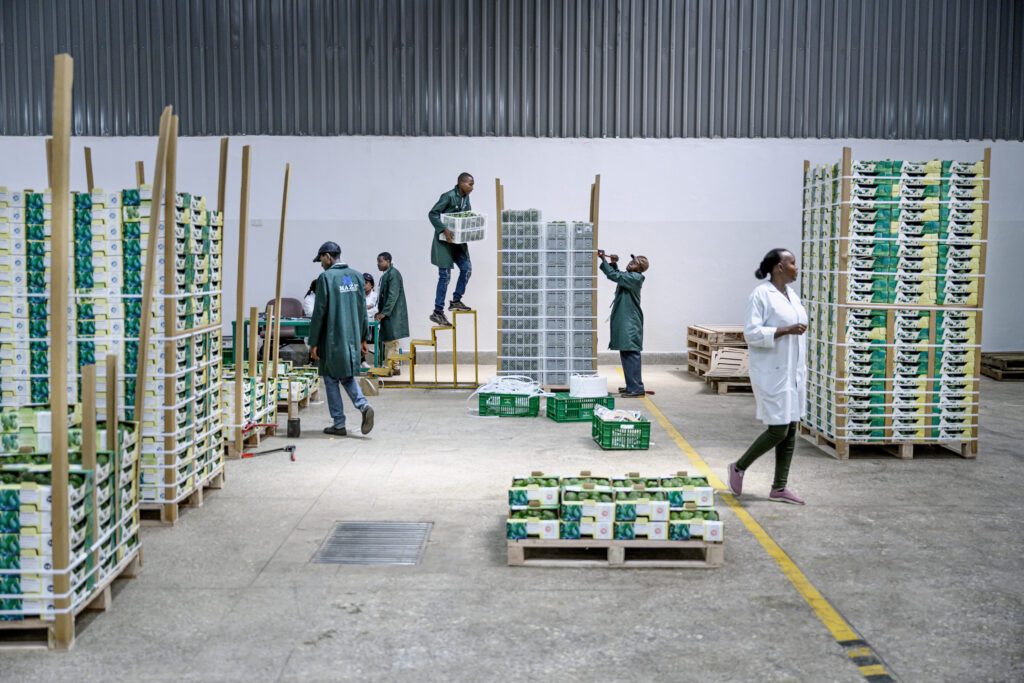
The images illustrating this piece come from the documentary photographer Kadir van Lohuizen‘s new book Food for Thought. When he discovered that his home country, the Netherlands, was the second largest food exporter in the world after the US, documentary photographer Kadir van Lohuizen decided to document some of the mechanisms behind mass food production. Where is our food produced? And how is it distributed across our world? He visited and documented production and transport sites of giant food companies in the Netherlands, Kenya, the USA, the United Arab Emirates and China. The result is Food for Thought, a photo documentation and food atlas that takes a closer look at some of the facts and figures behind the global food industry.
Title image: “Kenya March 2023” from the book Food for Thought, courtesy and © Kadir van Lohuizen / NOOR